How To Reduce Production Costs And Maintain High Quality Welding Results with Laser Welding Technology

Views: 72     Author: Site Editor     Publish Time: 2025-07-18      Origin: Site

Inquire

facebook sharing button
twitter sharing button
line sharing button
wechat sharing button
linkedin sharing button
pinterest sharing button
whatsapp sharing button
sharethis sharing button

Table of Contents

1. Introduction

2. Advantages of Laser Welding Technology

3. Optimization of Production Processes

4. Selection and Configuration of Laser Welding Equipment

5. Improved Optimization of Welding Process Parameters

6. Laser Welding Applications

7. Summarize


Introduction

The rapid development and application of laser welding technology marks a brand new era in modern manufacturing. As an efficient, precise and flexible welding method, laser welding is widely used in automotive, aerospace, electronics, medical and other industries. With the continuous progress of laser technology, the performance and efficiency of laser welding equipment has been significantly improved to meet the increasingly complex process requirements. Innovations such as high-speed laser welding, automated systems and intelligent control have enabled manufacturers to improve processing efficiency while ensuring weld quality, greatly contributing to the popularization of laser welding technology.


Currently, the global manufacturing industry is facing the dual challenge of reducing production costs and maintaining product quality. In an ultra-competitive market environment, companies not only need to optimize production processes to reduce costs, but also to ensure that products meet stringent quality standards to maintain customer satisfaction and enhance market competitiveness. At the same time, rising material prices and labor costs have also increased the pressure on enterprises. Against this backdrop, laser welding technology, with its superior features, has become an important tool for companies seeking cost control and quality assurance. Through the rational use of laser welding technology, manufacturers can realize the improvement of production efficiency and at the same time ensure the strength and precision of the welded joints, so as to enhance the overall production efficiency and competitiveness.

Advantages of Laser Welding Technology

1. High efficiency

Laser welding technology offers extremely fast welding speeds that can significantly reduce production cycle times. It is suitable for high volume production, helping companies to accomplish more welding tasks in a shorter period of time, thereby increasing overall productivity and reducing production costs.


2. Low heat affected zone

Laser welding produces a small heat affected zone (HAZ), which effectively reduces thermal deformation and stress in the material. This means that the weld has less impact on the surrounding material, helping to maintain the physical and chemical properties of the material, improving yield and reducing the need for subsequent processing.


3. Precise control

Laser welding allows precise control of the welding process, with welding parameters (such as power, speed and focal length) optimized for different materials and process requirements. This high level of precision ensures consistent weld quality, reduces rework and improves product consistency and reliability.


4. High weld quality

Laser welding typically produces high-strength welded joints that meet stringent quality standards. In addition, the smooth and defect-free weld seams produced during laser welding reduce the need for subsequent machining, resulting in time and cost savings.


air-cooled handheld laser welding machine1-Suntop
What are the precautions for the maintenance of laser welding machines2-Suntop
1
6000W handheld laser welding machine-5


5. Adaptable

Laser welding is adaptable to a wide range of materials and their varying thicknesses. This flexibility makes it a widely used tool in the manufacturing industry, capable of responding to a variety of complex welding needs.


6. Environmentally friendly

The laser welding process reduces the burden on the environment by eliminating the use of chemical fluxes or redundant heating equipment. Its efficient energy utilization also results in lower overall energy consumption, helping companies reduce operating costs while meeting environmental standards.


7. Non-contact welding

Because laser welding is non-contact, it reduces the risk of material damage and distortion, and can handle complex or delicate components for demanding industrial applications.


Together, these advantages have led to the widespread use of laser welding technology in many industries, such as automotive, aerospace, electronics, and medical devices, as an important means of improving productivity and product quality. Click here for more information

Optimization of Production Processes

1. Automation and Intelligence

The introduction of robots and automated welding systems is an important strategy to increase productivity. Through the use of automated equipment, the laser welding process can be highly mechanized, which not only reduces the need for human intervention, but also maintains stability and consistency in production tasks with high loads and frequency. The ability of robotic welding systems to perform welding tasks quickly and accurately frees operators from heavy and monotonous work, allowing them to focus on more complex tasks or optimized processes. In addition, intelligent systems monitor the welding process in real time and make dynamic adjustments to ensure consistent weld quality and reduce human error.


2. Integration of production lines

Integration of laser welding with other machining processes (e.g., cutting) can dramatically increase production efficiency. This integration not only reduces product dwell time on the production line, but also reduces material handling and transportation costs. By creating a continuous production line, the connection between the various processes is smoother, and the various machining processes can alternate quickly, reducing waiting and stopping times. At the same time, integrating the processing processes also promotes data sharing and analysis through centralized management, improving the transparency and controllability of overall production. In this efficient production system, enterprises can not only reduce production costs, but also accelerate the speed of product launch, which in turn improves market competitiveness.


Through the above measures, enterprises can improve their responsiveness in the fierce market competition, optimize the use of resources, and achieve higher production efficiency and better product quality. Click here for more information

Selection and Configuration of Laser Welding Equipment

1. Selecting efficient equipment

When selecting laser welding equipment, the first step is to determine the appropriate power and type for the specific production requirements. This process includes several important considerations:


Laser type:

Common laser welding equipment is primarily fiber lasers. Fiber lasers are widely used for their high efficiency and low operating costs for thin plates and many types of metal materials.

Power selection:

Laser power is a key factor in determining the effectiveness and speed of the weld. Generally, higher power helps to increase the speed and depth of the weld for thicker materials. However, the type and thickness of the material needs to be considered when selecting power to avoid overheating or burn-through. In addition, proper power selection can improve energy utilization and reduce production costs.

Practical application requirements:

Evaluate specific welding requirements such as weld strength, joint type (e.g., overlap or fillet weld), and production frequency. These factors will have a direct impact on the type and function of the welding equipment required. Based on these requirements, a laser welding machine with the appropriate features and functions can be selected.


2. Equipment maintenance and updating

Regular maintenance and updating is essential to ensure that the laser welding equipment operates in an efficient and stable state. Specifically include the following aspects:


Regular maintenance:

Regularly check the laser's optical components (such as lenses and mirrors) and cooling system to ensure that they are in optimal condition. Cleaning the optics improves laser transmission efficiency and prevents degradation of weld quality. At the same time, test the working condition of the cooling system to ensure good thermal management of the equipment to prevent overheating from affecting the performance of the equipment.

Software updates:

Laser welding equipment is usually equipped with control software, and software versions are regularly updated for the latest features and performance improvements. Software upgrades can enhance the equipment's intelligence and adaptive control capabilities, improving weld quality and efficiency.

Troubleshooting and repair:

Establish an effective troubleshooting mechanism to identify and solve problems in equipment operation in a timely manner. For the wear and tear of mechanical parts, timely replacement and maintenance to avoid affecting the production schedule and welding quality.

Technical training:

Regularly train the operators on the use and maintenance of the equipment to ensure that they can master the key points of the equipment operation, enhance the ability to judge and deal with faults, and minimize the man-made failure rate.


Through the reasonable choice of laser welding equipment and regular maintenance, enterprises can ensure the stability of the equipment under high load conditions, reduce the failure rate, ensure that the welding process continues to be highly efficient, thus improving the overall production efficiency and product quality. Click here for more information

Improved Optimization of Welding Process Parameters

1. Reasonable setting of welding parameters

Optimization of welding parameters is a key step to ensure the quality and efficiency of laser welding. Reasonable welding parameter settings can significantly improve the strength and quality of welded joints and reduce the occurrence of defects. Specifically, it mainly includes the following aspects:


Laser power:

Laser power is the main factor affecting the welding temperature and molten pool depth. The experimental process requires the testing of different powers to determine the optimal power value. By analyzing the shape and strength of the welded joint, the optimal power setting for the particular material and thickness is found to ensure that the melting effect during the welding process is adequate and does not cause overheating and burn-through.

Welding speed:

Welding speed directly affects the heat input of the weld and the stability of the molten pool. Too fast a welding speed may lead to inadequate welding, while too slow may lead to material overheating and deformation. Through experimental data analysis, combined with the actual situation of the welded joints, to determine the optimal welding speed in order to achieve the desired welding effect.

Feed rate:

Feed rate mainly refers to the relative moving speed between the welding head and the workpiece during the laser welding process. Reasonable configuration of the feed rate can ensure that the welding depth is maintained at the same time, to prevent excessive melting, to avoid welding defects. By considering the laser power, welding speed and material properties, the feed rate can be optimized to improve the welding quality.


2. Automated welding parameter adjustment

In modern laser welding, the application of intelligent control systems makes it possible to adjust welding parameters in real time. This technology can significantly improve the flexibility and adaptability of welding:


Real-time monitoring and feedback:

Real-time data such as temperature, molten pool status and weld quality during the welding process are collected using sensors and monitoring equipment. According to these real-time data, the system can quickly analyze the welding status, timely adjustment of laser power, welding speed and feed rate to adapt to different material properties and thickness changes.

Adaptable:

Automated welding system can flexibly respond to changes in different materials, thicknesses and types of welded joints and make instant adjustments to ensure that high quality welding results can still be maintained under a variety of complex conditions. This flexibility not only increases productivity, but also reduces downtime due to material changes or process modifications.


By optimizing welding process parameters and introducing intelligent automated welding systems, companies can continue to improve the quality and efficiency of laser welding, reduce production costs and achieve more efficient manufacturing processes. Click here for more information


Laser Welding Applications

Laser welding technology is used in a wide range of industries and is particularly well suited to the following areas due to its efficiency, precision and flexibility:


1. Automotive manufacturing

Laser welding is used for the welding of body structures, chassis, gearboxes and other components, enabling fast, high-quality welding, reducing weld distortion and improving overall structural strength and safety.


2. Electronics industry

In the manufacturing of electronic components, laser welding is used for precision welding of circuit boards, connectors, cell phone housings, etc. to ensure good electrical contact, smooth product appearance and improved reliability.


3. Aerospace

Laser welding is used to weld aircraft structures, engine parts, etc. It has extremely high requirements for welding quality and material strength to meet lightweight and high-performance design concepts.


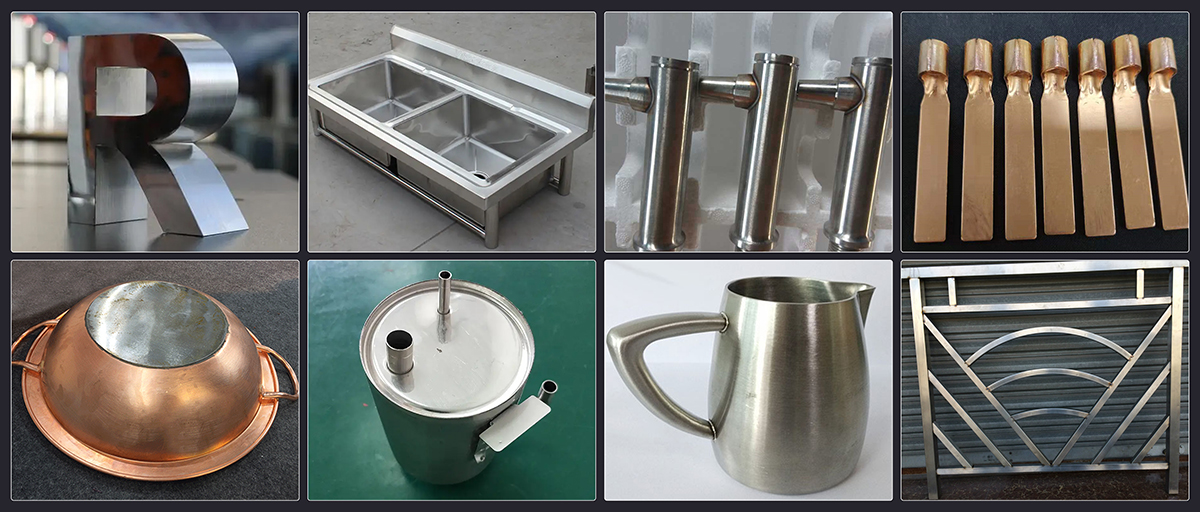
air-cooled handheld laser welding machine sample-Suntop


4. Medical devices

Welding of medical devices such as surgical instruments, implants and monitoring equipment requires high standards of hygiene and safety, and laser welding is able to achieve non-contact, low thermal damage welding results.


5. Energy industry

Laser welding is used to weld battery packs, solar panels and fuel cells, ensuring the strength and conductivity of the joints and improving energy conversion efficiency.


6. Metal and heavy industry

In metal manufacturing, laser welding is used for welding of alloy structural parts, which is suitable for complex shaped parts, and can effectively reduce the production cost and improve the production efficiency.


With its high efficiency, high precision and low heat-affected zone, laser welding is expanding its application potential in various industries. Whether it is to improve productivity, reduce costs or meet high quality standards, laser welding technology has become an important solution for modern manufacturing. Click here for more information

Summarize

Laser welding technology plays a key role in reducing production costs and ensuring weld quality. Its high welding speed, low heat affected zone and precise weld control allow companies to respond quickly to market demands while further improving product quality. This technology not only reduces material waste and manual intervention, but also reduces overall production costs by improving productivity and the reliability of weld links.


At the same time, as the manufacturing environment continues to change, technological innovation and continuous improvement are becoming particularly important. Companies need to continuously invest in new technologies and intelligent systems to adapt to increasingly complex production demands and market competition. In this process, data-driven welding parameter optimization and intelligent production processes can achieve a more efficient production model and ensure higher quality products.


In conclusion, the application of laser welding technology not only provides enterprises with competitive advantages in cost control and quality assurance, but also lays a solid foundation for future transformation and upgrading of the manufacturing industry. Through continuous exploration and innovation, enterprises can stand out in the fierce market competition and realize sustainable development.

Leave a Message
Contact us
More than 10 precision production line, easy to realize large quantities of goods, to provide you with the best price.
Contact Us
  No 317, Mu Dong RD, Wu Zhong DIST, Suzhou City, Jiangsu Province, China
 info@suntoplaser.com
  +86 13771746401

Products

Home
© 2023 Suzhou Suntop Laser Technology Co., Ltd  All rights reserved.