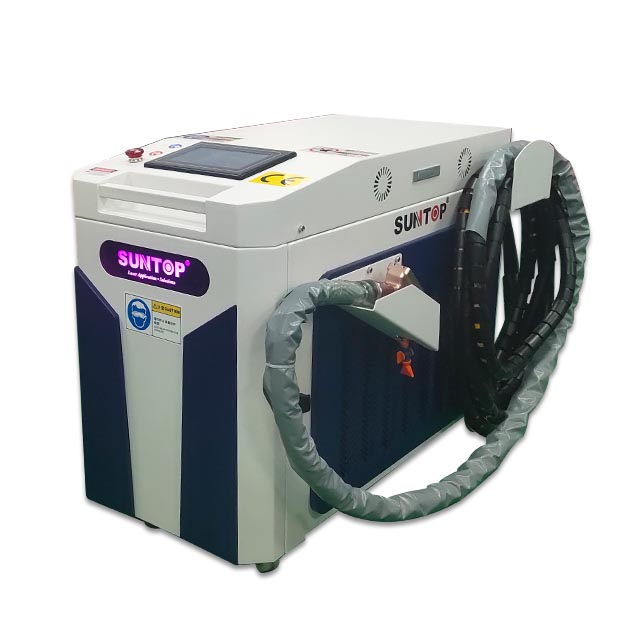
Views: 63 Author: Site Editor Publish Time: 2025-11-10 Origin: Site
3. Effectiveness of Oil Removal
5. Advantages and Limitations of Laser Cleaning Machine
6. Real-world Application Cases
Laser cleaning technology has emerged as a revolutionary method for surface cleaning across various industries. Developed in the late 20th century, this innovative technique utilizes high-intensity laser beams to remove contaminants from materials efficiently and effectively. Over the years, advancements in laser technology have significantly improved its applications, making it a preferred choice for industrial cleaning processes.
The removal of oil and rust from metal surfaces is crucial for several reasons. Firstly, these contaminants can compromise the integrity and longevity of metal components, leading to increased wear and tear and potential failures. Secondly, effective cleaning is essential for ensuring high-quality finishes in manufacturing and fabrication processes, as residues can adversely affect adhesion, coating, and overall appearance. Additionally, maintaining clean metal surfaces promotes safety and operational efficiency by preventing slip hazards and preserving equipment functionality.
In light of these factors, laser cleaning technology offers an ideal solution, delivering precision cleaning that is both effective and environmentally friendly. Its ability to remove oil, rust, and other surface contaminants makes it an invaluable tool in modern industrial practices, promising enhanced productivity and durability for metal products.
Laser cleaning technology uses high-energy laser pulses to create an instantaneous temperature rise on the surface being cleaned, effectively removing contaminants. When the laser beam comes into contact with surface contaminants (such as rust, oil, or coatings), the laser energy is rapidly absorbed by the contaminants, causing them to heat up and expand instantly. This thermal expansion generates significant pressure, disrupting the chemical bond between the contaminants and the substrate, ultimately preventing further adhesion and removal.
The advantages of laser cleaning lie in its high precision and localization, allowing for targeted cleaning within specific areas and minimizing damage to the substrate. Furthermore, this non-contact cleaning method effectively avoids the mechanical wear or chemical residues that can occur with traditional cleaning methods. Therefore, laser cleaning not only improves cleaning effectiveness but also extends the lifespan of the cleaned items.
1. Types and Characteristics of Oil Stains
On metal surfaces, oil stains can be mainly classified into the following types:
● Lubricating Oil: Commonly used in mechanical parts to reduce friction and wear. Lubricating oil has a high viscosity, is generally more difficult to remove, and forms a thin film on the surface, affecting subsequent processes such as painting or welding.
● Cutting Fluid: In metal processing, cutting fluid is used to cool and lubricate workpieces. After processing, cutting fluid residue on the metal surface can easily cause corrosion and reduce the effectiveness of subsequent processing.
● Rust Inhibitor: Used to protect metal surfaces from oxidation and corrosion. Residues left during storage and transportation often affect the appearance and quality of the product.
● Sludge and Dust Mixture: In industrial environments, sludge, dust, and other impurities often accumulate on metal surfaces. These mixtures, combined with oil stains, are difficult to clean.
Different types of oil stains have their own characteristics, requiring different strategies during cleaning.
2. Advantages of Laser Cleaning in Oil Removal
Laser cleaning exhibits significant advantages in oil removal:
● High Efficiency: Laser cleaning can quickly remove most oil stains, typically completing the cleaning task in a short time, far exceeding the efficiency of traditional cleaning methods, especially when dealing with complex or hard-to-reach areas.
● Non-Damaging: Laser cleaning is a non-contact cleaning method that does not require mechanical contact, thus effectively avoiding wear and damage to the metal surface and ensuring the integrity of the substrate.
● Environmentally Friendly: Laser cleaning does not require the use of chemical cleaning agents, eliminating the environmental hazards of chemical residues and meeting the environmental requirements of modern industry. Furthermore, laser cleaning generates less waste, reducing the complexity of waste disposal.
3. Evaluation of Cleaning Effect
To evaluate the effectiveness of laser cleaning in removing oil stains, experiments can involve comparing changes in the metal surface before and after cleaning. Taking the cleaning experiment of an industrial component as an example:
Before Cleaning: The average thickness of the oil stains on the surface was 150 micrometers. The surface appeared dull and lacked luster, with obvious dirt and grease residue.
After cleaning: After laser cleaning, the thickness of surface oil stains was reduced to below 10 micrometers, the surface regained its luster, and the cleanliness was significantly improved.
Such experimental data and case studies demonstrate that laser cleaning has significant advantages in oil stain removal. Its high efficiency, environmental friendliness, and non-destructive characteristics make it an ideal choice for modern metal cleaning. Click here for more information

1. Types of Rust and Their Impact
Rust is a chemical change that occurs when metallic materials react with oxygen and moisture in a humid environment. The main types are as follows:
● Iron Oxide Rust: The most common form of rust, usually reddish-brown or orange. Iron oxide reduces the mechanical strength of metals and causes embrittlement.
● Chlorinated Rust: Formed due to the presence of chlorides, typically occurring in marine or humid environments. The unevenness of chlorinated rust can lead to localized corrosion of metal structures, increasing the corrosion rate.
● Electrochemical Rust: In the presence of electrolytes, an anode-cathode reaction occurs on the metal surface, resulting in rust. This type of rust often occurs at the interface between metals, leading to corrosion between different metal materials.
Rust not only affects the appearance of metallic objects but also significantly reduces their mechanical properties and lifespan, negatively impacting the safety and reliability of equipment.
2. The Effects of Laser Cleaning in Rust Removal
Laser cleaning has demonstrated excellent results in rust removal. First, laser cleaning can effectively remove the rust layer from the metal surface, typically achieving a 100% removal rate. During the process, the laser can deeply penetrate the corroded surface, precisely destroying its structure and ensuring that not only the surface layer is removed, but the internal corrosion is also effectively treated.
By precisely adjusting the laser power and pulse frequency, laser cleaning can flexibly treat different types of rust, ensuring depth and thoroughness. Compared to traditional cleaning methods, laser cleaning can more effectively preserve the substrate properties of the metal and greatly reduce physical damage caused by cleaning.
3. Evaluation of Cleaning Effect
To evaluate the effectiveness of laser cleaning in removing rust, experiments and case studies can be conducted. For example, tests were performed on iron products:
Before cleaning: The average thickness of the rust layer was 200 micrometers, with obvious rust spots and corrosion marks on the surface, and high surface roughness.
After cleaning: After laser cleaning, the thickness of the surface rust layer was reduced to less than 10 micrometers, the surface smoothness was significantly improved, and visible rust spots were completely removed.
These experimental data and case studies clearly demonstrate the high efficiency, thoroughness, and non-destructive nature of laser cleaning in rust removal, making it an indispensable tool in modern metal maintenance and upkeep. Click here for more information
1. Advantages
● Environmentally Friendly, No Chemicals Used: One of the biggest advantages of laser cleaning technology is its environmental friendliness. Compared to traditional cleaning methods, laser cleaning does not require any chemical cleaning agents, thus avoiding chemical residues and environmental pollution. This makes laser cleaning a sustainable cleaning solution, particularly suitable for industries with strict environmental requirements.
● Precise Control, Suitable for Complex Surfaces: Laser cleaning can achieve high-precision cleaning results. By adjusting the laser power, pulse frequency, and beam focus, operators can precisely control the cleaning process, adapting to the shape and complexity of different surfaces. This feature is particularly suitable for cleaning complex structures, delicate workpieces, and hard-to-reach areas such as molds, pipes, and engraved items.
2. Limitations
● Cost Considerations: The initial investment in laser cleaning equipment is high, including equipment purchase, installation, and maintenance costs. This can be a significant financial burden for some small businesses or projects with limited budgets. Therefore, its cost-effectiveness must be fully assessed before deciding to use laser cleaning technology.
● Safe Operation Requirements: Laser cleaning involves high-energy laser beams, and its operation requires extremely high safety standards. Appropriate personal protective equipment (PPE) must be provided to operators, and the working environment must meet relevant safety standards to avoid injury to the eyes or skin from the laser beam.
● Applicability Limitations: Laser cleaning technology is not suitable for all types of materials. Some soft or fragile materials may be damaged under laser irradiation, resulting in surface melting or deformation. Furthermore, for certain types of dirt or rust, laser cleaning may not be as effective as some traditional methods. Therefore, the type of material and its suitability for laser cleaning must be considered before applying laser cleaning.
While laser cleaning machines offer numerous advantages such as environmental friendliness, precision, and efficiency, their limitations and applicable conditions must be considered during application to ensure the safety and economy of the cleaning process. Click here for more information
Laser cleaning technology has achieved significant success in multiple industries. Here are some typical examples:
1. Industrial Manufacturing
In a large manufacturing company, laser cleaning technology was used to remove oil and rust from mechanical equipment. After implementing laser cleaning, the equipment's cleaning efficiency increased by 50%, significantly reducing downtime. According to customer feedback, the cleaned equipment surface regained its shine, maintenance frequency decreased, and overall production efficiency significantly improved.
2. Automotive Industry
An automotive manufacturing company used laser cleaning technology to remove rust and dirt from automotive parts to improve coating quality. Laser cleaning not only effectively removed the rust layer but also ensured that the geometry of the parts was not damaged. During this process, the customer stated that laser cleaning reduced cleaning time to 30% of the original time and improved the adhesion and uniformity of subsequent coatings.
3. Mold Cleaning
In the mold manufacturing industry, laser cleaning is widely used to remove carbon deposits and wax residue from mold surfaces. After applying laser cleaning, a mold manufacturing company reduced mold changeover frequency by 40%, and the cleaned molds exhibited better yields in production. Customers reported that laser cleaning significantly extended the lifespan of molds.
Customer Feedback and User Experience
Customers generally expressed satisfaction with the effectiveness and user experience of laser cleaning. They noted that laser cleaning not only improved cleaning efficiency and reduced the time costs associated with traditional cleaning methods, but also had a positive impact on environmental protection. Most customers stated that reducing the use of chemical cleaning agents also lowered maintenance and repair costs.
Furthermore, customers highly praised the ease of operation of laser cleaning equipment. Many users pointed out that personnel could quickly learn to use it after only basic training. However, some customers mentioned the high initial investment, emphasizing the need to comprehensively consider long-term benefits and cost-effectiveness when choosing a laser cleaning solution.
Overall, the successful application of laser cleaning technology in multiple industries demonstrates its enormous potential in improving cleaning efficiency, protecting the environment, and ensuring equipment integrity. Click here for more information
Laser cleaning machines have demonstrated remarkable effectiveness in removing oil and rust from metal surfaces. Through precise control of high-energy laser pulses, laser cleaning can quickly and thoroughly remove various types of contaminants, ensuring the metal surface is restored to its optimal condition. Compared to traditional cleaning methods, laser cleaning is not only simpler to operate but also environmentally friendly, eliminating the need for chemical cleaning agents and thus avoiding potential harm to the environment and human health. Furthermore, the superior performance of laser cleaning technology in improving cleaning efficiency, reducing maintenance costs, and extending equipment lifespan has led to its widespread application and positive customer feedback in various fields such as industrial manufacturing, automotive, and aerospace.
Looking to the future, the development potential of laser cleaning technology remains enormous. With continuous advancements in laser technology and control systems, laser cleaning equipment will become more miniaturized, intelligent, and easier and more flexible to operate. In addition, laser cleaning solutions for specific materials and complex surface shapes will be continuously improved, giving it a wider range of applications. In the future, laser cleaning technology may be combined with emerging technologies such as artificial intelligence and big data to further enhance the accuracy and efficiency of cleaning methods.
With its advantages of high efficiency, environmental friendliness, and non-destructive properties, laser cleaning technology will play an increasingly important role in the field of metal surface cleaning, and its application prospects also indicate broader market opportunities.
Table of Contents1. Introduction
Table of Contents1. Introduction2. Overview of UV Laser Marking Machines3. Marking Effects on Different Materials3.1 Non-metallic Materials3.2 Metal Materials4. Advantages of UV Laser Marking5. Application Examples of UV Laser Marking6. Conclusion
Table of Contents1. Introduction