Views: 275 Author: Site Editor Publish Time: 2025-08-04 Origin: Site
4. Laser Cleaning Applications
5. Customer Feedback and Market Prospects
As a leading company in laser technology, Suntop is committed to driving innovation and development in the industry. We are dedicated to providing customers with efficient and environmentally friendly laser solutions. Through continuous research and development and technological advancement, we have achieved remarkable success in various fields. Our products are widely used in laser cutting, laser welding, and laser cleaning, earning high market recognition.
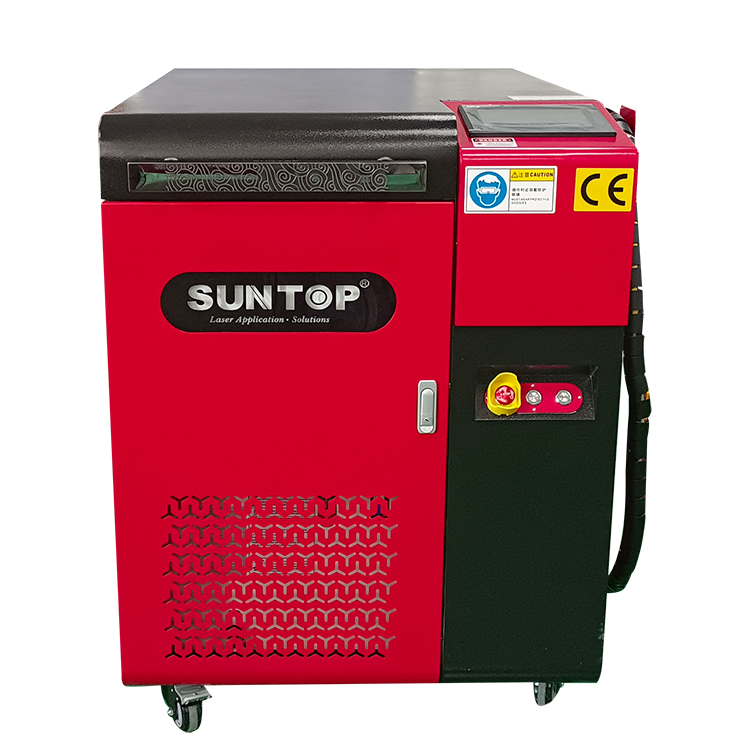
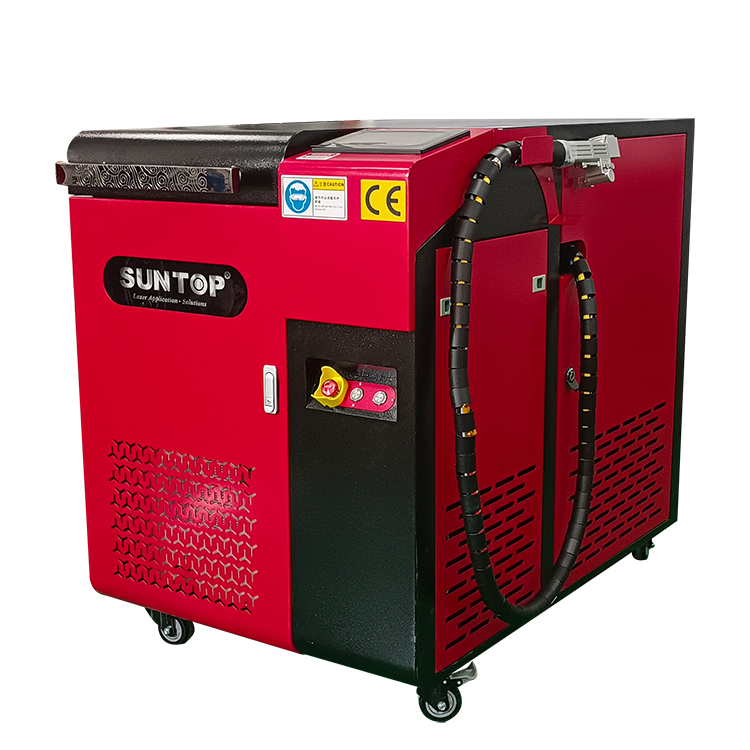
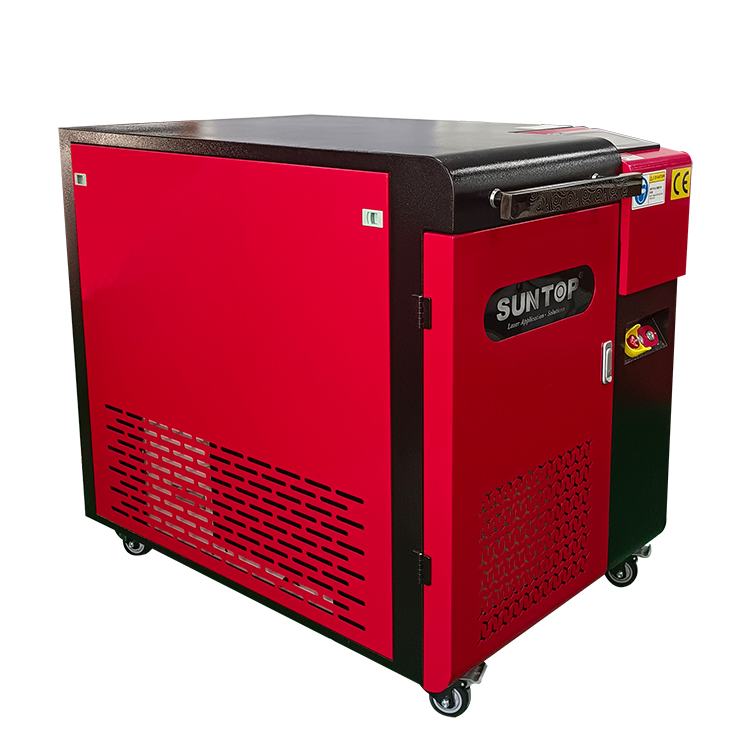
Today, we proudly announce the launch of a new product: a 6000W handheld laser cleaner. To meet market demand for high-efficiency cleaning equipment, we position this product as an ideal solution for industrial equipment maintenance, building surface cleaning, and a variety of other applications. With its powerful cleaning power and flexible handheld design, our 6000W laser cleaner will provide customers with unprecedented cleaning results and ease of use.
Suntop's newly launched 6000W handheld laser cleaner is a revolutionary cleaning device designed to meet efficient cleaning needs. Key features include:
● Powerful 6000W Laser Power: This laser cleaner utilizes up to 6000W of laser power to quickly and effectively remove various types of dirt, rust, and coatings, significantly improving cleaning efficiency. Whether it's industrial equipment or other surfaces, the powerful laser output ensures exceptional cleaning results.
● Up to 500mm Cleaning Width: With an exceptionally large 500mm cleaning width, this device is suitable for cleaning large areas. Users can process more surfaces in a shorter time without frequent repositioning, significantly improving work efficiency and making it particularly suitable for large industrial applications.
● Convenient Handheld Design: The 6000W handheld laser cleaner is designed with user convenience and flexibility in mind. Its user-friendly handheld structure allows operators to easily adjust the cleaning angle and position, adapting to different work environments and meeting diverse cleaning needs.
With these outstanding features, Suntop's 6000W handheld laser cleaning machine has undoubtedly become the industry's leading cleaning equipment, capable of providing customers with efficient and convenient cleaning solutions.
Laser cleaning technology is a cutting-edge surface cleaning method. Its principle is to irradiate a high-energy laser beam onto the surface of the object being cleaned. The concentrated release of laser energy evaporates or removes contaminants.
1. Environmentally friendly and chemical-free, reducing secondary pollution
One of the most significant features of laser cleaning is its environmental friendliness. Unlike traditional cleaning methods, laser cleaning does not require the use of chemical detergents and solvents, eliminating the environmental pollution and health risks associated with these chemicals. Furthermore, since the laser cleaning process does not produce chemical residues or secondary pollution, it ensures a safe and clean surface after cleaning, greatly complying with modern environmental protection requirements.
2. Improved cleaning efficiency, saving time and labor costs
Laser cleaning technology offers extremely high efficiency. In many cases, laser cleaning is several times faster than traditional cleaning methods, significantly reducing cleaning time. Because it can quickly remove a variety of contaminants, such as rust, oil, and dirt, operators can focus more on other tasks, effectively saving labor costs. Furthermore, the high controllability of laser cleaning reduces the need for repeated cleanings, further optimizing the overall workflow.
3. Applicable to Various Surface Materials
Laser cleaning technology has a wide range of applications, effectively cleaning a wide range of surfaces, including but not limited to metals (such as steel, aluminum, and copper) and concrete. This versatility makes laser cleaning an excellent choice for a wide range of applications, including industry, construction, automotive, and shipbuilding. Furthermore, laser cleaning can be tailored to the specific characteristics of each material, ensuring safety and effectiveness during the cleaning process without damaging the material structure.
Due to its environmentally friendly, efficient, and versatile characteristics, laser cleaning has become a key development in the modern cleaning industry. Suntop's 6000W handheld laser cleaning system not only offers significant technical advantages but also provides customers with high-performance solutions for a variety of applications, driving the industry towards more sustainable development.
Suntop's handheld laser cleaner, with its efficient and environmentally friendly cleaning capabilities, is widely applicable across a wide range of industries and fields.
1. Industrial Equipment Cleaning
In heavy industrial environments, equipment maintenance and upkeep are crucial. Over time, industrial equipment accumulates oil, rust, and other contaminants, which not only affect operational efficiency but can also lead to failure. The 6000W laser cleaner effectively removes these deposits, restoring equipment to its original performance and reducing downtime and maintenance costs. For large machinery, molds, and production line equipment, laser cleaning is a crucial solution for improving cleaning efficiency and protecting equipment.
2. Building Surface and Structure Maintenance
Buildings and infrastructure are subject to environmental degradation during use, and dust, contaminants, rust, and paint accumulate on their surfaces. The 6000W handheld laser cleaner can clean and maintain a variety of building materials, including concrete and metal components. Laser cleaning not only restores the aesthetic appearance of building surfaces, but also extends the lifespan of structures and reduces safety hazards caused by surface contamination.
3. Cleaning and Maintenance of Ships and Vehicles
Regular cleaning and maintenance are essential for both ships and vehicles. Laser cleaning machines can quickly remove marine biofouling, rust, and oil stains from ship hulls, as well as dirt from vehicle exteriors, maintaining a clean appearance while preventing corrosion and structural damage. For the shipping and automotive industries, the use of laser cleaning not only improves work efficiency but also ensures the safety and durability of ships and vehicles.
Suntop's 6000W handheld laser cleaning machine, with its outstanding performance, is suitable for the cleaning and maintenance needs of various industries. By providing precise, efficient, and environmentally friendly cleaning solutions, this equipment not only improves work efficiency but also reduces maintenance costs, achieving sustainable cleaning and maintenance practices. We look forward to seeing its widespread adoption and use in even more applications in the future.
1. User Feedback
Early adopters of the Suntop handheld laser cleaner have generally expressed satisfaction with its efficiency and ease of use.
● Outstanding cCleaning results: Customers report that the laser cleaner quickly and effectively removes a variety of contaminants, including rust, oil, and dust, leaving surfaces as smooth as new. Many users report significantly reduced cleaning time and improved work efficiency.
● Convenient operation: The handheld design allows for flexible operation, allowing users to clean in a variety of environments without the need for additional equipment, making it particularly suitable for hard-to-reach areas. Customers report that using the laser cleaner streamlines their workflow, reducing labor costs and burdens.
● Environmental performance: Many users highly praise the machine's chemical-free nature, stating that it protects the environment while safeguarding worker health. Customers generally agree that this makes laser cleaning an ideal industrial cleaning solution.
2. Market Demand Analysis
With the acceleration of industrialization and modernization, market demand for cleaning equipment is growing, primarily driven by the following factors:
● Increasingly stringent environmental regulations: More and more industry regulations require companies to reduce their environmental impact, leading to a growing demand for environmentally friendly cleaning technologies. Laser cleaning technology aligns with this trend, providing companies with efficient and environmentally friendly cleaning solutions.
● Industrial automation: Automated and intelligent production environments place increasing demands on cleaning equipment. High-power, flexible cleaning solutions will be key to the future market, and Suntop's 6000W handheld laser cleaning machine is well-suited to meet these growing demands.
● Expanding applications in multiple fields: Laser cleaning technology is gradually being adopted by various industries, from traditional manufacturing and construction to shipbuilding and automotive maintenance, offering broad market application prospects. It is expected that more industries will recognize the efficiency and advantages of laser cleaning, leading to its wider application.
3. Future Development Trends
Looking ahead, the laser cleaning market will see several clear development trends:
● Continuous technological innovation: With the advancement of laser technology, the power, efficiency, and functionality of cleaning equipment will continue to improve, driving progress in the laser cleaning industry.
● Increasing customization demand: Users will increasingly demand specific cleaning requirements, and customized laser cleaning solutions will occupy a significant position in the future market.
● Intelligent integration: The intelligentization of laser cleaning equipment and IoT integration will be the next development direction, enhancing operational convenience and data analysis capabilities.
Suntop's 6000W handheld laser cleaning machine has received positive customer feedback and has broad market application potential. As cleaning demand grows and the market environment changes, Suntop will continue to focus on technological innovation and improving customer satisfaction to seize the prospects of the laser cleaning market and promote the sustainable development of the cleaning industry.

With the launch of the 6000W handheld laser cleaning machine, Suntop once again demonstrates our commitment to innovation in laser cleaning technology. We remain customer-focused and continuously develop efficient and environmentally friendly cleaning solutions to meet the challenges of a wide range of industries. Our laser cleaning machines have earned widespread market recognition and customer acclaim for their superior performance, ease of use, and environmental friendliness.
We sincerely invite you to learn more about our customized products and solutions. Whether you're looking to improve your equipment's cleaning efficiency or need to address specific material cleaning challenges, Suntop can provide you with a customized laser cleaning solution. Let's work together to advance industry development and achieve a clean and sustainable future.
Table of Contents1. Introduction
Table of Contents1. Introduction2. Overview of UV Laser Marking Machines3. Marking Effects on Different Materials3.1 Non-metallic Materials3.2 Metal Materials4. Advantages of UV Laser Marking5. Application Examples of UV Laser Marking6. Conclusion
Table of Contents1. Introduction