Views: 169 Author: Site Editor Publish Time: 2026-03-05 Origin: Site
2. How UV Laser Marking Machines Work
3. Advantages of Personalized Customization
4. Applications of UV Laser Marking Machines in Personalized Product Customization
5. Steps for Implementing Personalized Customization
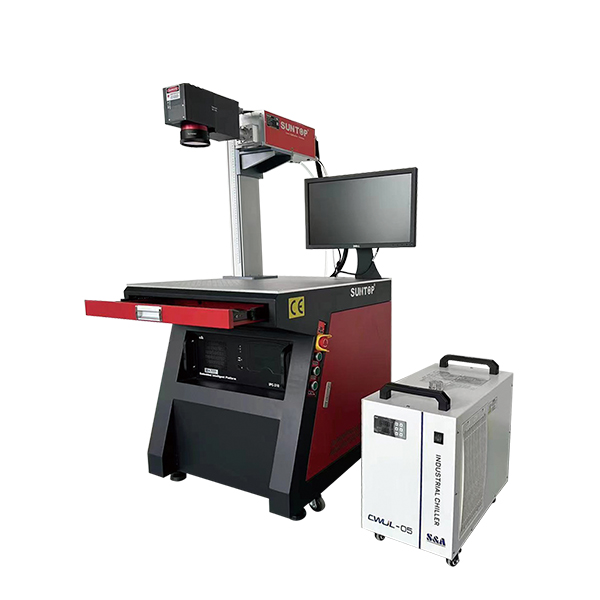
UV laser marking machines are devices that utilize ultraviolet laser technology for high-precision identification and pattern engraving. By employing short-wavelength lasers for non-contact marking on various material surfaces, they achieve clear and durable identification effects. Compared to traditional marking methods, UV laser marking offers significant advantages in material adaptability and marking precision. Widely applied across industries such as electronics, pharmaceuticals, food, and cosmetics, it ensures the stability of surface markings under conditions of abrasion, chemical corrosion, and high temperatures.

In today's market, personalized product customization is increasingly vital. As consumer demand for uniqueness and individuality grows, traditional mass production can no longer meet diverse market needs. Personalized customization not only enhances product value but also strengthens brand appeal and competitiveness. Using UV laser marking machines, businesses can add personalized identifiers such as customer names, special patterns, or QR codes to products. This approach elevates customer satisfaction, fosters brand loyalty, and opens new market opportunities. Against this backdrop, leveraging UV laser marking for personalized product customization is not only a prudent choice aligned with market trends but also an effective strategy for enhancing corporate competitiveness.
UV laser marking machine utilize ultraviolet lasers with a wavelength of 355 nanometers for identification and pattern engraving. UV lasers possess a short wavelength, enabling high-precision focusing on material surfaces to achieve exceptionally fine marking results. During the marking process, the laser beam acts on the material through high-frequency pulses, rapidly vaporizing the surface to form desired text, patterns, or barcodes. This non-contact processing method not only ensures high-quality markings but also prevents thermal damage to the material surface.
● High precision: Capable of micron-level fine marking, suitable for engraving complex graphics and small text.
● Wide applicability: Can mark on various materials including plastics, metals, glass, ceramics, etc.
● Environmental friendliness: Generates minimal waste and involves no chemicals, making it relatively eco-friendly.
● Laser Marking:
Working Principle: Laser marking typically uses lasers of different wavelengths (e.g., CO₂ lasers) for material processing. CO₂ lasers are suitable for non-metallic materials but yield less pronounced results on metals compared to UV lasers.
Marking Effect: UV lasers produce finer and clearer markings on material surfaces, particularly excelling in applications requiring high contrast.
● Inkjet Printing:
Working Principle: Inkjet printing forms patterns by ejecting liquid ink onto material surfaces. This process avoids high-temperature lasers but typically requires drying time.
Durability: Inkjet marks may fade over time, through friction, or upon chemical exposure, offering poor longevity; UV laser marking is permanent, maintaining integrity even in extreme environments.
● Etching and Branding:
Working Principle: Etching and branding methods typically use physical tools (such as cutting blades or heated irons) to process materials.
Flexibility: UV laser marking offers greater flexibility, enabling rapid design changes without tool replacement.
Overall, UV laser marker demonstrate significant advantages in personalized product customization and various other applications due to their high precision, versatility, and eco-friendliness. Click here for more information
1. Enhancing Product Value-Added
Personalized customization significantly boosts product value-added by incorporating unique identifiers, patterns, or text onto items. This distinctiveness transforms products from mere commodities into tangible expressions of consumer emotions and identity. By offering personalized options, brands strengthen consumer identification with the brand, thereby elevating brand equity. Personalized products often command higher prices, yielding greater profits for businesses.
2. Strengthening Market Competitiveness
In today's fiercely competitive market, personalized customization effectively meets customers' unique needs, helping businesses stand out in a highly homogenized landscape. By offering tailored services, companies can create differentiated products that cater to the specific preferences and requirements of diverse customer segments. This strategy enables brands to better navigate market diversification trends, attract greater consumer attention and purchases, thereby bolstering their competitive edge.
3. Boosting Customer Loyalty
Personalized products foster deeper emotional connections with consumers. By delivering tailored solutions, brands make customers feel valued and special, thereby increasing satisfaction and loyalty. Consumers are more likely to develop emotional attachment to brands that meet their personalized needs, leading to higher repurchase rates and word-of-mouth promotion. Long-term, cultivating such loyalty helps businesses build a stable customer base, further driving growth.
Personalized customization not only elevates product value and strengthens market competitiveness but also deepens the emotional bond between customers and brands. As consumer demand for personalization continues to grow, adopting personalized customization strategies will become a crucial pathway for businesses to enhance market performance and customer satisfaction. Click here for more information
1. Product Identification
UV laser marking machines efficiently and precisely apply serial numbers, barcodes, or QR codes onto product surfaces. These markings facilitate product tracking and management while enhancing security and anti-counterfeiting capabilities. Utilizing UV laser technology, the marked content remains clearly legible and resistant to abrasion, effectively ensuring the longevity of identification information throughout the product lifecycle. Consequently, many manufacturers opt for UV laser marking on their products to meet industry standards and regulatory requirements, achieving higher efficiency in product identification and traceability.
2. Personalized Design
The high-precision marking capability of UV laser marking machines enables businesses to offer personalized design services to customers. Customers can choose to engrave names, personalized patterns, or unique designs on products, making each item distinctive and exclusive. This personalized creation not only enhances customer satisfaction but also elevates product value, making them ideal gifts or keepsakes. For instance, personalized engraving on materials like metal, glass, or wood creates truly one-of-a-kind products, helping attract and retain customers.
3. Success Stories in the Gift Market
The application of UV laser marking machines is particularly significant in the gift market. As customer demand for personalized gifts grows, many businesses are leveraging UV laser marking to produce customized gifts and souvenirs. Examples include couple-customized necklaces, personalized Mother's Day or Father's Day gifts, and corporate-branded office supplies—all made possible by UV laser marking technology. These products, enhanced with personalized markings and designs, not only add emotional value but also elevate brand image, becoming bestsellers in the market.
UV laser marking machines hold broad application prospects in personalized product customization. Whether for product identification, personalized design, or successful gift market cases, they demonstrate their potential in enhancing product value and meeting consumer demands. As market demand for personalization continues to grow, UV laser marking technology will continue to drive the development of this industry. Click here for more information
1. Market Research
Successful personalized customization begins with thorough market research. Businesses must identify target customer needs and emerging trends to gain a comprehensive understanding of shifting consumer preferences. This process involves using surveys, focus group discussions, and market analysis tools to collect data on consumer habits, preferences, and purchasing motivations. Through extensive market research, companies can pinpoint core customer segments and uncover unmet needs, laying the groundwork for subsequent personalized solutions.
2. Design Phase
After defining target customer requirements, the design phase commences. Utilizing tools like CAD, businesses create personalized graphics and logos. These designs must integrate customer needs with the company's brand identity to ensure both aesthetic appeal and practicality. Close communication with clients during this stage is essential to align all design details with their expectations. Through iterative design revisions and reviews, the final personalized patterns are finalized.
3. Machine Setup
Once designs are finalized, proceed with installing and commissioning the UV laser marking machine. Configure the machine to required specifications, including laser power, speed, frequency, and other settings to ensure precise marking. During commissioning, technicians must conduct multiple tests to verify proper equipment functionality and achieve accurate marking results on various materials. Additionally, operators should receive training to familiarize themselves with equipment operation and safety protocols.
4. Production Process
Following machine setup, the company can proceed to small-batch production. During this phase, manufacturing aligns with order requirements while concurrent quality inspections ensure each product meets standards. Leveraging the UV laser marking machine's high-efficiency production capacity, the company can swiftly respond to customer demands and even deliver within short timeframes. Comprehensive production monitoring and quality control systems enable timely identification and resolution of issues during manufacturing to guarantee product quality.
5. Feedback and Improvement
Finally, the personalized customization process does not end here. Collecting customer feedback is key to achieving continuous improvement. Through customer opinions and suggestions, businesses can gain deep insights into the strengths and weaknesses of personalized customization, using this foundation for product optimization and process refinement. This not only enhances the quality of existing products but also provides crucial reference for future product development. Regularly evaluating market response and customer satisfaction helps businesses maintain a competitive edge.
The steps for implementing personalized customization encompass market research, design, machine setup, production processes, and feedback/improvement. Through this systematic approach, companies can effectively meet customer needs, enhance product value, and secure a competitive edge in an increasingly challenging market.
With surging consumer demand for uniqueness and personalized experiences, the market for customized products is entering a golden age of rapid growth. Increasingly, brands are prioritizing personalized services, committed to delivering products that not only meet basic consumer needs but also reflect their identity and distinctive tastes. In the coming years, intelligent and automated solutions are expected to become key drivers of customization. Businesses will leverage data analytics and artificial intelligence to more accurately uncover customer preferences, enabling swift responses to market demands.
Simultaneously, continuous advancements in UV laser marking technology provide robust support for personalized production. The precision and flexibility of this technology enable businesses to achieve intricate marking designs on diverse materials, significantly expanding the variety of personalized products. Furthermore, as equipment costs gradually decrease and production efficiency improves, more small businesses and entrepreneurs will gain access to this market, driving the widespread adoption of personalized products. Overall, UV laser marking technology is poised to become an indispensable innovative force in the realm of personalized customization.
Personalized customization plays an increasingly vital role in today's market, not only fulfilling consumers' demand for uniqueness and individuality but also delivering competitive advantages and higher added value to businesses. As consumer expectations for customized products continue to rise, businesses must adapt flexibly to this trend, creating solutions that meet individual needs. In this regard, UV laser marking machines are playing a pivotal role. With advantages such as high precision, strong adaptability, and environmental friendliness, they provide robust technical support for the design and production of personalized products.
Therefore, encouraging businesses to actively adopt UV laser marking technology will be an effective strategy to drive innovation and differentiated competition. Through this advanced technology, companies can not only respond swiftly to market changes and enhance customer satisfaction but also establish a distinctive brand image in consumers' minds. In an increasingly competitive market environment, embracing personalized customization and UV laser marking technology will position businesses to gain a favorable advantage in future development.

Table of Contents1. Introduction
Table of Contents1. Introduction2. Overview of UV Laser Marking Machines3. Marking Effects on Different Materials3.1 Non-metallic Materials3.2 Metal Materials4. Advantages of UV Laser Marking5. Application Examples of UV Laser Marking6. Conclusion
Table of Contents1. Introduction