Views: 146 Author: Site Editor Publish Time: 2026-10-16 Origin: Site
3. Detailed Overview of Material Compatibility
4. Key Advantages Over Traditional Processes
6. Equipment Performance and Stability Advantages
7. Industry Value and Development Trends
As industries such as precision manufacturing, electronics, healthcare, and cultural/creative sectors increasingly demand higher levels of precision and integrity in product marking, the drawbacks of traditional marking processes have become more pronounced. Conventional marking methods often suffer from issues such as thermal damage to the substrate, limited material compatibility, restricted engraving precision, and the production of rough, non-durable markings. These limitations fall short of the standards required for high-quality, precision-oriented industrial production, thereby hindering product quality enhancement and process innovation.
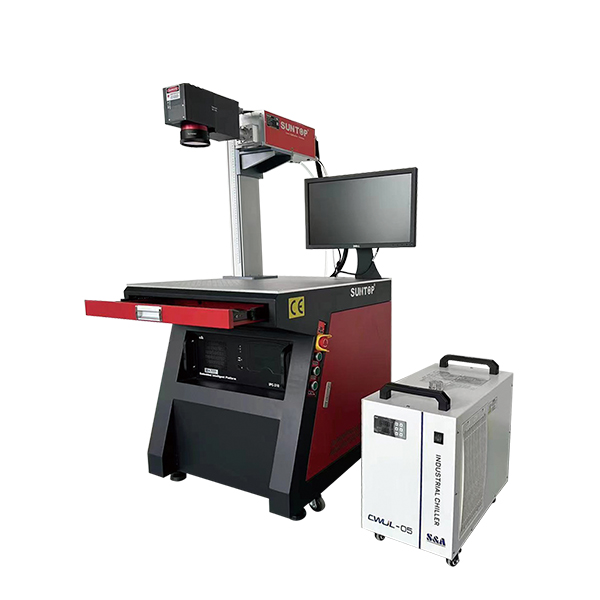
To address these common industry pain points, a newly upgraded, multi-power UV laser marking system has been launched. Available in 3W, 5W, 10W, 15W, and 20W configurations, this equipment offers the flexibility to meet diverse marking requirements—accommodating various materials, precision levels, and levels of process complexity. Leveraging advanced "cold processing" UV laser technology, the system eliminates thermal damage, ensuring the substrate remains intact. It is compatible with a wide range of materials and capable of micron-level precision marking, making it an ideal solution for precision identification across numerous industries.
With core advantages including high processing efficiency, precise and seamless results, broad material compatibility, and low operational costs, this multi-power UV laser marking system effectively overcomes the shortcomings of traditional methods. It provides high-quality industrial marking solutions for a variety of manufacturing enterprises, empowering the manufacturing sector to achieve more efficient, precise, and cost-effective marking processes.
1. Multi-Power Modular Design: The system offers selectable power levels—3W, 5W, 10W, 15W, and 20W—allowing for flexible adjustment. This versatility enables precise adaptation to various marking requirements, whether for delicate, lightweight engraving or deeper, more substantial marking, making it suitable for a wide range of diverse processing applications.
2. Advanced UV "Cold" Processing Technology: Utilizing state-of-the-art UV "cold" processing, the system operates without thermal radiation or heat accumulation. This effectively prevents issues such as thermal deformation, edge scorching, or surface discoloration, ensuring the integrity of the workpiece substrate and significantly increasing the product yield rate.
3. Ultra-Fine Marking Capability: With high-precision laser focusing and a uniform, refined beam spot, the system effortlessly produces intricate, high-precision patterns—including micro-characters, precise QR codes, delicate textures, and transparent-style scales. The resulting marks are clear, consistent, and highly durable, meeting the rigorous standards required for high-end precision manufacturing.
4. Intelligent, User-Friendly Operating System: Equipped with an intelligent control system, the unit comes with pre-configured, industry-tested marking parameters that can be accessed with a single click, eliminating the need for complex setup. The interface is intuitive and easy to learn, allowing new operators to get up to speed quickly—thereby shortening training cycles and reducing labor and operational costs for the enterprise.

1. Hard Metals: Suitable for marking stainless steel, aluminum alloys, copper, and various hardware components. The markings are clear and uniform, offering strong adhesion and high resistance to friction and corrosion. They remain durable over long-term use, meeting the requirements for permanent, traceable identification on industrial parts.
2. Plastics and Polymers: Compatible with materials such as ABS, PVC, acrylic, and various plastic housings. Utilizing a "cold processing" technique, the marking process causes no thermal damage, edge chipping, or discoloration (yellowing or whitening). The resulting marks are refined and smooth, preserving the original integrity of the workpiece's appearance.
3. Flexible Materials: Can be reliably applied to flexible materials, including leather, denim, and various textiles. The markings are intricate and possess a three-dimensional quality; the engraving process does not damage or tear the fabric, effectively preventing deformation or wrinkling. This is ideal for custom creative products and textile labeling.
4. Specialty Materials: Capable of marking challenging materials such as glass, ceramics, resins, and translucent substances. It achieves a precise, uniform, and subtle engraving effect without damaging the substrate—perfect for high-end jewelry, translucent components, and artisanal crafts that require delicate, detailed marking.
1. Versus Ink-Based Screen Printing: Eliminates reliance on consumables such as inks and screens. It removes the need for repetitive color matching, plate making, and alignment, resulting in significant production cost savings. The markings exhibit strong adhesion, high wear resistance, and excellent color retention. Furthermore, the process generates no waste gas or wastewater, making it a more eco-friendly, "green" solution.
2. Versus Fiber Laser Marking: Utilizes UV "cold processing" technology, which avoids high-temperature thermal effects. This fundamentally prevents issues such as scorching, yellowing, deformation, or cracking in heat-sensitive materials—including plastics, leather, and glass—thereby expanding the range of processable materials and increasing product yield rates.
3. Versus Chemical Etching: Eliminates the need for corrosive acid or alkaline chemicals, ensuring no hazardous chemical residues and removing safety risks. The process is safe, environmentally friendly, and highly efficient; it requires no complex pre-treatment, offers faster processing speeds, and is well-suited for large-scale industrial production.
1. Electronics and Digital Industry: Enables precise marking of micro-characters, QR codes, and other data on components such as precision electronic parts, mobile phone structural components, and circuit boards. This facilitates full-lifecycle product traceability and meets the high-standard marking requirements of the precision electronics sector.
2. Medical Device Industry: Suitable for the precise marking of sterile instruments, medical consumables, and precision medical components. The marking process is contamination-free and leaves no residue, ensuring compliance with the strict hygiene and safety standards required for medical manufacturing.

3. Gifts and Creative Products: Supports the engraving of personalized patterns and text on a wide range of materials, including leather goods, acrylic ornaments, and fabric-based creative items. The resulting marks are delicate and refined, catering to diverse, customized product requirements.

4. Hardware and Automotive Parts: Designed for the permanent marking of model specifications, brand logos, and anti-counterfeiting codes on various metal components and automotive parts. The marks are clear, wear-resistant, and durable—ideal for standardized, high-volume industrial production.

5. Packaging and Printing Industry: Capable of high-precision anti-counterfeiting marking and pattern engraving on transparent packaging, resin products, and glass containers. The process leaves no trace and causes no damage to the substrate, resulting in a high-end, sophisticated finish for product packaging.
1. Stable and Reliable Laser Source: Equipped with a high-quality ultraviolet (UV) laser source, the system offers a long service life and produces a uniform, refined laser spot. It ensures exceptional consistency and repeatability across all marked parts, effectively eliminating issues such as color variation or inconsistent marking depth during batch production—making it perfectly suited for large-scale industrial manufacturing.
2. Low Energy Consumption and High Production Efficiency: The equipment features low overall power consumption and high energy efficiency. It delivers significant energy savings during prolonged, continuous operation. While maintaining high-speed, high-precision marking, it substantially reduces long-term electricity costs and overall operational expenses, offering an outstanding price-performance ratio.
3. Robust, Durable, and Easy to Maintain: Designed with a stable, sturdy structure, the system operates reliably with a low failure rate and strong resistance to external interference, allowing it to function effectively even in complex factory environments. Routine maintenance is straightforward and requires no specialized, complex procedures. The equipment supports long-term, uninterrupted operation, ensuring production schedules remain on track.
4. Compliant, Safe, and Eco-friendly: The equipment strictly adheres to industrial safety standards and holds all necessary compliance certifications, ensuring safe and stable operation. The marking process generates no chemical residues, dust, exhaust gases, or other pollutants. As an environmentally friendly processing solution, it aligns with the sustainability requirements of modern, intelligent manufacturing.
1. Meeting the Demands of Smart Manufacturing Upgrades: As the transition toward Industry 4.0 and intelligent production continues, the manufacturing sector increasingly requires precise, standardized, and traceable product identification. This multi-power UV laser marking machine enables micron-level precision marking and permanent, traceable coding. It integrates seamlessly into the quality control systems of high-end manufacturing sectors—such as electronics, medical devices, and automotive components—perfectly aligning with the industry’s shift toward higher precision, greater intelligence, and increased digitalization.
2. Overcoming the Material Limitations of Traditional Processing: This system transcends the constraints of conventional marking equipment, which is often limited to metals or rigid materials. With its universal material compatibility, it can process a wide range of substrates, including metals, plastics, leather, glass, and acrylic. It effectively addresses the challenges of marking diverse product types and complex, multi-material components, significantly expanding the scope of industrial laser marking applications.
3. Driving Cost Reduction, Quality Improvement, and Efficiency: By eliminating the drawbacks associated with traditional methods—such as screen printing, chemical etching, or conventional thermal processing—this system requires no consumables and generates no chemical pollution. It offers high yields and rapid processing speeds, helping enterprises upgrade their marking processes to be more standardized, sophisticated, and eco-friendly. This not only reduces material waste and labor costs but also enhances the aesthetic quality of products and their overall market competitiveness, providing a reliable, intelligent processing solution for efficient, low-carbon, and high-volume manufacturing.
With its full-power configuration, compatibility with a wide range of materials, and high-precision "cold processing" capabilities, this multi-power UV laser marking machine offers exceptional versatility and practicality. It is well-suited for diverse sectors—including electronics, medical devices, hardware, creative products, and packaging—effectively overcoming the limitations of traditional marking methods, such as low precision, potential material damage, and high costs. It thus meets the modern industrial demand for varied, high-precision marking solutions.
As the precision manufacturing industry continues to evolve—with a growing emphasis on refinement, eco-friendliness, and intelligence—this UV laser marking machine is poised to expand into new material applications and operational scenarios, consistently driving quality improvements, efficiency gains, and process innovation within the manufacturing sector.
Looking ahead, the brand remains committed to the research, development, and manufacturing of laser equipment. Staying true to its core mission of technological innovation, the company will continue to optimize equipment performance and user experience, providing clients with stable, professional, and comprehensive one-stop solutions for precision laser marking.
content is empty!
Table of Contents1. Introduction
Table of Contents1. Introduction2. Overview of UV Laser Marking Machines3. Marking Effects on Different Materials3.1 Non-metallic Materials3.2 Metal Materials4. Advantages of UV Laser Marking5. Application Examples of UV Laser Marking6. Conclusion
Table of Contents1. Introduction