Views: 47 Author: Site Editor Publish Time: 2025-11-05 Origin: Site
2. Principles of UV Laser Marking
3. Advantages of UV Laser Marking in Anti-Counterfeiting
5. Combining with Other Anti-Counterfeiting Technologies
In today's increasingly complex global market environment, product anti-counterfeiting has become a focal point for both businesses and consumers. The rampant proliferation of counterfeit and substandard products not only severely undermines consumer rights but also inflicts significant damage on brand reputation and corporate profits. Particularly within the high-value goods and luxury goods sectors, ensuring product authenticity and integrity has emerged as a critical factor in enhancing market competitiveness. Consequently, an effective anti-counterfeiting system not only safeguards consumer interests but also builds enduring trust for brands.

In this regard, innovations in UV laser marking technology offer a novel solution for product anti-counterfeiting. This advanced laser marking technique combines high precision with high efficiency, enabling companies to engrave unique identifiers, QR codes, or intricate patterns onto products. These markings are not only difficult to replicate but also exhibit excellent weather resistance, maintaining clarity across diverse environments and effectively deterring counterfeiting. By adopting UV laser marking technology, companies can achieve more efficient product tracking and verification, further enhancing brand protection capabilities to meet increasingly stringent market challenges.
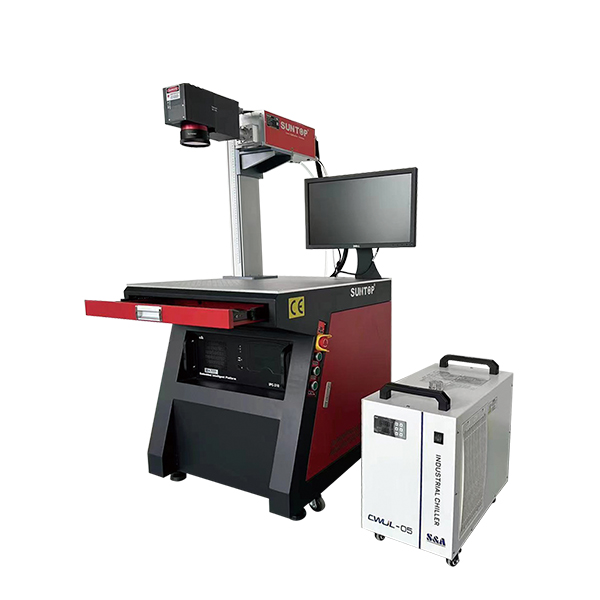
UV laser marking is a technique that uses a UV laser beam to mark material surfaces. Its mechanism primarily relies on the laser's high energy density and unique wavelength characteristics. During this process, the UV laser beam is absorbed by the material, generating instantaneous thermal energy that induces physical and chemical changes on the surface. Specifically, the UV laser's short wavelength (typically around 355nm) effectively focuses the laser energy onto an extremely small area, enabling high-precision marking.
During marking, the laser beam is emitted from the laser source and focused into a minute laser spot via a focusing lens. As this spot rapidly traverses the material surface, the intense heat causes the surface layer to evaporate or sublimate, forming a permanent and clear mark. Due to the UV laser's minimal heat-affected zone, the marking process causes negligible thermal damage to the material, ensuring the legibility and aesthetic quality of the markings.
This technology not only offers high precision and resolution but also enables the marking of intricate patterns and fine text. Consequently, it finds extensive application across diverse sectors including jewelry, electronics, pharmaceuticals, and food packaging. UV laser marking technology provides brands with exceptional anti-counterfeiting and traceability capabilities through its outstanding marking quality and durability, making it an essential tool in modern production processes.
1. Precision Marking and Uniqueness
UV laser marking technology enables extremely fine engraving on product surfaces, capable of imprinting unique QR codes, barcodes, or proprietary identifiers. These distinctive markings not only provide identification for each product but also offer high security, making replication or counterfeiting nearly impossible. For brands, this uniqueness enhances consumer trust while effectively tracking product distribution and ensuring supply chain transparency.
Additionally, UV lasers can create microscopic patterns or intricate designs to enhance mark recognition. By applying unique artistic designs or complex anti-counterfeiting features (such as microtextures or invisible marks) to product surfaces, companies can effectively prevent counterfeiting and forgery. These minute, intricate details are often imperceptible to the naked eye of the average consumer, further guaranteeing product authenticity.
2. Non-Destructive Marking Technology
Another major advantage of UV laser marking is its non-destructive nature. This technology enables high-quality marking without damaging or altering the product surface, ensuring the item retains its integrity and appearance post-marking. Due to the laser's minimal heat-affected zone, thermal deformation or material scorching is virtually eliminated during the process, preserving the product's aesthetics and quality.
UV laser marking is compatible with a wide range of materials, including metals, plastics, glass, and even ceramics. Under UV laser exposure, all materials form durable markings with excellent adhesion and resistance, ensuring long-term retention on products and significantly enhancing anti-counterfeiting effectiveness. This makes UV laser marking a crucial anti-counterfeiting tool across industries such as medical devices, electronics, and luxury goods.
3. Abrasion Resistance and Durability
Beyond its precision marking capabilities, UV laser marking excels in abrasion resistance and longevity for anti-counterfeiting applications. Markings created on UV-laser-marked products typically exhibit strong abrasion resistance, meaning they resist fading or wear even during regular use. Whether subjected to repeated friction or exposed to humid environments, these markings remain clear and legible.
More importantly, the chemical resistance of UV laser markings enables them to withstand corrosion from various chemicals, ensuring product markings remain unaffected by environmental factors such as temperature fluctuations, UV exposure, or chemical substances. This stability makes UV laser marking an ideal solution for sectors with stringent anti-counterfeiting requirements, including cosmetics, pharmaceuticals, and food packaging. By guaranteeing the longevity of identification information, brands can better guard against counterfeiting, thereby enhancing their market competitiveness. Click here for more information

1. Anti-Counterfeiting Measures for Luxury Brands
A renowned luxury brand recognized the threat counterfeit goods posed to its image and consumer trust, deciding to adopt UV laser marking technology to enhance product authenticity. The brand implemented intricate laser markings on its handbags and accessories, featuring microscopic identifiers and complex patterns that are virtually impossible to replicate. By applying this technology, the brand not only added unique QR codes to products—enabling consumers to verify authenticity with a simple scan—but also achieved a significant reduction in counterfeiting rates. This initiative markedly boosted consumer trust and loyalty, further strengthening the brand's market competitiveness.
2. Traceability System for Food Packaging Enterprises
Addressing widespread traceability challenges in the industry, a food packaging enterprise employs UV laser marking to print QR codes with unique identifiers on its packaging. Consumers can scan these codes to access detailed product information, including production dates, batch numbers, and supply chain details. This transparency fosters greater consumer confidence in purchasing the brand's products, significantly boosting its market share. Simultaneously, the company substantially reduced counterfeit product circulation through UV laser marking. Consumer feedback revealed enhanced brand recognition and trust, creating a distinct competitive advantage over rivals.
3. Applications in the Electronics Sector
An electronics manufacturer employs UV laser marking on its products, incorporating anti-counterfeiting QR codes and brand logos. These markings deliver high precision and abrasion resistance while withstanding extreme environments, ensuring long-term clarity and readability. By highlighting this advanced anti-counterfeiting technology in marketing campaigns, the manufacturer successfully attracted consumers prioritizing quality and safety. Exceptional consumer satisfaction with the anti-counterfeiting capabilities boosted the brand's market reputation and credibility, driving corresponding sales growth and further solidifying its leadership position within the industry.
As demonstrated by the above applications, the innovative use of UV laser marking technology across various industries provides effective support for brands seeking to enhance anti-counterfeiting capabilities and market competitiveness. Whether in luxury goods, food packaging, or electronics, this technology delivers unique identification and traceability features that strengthen consumer trust and reduce the risk of counterfeit products. As more brands recognize the immense potential of UV laser marking, this technology is expected to play an increasingly critical role in future anti-counterfeiting applications. Click here for more information
In today's market, a single anti-counterfeiting technology often struggles to withstand increasingly sophisticated counterfeiting practices. Therefore, integrating UV laser marking with other anti-counterfeiting measures—such as watermarks, invisible printing, and RFID technology—can significantly enhance a product's overall anti-counterfeiting effectiveness. For instance, integrating UV laser marking with watermark technology on product packaging provides anti-counterfeiting features that are imperceptible to the naked eye while revealing the watermark under specific light sources. This adds another layer of security for the brand. Consumers can verify authenticity through both the marking and the concealed watermark, making it harder for counterfeiters to replicate.
Simultaneously, integrating RFID technology with UV laser marking enables brands to apply unique QR codes or RFID tags to products. This approach not only provides distinct identification codes but also facilitates real-time tracking and storage of product information. Consumers can effortlessly verify product authenticity by scanning the QR code or accessing the RFID information. This multi-layered anti-counterfeiting solution delivers robust protection while enhancing consumer engagement and trust, ensuring brands maintain a competitive edge in the marketplace. Through these integrated strategies, enterprises can more effectively combat counterfeit challenges and build a safer, more reliable product ecosystem. Click here for more information
With the continuous advancement of technology, laser marking technology holds vast potential for application in anti-counterfeiting. In the future, laser marking will increasingly integrate with emerging technologies such as artificial intelligence (AI), the Internet of Things (IoT), and big data analytics, thereby enhancing its functionality and adaptability. For instance, AI can analyze consumer behavior and market data to optimize product anti-counterfeiting designs and marking processes. Through real-time monitoring and data analysis, brands can swiftly identify potential counterfeiting activities and adjust strategies accordingly, enabling more precise market responses.
Simultaneously, the emergence of new materials will unlock fresh application scenarios for laser marking technology. For instance, utilizing high-performance nanomaterials, biodegradable materials, and novel composite materials, laser marking can not only significantly enhance marking durability and clarity but also align with environmental sustainability principles. In product packaging and label design, integrating smart materials enables dynamic anti-counterfeiting features—such as materials that change color or patterns under specific conditions—offering consumers more intuitive and secure product verification methods.
As technology advances and materials innovate, laser marking technology will continue to evolve in anti-counterfeiting applications, delivering superior security and user experiences. Brands must stay attuned to these trends and actively explore the integration of new technologies and materials to secure their position in an increasingly competitive market.
In today's fiercely competitive market environment, enhancing product anti-counterfeiting capabilities through UV laser marking has become a crucial strategy for enterprises to protect their brands and maintain consumer trust. With its high precision, wear resistance, and non-destructive properties, UV laser marking technology provides products with unique and irreplicable identifiers, significantly reducing the risk of counterfeit goods. This not only strengthens consumer trust in the brand but also enhances the company's competitiveness in the market, ensuring a solid foothold in the ever-changing business landscape.
Encouraging enterprises to actively adopt UV laser marking and integrate it with other anti-counterfeiting technologies to develop a more comprehensive anti-counterfeiting system will lay a solid foundation for the sustainable development of the brand. Facing the continuously evolving market demands and technological innovations of the future, enterprises should persistently explore and invest in advanced technologies to ensure their products maintain a leading position in anti-counterfeiting and security. Through such strategic planning, brands can more effectively resist counterfeiting, safeguard their market position, and simultaneously provide consumers with safer and more reliable product choices.
Table of Contents1. Introduction
Table of Contents1. Introduction2. Overview of UV Laser Marking Machines3. Marking Effects on Different Materials3.1 Non-metallic Materials3.2 Metal Materials4. Advantages of UV Laser Marking5. Application Examples of UV Laser Marking6. Conclusion
Table of Contents1. Introduction