Views: 27 Author: Site Editor Publish Time: 2025-10-01 Origin: Site
2. Working Principle of Handheld Laser Welding Machines
3. Advantages of Handheld Laser Welding Machines
4. Suitability for Complex Welding Shapes
5. Challenges and Solutions in Material Diversity
6. Market Prospects and Development Trends
Handheld laser welding machines are advanced devices that utilize laser beams for metal welding. Compared to traditional welding techniques, these machines offer higher precision and flexibility, finding widespread application in metal fabrication, automotive manufacturing, aerospace, and precision equipment maintenance. By concentrating intense laser energy, this welding equipment rapidly heats the welded materials, achieving efficient, reliable, and aesthetically pleasing results.
The rise of handheld welding technology in recent years stems from increased demands for automation and efficient production. Traditional welding methods often require complex clamping and fixture processes, and face limitations when welding in confined or hard-to-reach areas. Handheld laser welding machines, with their lightweight and flexible design, can perform welding operations in various complex environments and shapes, significantly improving work efficiency while reducing requirements for operational space. Furthermore, the broad adaptability of handheld laser welding machines allows them to simultaneously weld multiple materials—such as stainless steel, aluminum, and copper—meeting the growing demand for diversity in modern manufacturing. This technological advancement signifies the welding industry's progression toward greater efficiency and intelligence, opening new opportunities for development across various sectors.
1. Fundamental Principle of Laser Welding
Laser welding utilizes the high energy density of a laser beam to locally heat metal materials to their melting point, thereby achieving a welded joint. When the laser beam strikes the material surface, the material absorbs the laser energy and rapidly heats up to a molten state. During the welding process, liquid metal forms, which ultimately cools and solidifies into a stable joint. Laser welding offers high precision and controllability because the laser beam's energy output and irradiation position can be precisely regulated.
Advantages of laser welding include a smaller heat-affected zone, reduced risk of material deformation, and improved weld strength and surface quality. By adjusting parameters such as laser wavelength, power, welding speed, and focal length, it can meet welding requirements for various materials and thicknesses.
2. Structure and Operation of Handheld Laser Welding Machines
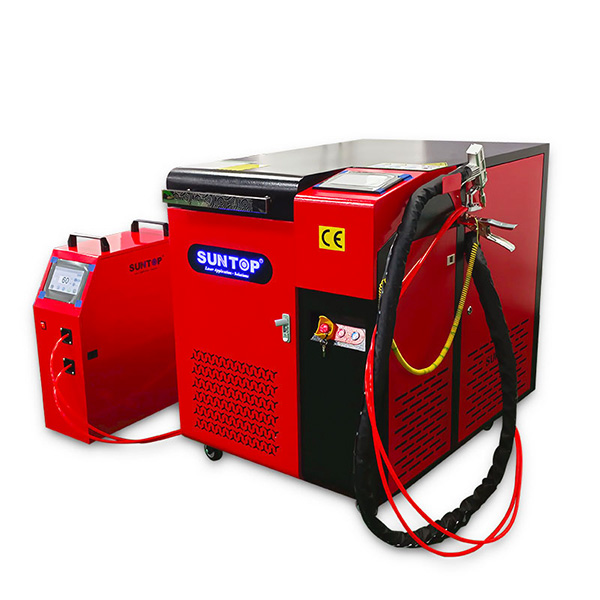
Handheld laser welding machines typically consist of the following main components:
● Laser source: Generates the laser beam, commonly using fiber lasers or solid-state lasers, offering high efficiency and long service life.
● Optical system: Includes lenses and mirrors to focus the laser beam, enhancing energy density for welding.
● Control System: Sets welding parameters (e.g., laser power, welding speed) and regulates laser emission and exposure duration.
● Cooling System: Maintains safe operating temperatures for the laser source and components, preventing overheating.
● Handheld Welding Head: The operator-held section, often equipped with auxiliary devices for precise control of welding position and angle.
Operationally, handheld laser welding machines are relatively simple and convenient. The operator first configures the required laser parameters based on the characteristics of the materials to be welded. Then, the handheld welding head is aligned with the welding position, and upon pressing the start button, the laser beam automatically emits and performs welding according to the set parameters. During the welding process, the operator can freely move the welding head, enabling flexible operation for complex shapes and different positions.
This flexible and convenient operation allows handheld laser welding machines to perform precise welding in many hard-to-reach areas, significantly improving the efficiency and quality of welding work.
Handheld laser welder offer multiple significant advantages due to their unique design and technology, making them widely adopted in the welding industry.
1. Flexibility and Mobility
● Suitable for diverse work environments and scenarios
The lightweight design of handheld laser welding machines enables flexible operation across various work settings—whether on factory production lines, in repair workshops, or at customer sites—meeting welding demands with ease. This mobility makes them an ideal choice for diverse engineering requirements.
● Capable of maneuvering in confined or irregular spaces
Traditional welding equipment often requires substantial operating space, whereas handheld laser welding machines can easily access tight, hard-to-reach areas. For instance, when welding complex mechanical components or structures, operators can freely adjust welding angles as needed to achieve precise welds.
2. High Precision and Welding Quality
● Achieves Detailed and Consistent Welding Results
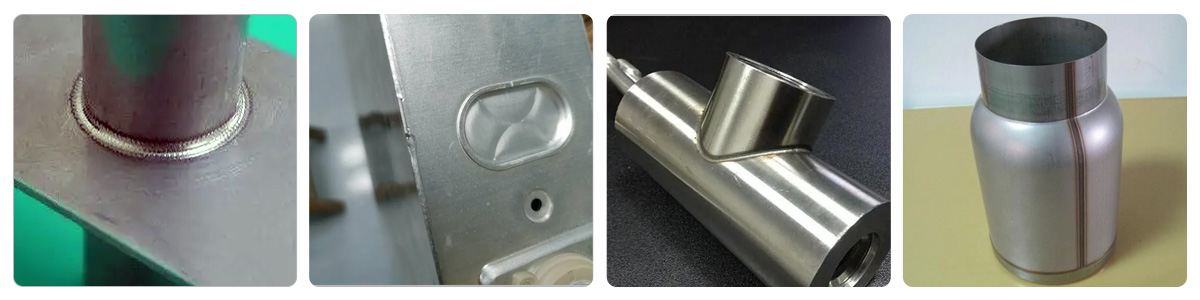
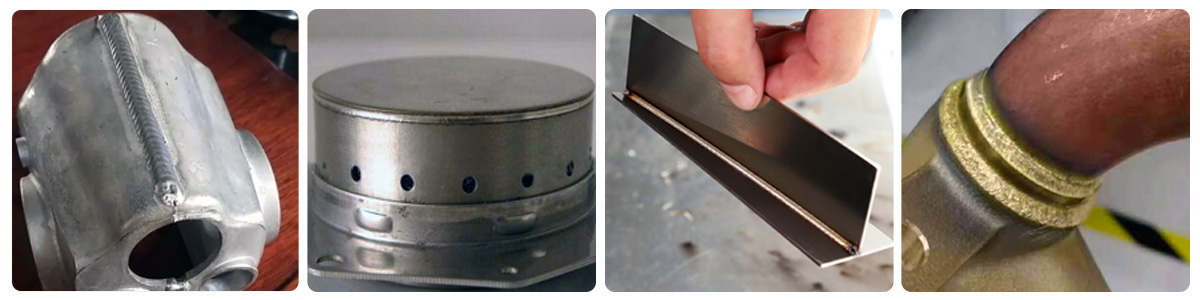
Leveraging the laser's high energy concentration, handheld laser welders can weld within extremely small areas, producing high-precision welds. This results in finer welds with smooth surfaces, requiring little to no post-processing.
● Minimizes Heat-Affected Zone and Reduces Material Deformation
Laser welding produces a relatively small heat-affected zone, effectively minimizing material deformation and thermal distortion. This advantage is particularly valuable in applications demanding exceptional weld quality, ensuring the structural integrity and strength of the welded components.
3. High Adaptability
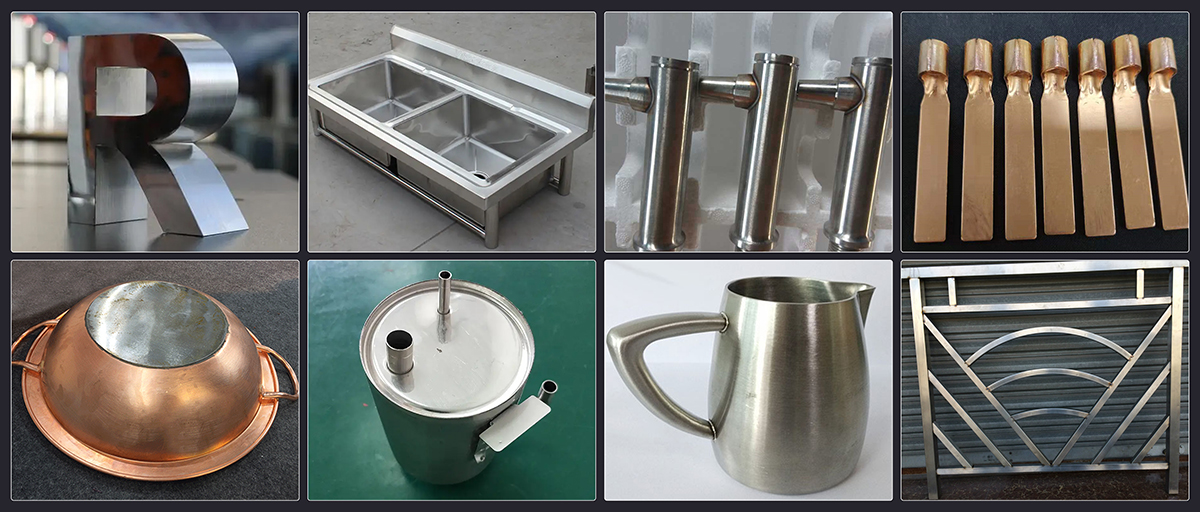
● Capable of Welding Diverse Materials (e.g., Stainless Steel, Aluminum, Copper)
Handheld laser welding machines offer broad material adaptability, capable of joining diverse metallic materials. This capability makes them suitable for various industries, including automotive manufacturing, electronics, and pipeline construction.
● Handles materials of varying thicknesses
Whether working with thin sheets or thicker metal components, handheld laser welding machines can adjust laser parameters as needed to meet welding requirements for different thicknesses. This flexibility enables outstanding performance across diverse application scenarios.
With its flexibility, high precision, and strong adaptability, the handheld laser welding machine has become a vital technological tool in modern welding. It not only enhances welding efficiency and quality but also broadens the scope of welding applications, meeting the current market demand for diverse and customized welding solutions. Click here for more information

Handheld laser welding machines excel in handling complex welding shapes due to their precise laser control and flexible operation. Below are their capabilities in welding complex geometries, along with their welding accuracy and aesthetic quality.
1. Welding Capabilities for Complex Geometries
● Performance of Handheld Laser Welders in Complex Shape Welding
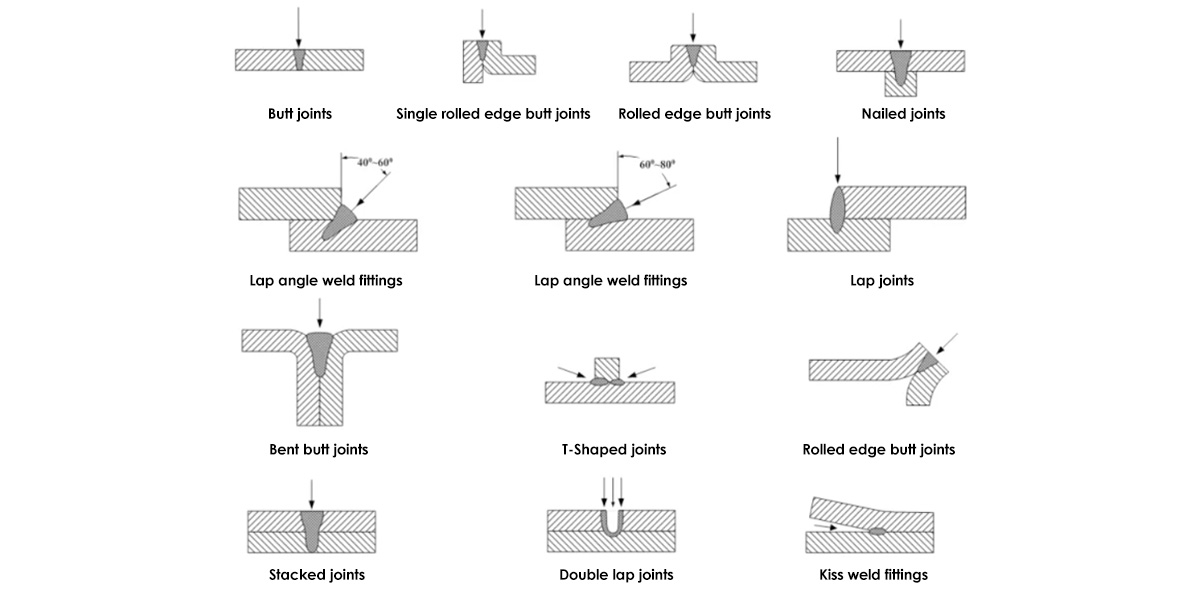
Handheld laser welders apply their flexibility and precision to weld various complex geometric workpieces. Traditional welding methods often struggle with irregular shapes or connection points, whereas laser welding handles them effortlessly. For instance, laser welding machines can perform precise welds on curved surfaces, irregularly shaped components, pipe connections, and complex frameworks without constraints on welding angles or positions.
● Welding Examples on Curved Surfaces and Irregular Components
In the automotive industry, curved body panels frequently require welding. Handheld laser welding machines achieve uniform welds on curved surfaces by precisely adjusting laser focus and power. Additionally, in the home appliance sector, irregular metal frames or components can be joined with high quality using handheld laser welding, avoiding defects common in traditional welding. These applications demonstrate the broad applicability of handheld laser welding machines for complex shapes.

2. Welding Precision and Aesthetics
● Welding Effect and Aesthetic Appeal
Handheld laser welding machines deliver high precision, ensuring consistent, fine welds with smooth post-weld surfaces. For instance, in a metal frame welding project, handheld laser welding achieved virtually seamless connections with the base material, enhancing both mechanical strength and overall visual appeal.
● Welding Effect
Consider a sheet metal fabrication company: using a handheld laser welder for product frame welding produced uniform welds with no visible defects, making the final product more competitive in the market.
The capability of handheld laser welding machines to handle intricate weld shapes makes them an ideal choice across multiple industries. Their high-precision welding results and excellent aesthetic appeal not only elevate weld quality but also boost the market competitiveness of final products. As technology continues to advance, handheld laser welding machines will demonstrate even greater potential and advantages in future applications. Click here for more information
In modern manufacturing, handheld laser welding machines are widely adopted for their flexibility and efficiency. However, significant challenges persist when welding diverse materials. Below are welding difficulties related to material diversity and their corresponding solutions.
1. Welding Difficulties with Different Materials
● Impact of Material Properties on Welding
Different materials exhibit distinct physical and chemical properties during welding. For instance, stainless steel and aluminum demonstrate significant differences in thermal conductivity—stainless steel has low thermal conductivity, while aluminum has high thermal conductivity. This means that when welding aluminum, higher laser energy settings are required to compensate for its rapid heat dissipation. Additionally, certain materials (such as galvanized steel) may have surface coatings that affect weld quality, potentially necessitating coating removal or adjustments to welding temperature and speed.
● Other Considerations
Material thickness, surface finish, alloy composition, and impurity content also affect welding outcomes. For instance, thicker materials require higher laser power and appropriate welding speeds to ensure the weld zone reaches melting temperature. Simultaneously, contaminants, rust, or oxides can cause welding defects, making their identification and resolution critical for successful welding.

2. Technical and Setting Adjustments
● Laser Parameter Adjustment
Laser welding machine parameters (e.g., laser power, welding speed, focal length) require precise tuning for different materials. For low thermal conductivity materials, gradually increase laser power to achieve sufficient heat input. Conversely, for high thermal conductivity materials, appropriately reduce power and increase welding speed to minimize the heat-affected zone and prevent deformation.
● Pre-Treatment Methods
Surface preparation of the materials is also critical for successful welding. Prior to welding, the material surface should be cleaned to remove oil, dust, and oxides, ensuring proper fusion during the process. Additionally, for certain difficult-to-weld materials, preheating techniques can be employed. This involves heating the material to its minimum melting temperature, thereby enhancing weldability.
Although welding difficulties vary across materials, handheld laser welding machines can overcome these challenges through appropriate technical adjustments and parameter optimization. The key lies in understanding each material's properties and developing corresponding welding strategies to ensure high-quality results. With technological advancements, laser welding will increasingly adapt to diverse materials, providing modern manufacturing with more flexible and efficient welding solutions. Click here for more information
Handheld laser welding machines hold exceptionally broad market prospects in the manufacturing and maintenance sectors. As demand for high-efficiency, high-precision welding technology continues to grow across industries, the application potential of handheld laser welding machines becomes increasingly prominent. In fields such as automotive manufacturing, electronics, aerospace, and construction, these machines not only significantly enhance production efficiency and reduce welding defect rates but also meet the welding demands of complex shapes and diverse materials. Furthermore, their flexibility makes these machines particularly suitable for on-site repairs and small-batch production, opening substantial opportunities for application in the maintenance service sector.
The continuous emergence of new technologies further propels the advancement of handheld laser welding machines. From innovations in laser emitter technology (such as fiber lasers and ultra-short pulse lasers) to advancements in intelligent control systems, modern handheld laser welding machines have become more efficient, precise, and user-friendly. Intelligent systems will enable welding machines to automatically adjust parameters, optimizing them for different materials and welding conditions to further enhance weld quality and consistency. Furthermore, with the integration of Industry 4.0 and the Internet of Things (IoT), the connectivity and networking capabilities of handheld laser welding machines will enable real-time monitoring, data analysis, and remote operation. This will grant the welding process greater flexibility and responsiveness, potentially propelling the entire welding industry toward a smarter future.
As market demands for welding technology continue to rise, handheld laser welding machines will see broader application prospects in manufacturing and maintenance industries. Emerging technologies will accelerate their development pace, continuously improving welding efficiency and quality. In the future, handheld laser welding machines are poised to become one of the core technologies in the welding field, providing more innovative and efficient solutions for production and maintenance. Click here for more information
Handheld laser welding machines demonstrate significant advantages in complex welding shapes and materials due to their exceptional flexibility, high precision, and broad material adaptability. Their capability to perform precise welding on various geometries, curved surfaces, and irregular structures makes them an essential tool in modern manufacturing and maintenance industries. Additionally, these machines effectively weld diverse metallic materials such as stainless steel, aluminum, and copper, meeting varied market demands. Their superior weld quality and aesthetic appeal also ensure product appearance and performance, further strengthening their competitive market position.
Looking ahead, the development of handheld laser welding machines will benefit from continuous technological advancements. With enhanced laser technology, intelligent control, and data analysis capabilities, these machines will become smarter, more efficient, and user-friendly. By integrating advanced welding parameter optimization and real-time monitoring capabilities, future welders will automatically adapt to different materials and welding environments, further improving welding precision and production efficiency. Simultaneously, intelligent handheld laser welders will bring greater flexibility and responsiveness to manufacturing and maintenance industries, driving the entire welding sector toward smarter, more efficient practices. This will meet the market's growing demand for personalized and complex welding solutions.
Table of Contents1. Introduction
Table of Contents1. Introduction2. Overview of UV Laser Marking Machines3. Marking Effects on Different Materials3.1 Non-metallic Materials3.2 Metal Materials4. Advantages of UV Laser Marking5. Application Examples of UV Laser Marking6. Conclusion
Table of Contents1. Introduction