How To Avoid Common Cutting Defects And Issues When Using Laser Cutting Machines

Views: 62     Author: Site Editor     Publish Time: 2025-09-26      Origin: Site

Inquire

facebook sharing button
twitter sharing button
line sharing button
wechat sharing button
linkedin sharing button
pinterest sharing button
whatsapp sharing button
sharethis sharing button

Table of Contents

1. Introduction

2. Common Cutting Defects

3. Strategies for Avoiding Cutting Defects

4. Conclusion


Introduction

Laser cutting technology has gained widespread application in manufacturing due to its high precision, efficiency, and flexibility. With technological advancements, laser cutting machines can process various materials including metals, plastics, and wood, making it a vital processing tool across multiple industries such as aerospace, automotive manufacturing, electronic components, construction, and artistic creation. Laser cutting not only achieves intricate shapes but also delivers exceptional repeatability, meeting the stringent demands for quality and efficiency in modern manufacturing.


However, the occurrence of cutting defects during laser cutting remains a significant concern. These defects not only directly impact the aesthetics and accuracy of the cut but can also lead to reduced production efficiency and diminished product quality. For instance, rough edges and scorching may result in product returns, thereby increasing production costs and causing delivery delays. Additionally, incomplete cuts and deformation can compromise subsequent assembly and functional performance. Therefore, identifying and preventing these common cutting defects is crucial for enhancing production efficiency and ensuring product quality. By implementing effective preventive measures, enterprises can maintain a competitive edge in the market, achieving higher production efficiency and greater customer satisfaction.

Common Cutting Defects

1. Rough Cutting Edges

Cause: Excessive cutting speed or improper equipment settings. During laser cutting, an overly high cutting speed may prevent the laser beam from fully penetrating the material, resulting in rough edges or burrs. Additionally, inaccurate machine alignment and focal point settings can compromise cutting quality.

Solution: Adjust the cutting speed appropriately based on material thickness and properties. Regularly inspect and calibrate equipment to ensure optimal laser focus.


2. Burning and Carbonization

Cause: Excessive laser power or unsuitable cutting material. An overly intense laser beam can overheat the material, causing edge burning or carbonization, especially when cutting flammable or heat-sensitive materials.

Solution: Select appropriate laser power and adjust power parameters based on material type and thickness. Additionally, ensure the material is suitable for laser cutting and consider using auxiliary gases to reduce heat generated during the process.


3. Incomplete Cutting

Cause: Improper laser focus or material thickness exceeding machine capacity. Incorrect focus positioning results in insufficient cutting depth. Additionally, exceeding the laser cutter's maximum processing capability causes incomplete cuts.

Solution: Regularly inspect and adjust the focal length according to material and equipment specifications. Ensure the material thickness falls within the machine's rated cutting range to guarantee thorough cutting.


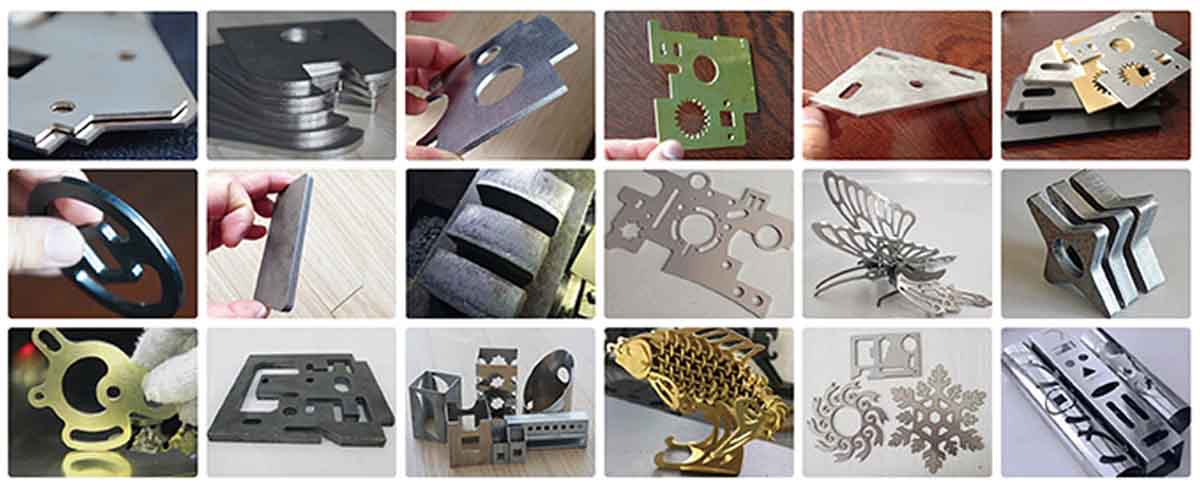
sheet metal laser cutting samples-Suntop


4. Cutting Deformation

Causes: Deformation due to insufficient cooling or material stress. Localized overheating during cutting can cause material deformation, particularly in metals and plastics. Internal material stress may also lead to deformation from uneven heat distribution.

Solution: Enhance the cooling system to ensure adequate cooling during cutting. Add spray cooling or circulating water cooling if necessary. For welded or pre-treated materials, performing stress relief treatment beforehand can effectively reduce deformation risks.


5. Uneven Cut Seam

Cause: Worn guide rails or uneven material surfaces. Worn guide rails may cause movement failures, resulting in discontinuous or fluctuating cuts. Additionally, uneven material surfaces can compromise cut seam uniformity.

Solution: Conduct regular inspections and maintenance of the laser cutter's guide rails to ensure optimal operational condition. Simultaneously, ensure materials are properly prepared and supported before cutting to maintain flatness and reduce the risk of uneven cut seams.


By thoroughly understanding these common cutting defects and their causes, manufacturers can implement targeted measures to minimize defect occurrence, thereby enhancing cutting quality and production efficiency. Click here for more information

Strategies for Avoiding Cutting Defects

1. Optimize Machine Parameters

Reasonably adjust laser power, cutting speed, and focal position: Setting appropriate laser power and cutting speed based on material properties and thickness is key to reducing defects. For thicker or harder materials, increase laser power and moderately reduce cutting speed to ensure uniform cutting. Simultaneously, ensure the laser focus is precisely aligned with the material surface to optimize cutting results.


2. Select Appropriate Materials

Choose materials compatible with the equipment and suitable for laser cutting: Different materials exhibit varying behaviors during laser cutting, making material selection critical. When procuring materials, consider thickness, composition, and reactivity to laser cutting, while ensuring the selected material can be processed within the laser cutter's parameter range.


3. Perform Regular Equipment Maintenance

Regularly inspect and replace consumables (such as nozzles, lenses, etc.): Ensuring all components of the laser cutting machine are in good condition effectively reduces cutting defects. Regular cleaning and replacement of laser nozzles, mirrors, and lenses are vital for maintaining beam focus and intensity. Additionally, inspect mechanical parts like guide rails and pulleys to prevent cutting inaccuracies caused by wear.


4. Monitor the Cutting Process

Use sensors and monitoring systems to track cutting quality in real time: Advanced sensor technology and monitoring software enable real-time tracking of cutting parameters like laser power, cutting speed, and material movement. This real-time monitoring not only detects issues immediately but also allows for parameter adjustments to prevent potential defects and enhance cutting precision.


Why the precision electronics industry choose laser cutting samples-Suntop


5. Cooling and Ventilation

Ensure the cutting area has adequate ventilation and cooling systems to prevent overheating: Heat generated during laser cutting requires effective dissipation to avoid material deformation or scorching. Install cooling spray or airflow systems in the cutting zone while maintaining proper ventilation to reduce temperatures and enhance cutting stability.


6. Conduct Cutting Tests

Perform sample cuts before formal production to evaluate results under different parameters: Before mass production, small-scale sample cutting is crucial for ensuring final product quality. Adjust settings based on test results to optimize cutting outcomes. Sample cuts help identify potential issues and implement corresponding improvements, ensuring smooth production line operation.


By implementing these strategies, manufacturers can effectively reduce common defects in laser cutting, enhance production efficiency and product quality, thereby gaining a competitive edge. Click here for more information

Conclusion

Through proper equipment configuration and regular maintenance, manufacturers can significantly reduce common defects in the laser cutting process, thereby enhancing cutting quality and production efficiency. Optimizing laser power, cutting speed, and focal position, combined with selecting suitable materials and implementing effective cutting monitoring, are all key factors in achieving precise cuts. Regular equipment maintenance and ensuring it operates in good condition are also crucial safeguards against issues.


Looking ahead, the continuous advancement and innovation in laser cutting technology will drive further progress in this field. Smarter automation systems, advanced material handling techniques, and more efficient cooling and ventilation solutions will elevate laser cutting equipment to unprecedented levels of precision and efficiency. We can anticipate more efficient, reliable, and flexible laser cutting solutions that will inject new momentum into the development of the manufacturing industry.

Leave a Message
Contact us
More than 10 precision production line, easy to realize large quantities of goods, to provide you with the best price.
Contact Us
  No 317, Mu Dong RD, Wu Zhong DIST, Suzhou City, Jiangsu Province, China
 info@suntoplaser.com
  +86 13771746401

Products

Home
© 2023 Suzhou Suntop Laser Technology Co., Ltd  All rights reserved.