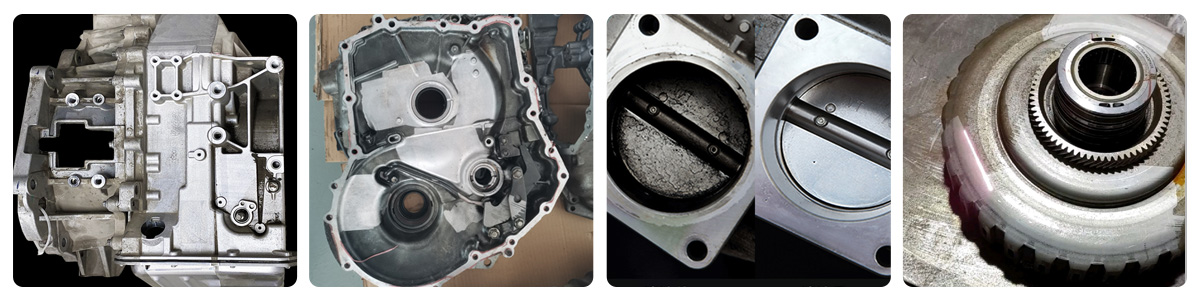
Laser Cleaning Technology: A New Breakthrough in The Precise Removal of Oxidized Layers on Complex Structural Surfaces

Views: 78     Author: Site Editor     Publish Time: 2025-07-09      Origin: Site

Inquire

facebook sharing button
twitter sharing button
line sharing button
wechat sharing button
linkedin sharing button
pinterest sharing button
whatsapp sharing button
sharethis sharing button

Table of Contents

1. Introduction

2. Laser Cleaning Technology Overview

3. Formation of the Oxide Layer and its Effects

4. Laser Cleaning on Complex Structured Surfaces

5. Technological Progress and Future Development

6. Summarize


Introduction

Laser cleaning technology is an advanced method that uses high-energy laser beams to remove surface contaminants. This technology has undergone significant development since its introduction in the 1980s. Initially, laser cleaning was mainly used in the industrial field to remove welding residues, oil stains, and oxide layers on metal surfaces. However, with the continuous advancement of laser technology, its advantages in cleaning efficiency, precision, and adaptability have gradually emerged, and it has gradually expanded to a wider range of applications, including cultural relics protection, aerospace, and electronic equipment.


Especially on the surfaces of complex structures, laser cleaning faces many challenges. These complex surfaces often have unique geometric shapes and diverse material properties. Traditional cleaning methods often find it difficult to effectively remove the oxide layer without causing damage to the substrate. Therefore, studying the application of laser cleaning on the surfaces of complex structures will not only help improve cleaning efficiency and quality, but also avoid material damage caused by insufficient technology, thereby reducing production costs and improving product quality. In-depth research in this field will also open up new possibilities for the future development of laser cleaning technology and promote its popularization and application in more industries.

Laser Cleaning Technology Overview

1. Working principle of laser cleaning

The working principle of laser cleaning is to irradiate the target surface with a high-energy laser beam. The laser energy is absorbed by surface contaminants (such as oil, rust and oxide layer, etc.), causing its temperature to rise sharply. At this time, the contaminants undergo physical or chemical changes, and quickly evaporate or peel off to form gas and particles. These removed particles and gases can be effectively transported and removed by auxiliary means such as airflow or vacuum, thereby achieving efficient, precise and damage-free cleaning effects.

Mini Backpack Pulse Handheld Laser Cleaning Machine-Suntop
1500W Handheld Laser Cleaning Machine-Suntop
2000W 3000WHandheld Laser Cleaning Machine-Suntop


2. Main advantages of laser cleaning

Environmental protection: Laser cleaning does not use chemical solvents or cleaning agents, thus avoiding the generation of harmful waste, reducing pollution to the environment, and meeting the requirements of green cleaning.


Efficiency: The laser cleaning process is fast and can achieve cleaning effects in a short time, especially on large areas or surfaces with complex shapes, significantly improving production efficiency.


Accuracy: This technology can accurately control the energy and irradiation time of the laser, and can effectively remove various pollutants without damaging the substrate. It is suitable for cleaning tiny details and complex structures.


Customizability: The laser cleaning system can be flexibly adjusted according to different materials and pollutant types to meet personalized cleaning needs and provide targeted solutions.


Safety: Compared with traditional cleaning methods, laser cleaning has lower risks during operation, does not involve the use of chemicals, and is safer during operation.


Laser cleaning technology has become an ideal cleaning method in more and more industries due to its significant advantages such as environmental protection, high efficiency, precision, customizability and safety. Click here for more information

Formation of the Oxide Layer and its Effects

1. Causes of oxide layer on metal surface

The oxide layer on metal surface is a substance formed by the reaction of metal with oxygen or other oxidants, and its main component is metal oxide. The main reasons for the formation of oxide layer include:


Natural oxidation: Metal reacts with oxygen in the air under normal conditions to form an oxide layer naturally. This process is affected by ambient temperature, humidity and oxygen concentration.


Electrochemical oxidation: In an environment with electrolytes, metals can be oxidized through electrochemical processes, which is common in corrosive environments. The passage of current through the metal surface promotes the occurrence of oxidation reactions.


Thermal oxidation: At high temperatures, metals react with oxygen to form an oxide layer, which is particularly common in high-temperature applications (such as engine parts).


The influence of pollutants: The presence of other elements or pollutants on the surface (such as moisture, salt or oil) may accelerate the oxidation process and form different types of oxide layers.


2. Effect of oxide layer on material properties

Physical property changes: The oxide layer usually changes the surface hardness, toughness and ductility of the metal, which may cause brittleness on the metal surface and reduce its mechanical properties.


Increased corrosivity: Certain types of oxide layers may be more sensitive to environmental factors (such as humidity, acidic media, etc.), leading to accelerated corrosion and thus shortening the service life of the material.


Decreased electrical and thermal conductivity: After the oxide layer is formed, the electrical and thermal conductivity of the metal may be significantly reduced, which is particularly important in electrical and electronic components with high electrical conductivity requirements.


Decreased surface adhesion: The oxide layer affects the adhesion of subsequent coatings or bonding materials, which may cause the coating to peel or fall off, affecting the surface treatment effect.


Is the cleaning effect of laser cleaning of molds affected by the shape and size of the mold samples1-Suntop
Metal Laser Cleaning Machine Cleaning Effect-Suntop
Is the cleaning effect of laser cleaning of molds affected by the shape and size of the mold samples5-Suntop
Is the cleaning effect of laser cleaning of molds affected by the shape and size of the mold samples4-Suntop


3. The necessity of removing the oxide layer and its impact on subsequent processing and surface treatment

Improving the welding performance of materials: Removing the oxide layer can improve the cleanliness of the metal surface, improve the fusion during welding, and ensure the quality and strength of welding.


Enhancing the adhesion of the coating in subsequent surface treatment: Removing the oxide layer helps the subsequent surface treatment processes such as painting and plating, ensuring uniform adhesion of the coating and avoiding peeling and falling off.


Improving machining accuracy: Before machining, removing the oxide layer can avoid material deformation and damage caused by insufficient interlayer strength during machining, ensuring higher machining accuracy.


Extended service life: By removing the oxide layer, further corrosion and degradation are prevented, thereby extending the service life and reliability of the material.


In summary, the formation, characteristics and impact of the oxide layer on the performance of metal materials is a complex process. In many applications, removing the oxide layer is a key step to ensure the effectiveness of subsequent processing and surface treatment. Click here for more information

Laser Cleaning on Complex Structured Surfaces

1. Latest research and examples

The application of laser cleaning technology in cleaning complex structure surfaces has made significant progress in recent years, especially in the fields of aerospace, automobile manufacturing, electronic equipment and cultural relics protection. The following are some examples of the latest research and successful applications:


● Aerospace: For the cleaning of aircraft engine parts, researchers use high-energy lasers to remove oxides, coatings and carbon deposits from turbine blades and combustion chambers. In some cases, laser cleaning significantly improves the maintenance efficiency and life of parts, while reducing the use of chemical cleaning agents.


● Automobile manufacturing: In the cleaning process of automobile sheet metal parts, laser technology is used to remove oxides and oil stains from welds to ensure the adhesion of subsequent spraying. Studies have shown that laser cleaning can effectively shorten the cleaning time while improving the uniformity and durability of the coating.


● Electronic equipment: For the cleaning of tiny electronic components, laser cleaning is used to remove contaminants from sensitive surfaces. Laser cleaning can accurately control the cleaning depth and intensity to ensure that no damage is caused to the components, showing its great potential in the microelectronics industry.


● Cultural Relics Protection: In the restoration and protection of cultural relics, laser cleaning is used to remove dirt and oxide layers on the surface, successfully and accurately protecting the original appearance of cultural relics. Studies have shown that laser cleaning methods can optimize the cleaning process and reduce mechanical damage to the surface of cultural relics by traditional methods.

Is Laser Cleaning Speed Affected by Power samples-Suntop

2. Adjustment and precision cleaning of laser cleaning technology

Laser cleaning technology is highly adjustable and can be flexibly adjusted according to specific shapes and materials to achieve precise cleaning effects. The main adjustment factors include:


● Laser wavelength: Different materials have different absorption capabilities for lasers of different wavelengths. The laser cleaning system can select the appropriate wavelength as needed to ensure the best cleaning effect.


● Laser power and pulse width: Adjusting the power and pulse width of the laser can control the intensity of cleaning and the heat-affected zone, thereby avoiding damage to the substrate. For sensitive materials, low power and short pulses can be used to achieve fine cleaning.


● Scanning speed and mode: By adjusting the movement speed and scanning mode of the laser beam, the uniformity and efficiency of cleaning can be optimized. For surfaces with complex shapes, using different scanning modes (such as linear, circular, etc.) helps to cover all cleaning areas.


● Atmosphere and auxiliary media: During the cleaning process, choosing different atmospheres (such as air, nitrogen or vacuum) and auxiliary media (such as water mist or airflow) can effectively control the removal of particles and reduce environmental impact.


By combining these adjustment methods, laser cleaning technology can adapt to various complex structures and material types, thereby achieving efficient and precise cleaning effects to meet the needs of different industries. Click here for more information

Technological Progress and Future Development

Laser cleaning technology has undergone significant innovations in recent years, especially in terms of spot accuracy and the application of intelligent control systems. These technological advances make laser cleaning more efficient and precise. By using high-performance lasers and advanced optical components, the focusing ability of the spot is enhanced, resulting in higher cleaning accuracy. This means that when processing complex structure surfaces, the laser can more accurately target the target contaminated area, reduce the heat-affected area, and avoid damage to the substrate. In addition, the introduction of intelligent control systems enables the laser cleaning process to monitor in real time and automatically adjust parameters to adapt to different materials and types of contamination. This intelligent management method greatly improves work efficiency and reduces the risk of manual intervention.


Looking to the future, laser cleaning technology has broad application prospects in many fields. First, in the aerospace field, laser cleaning can efficiently remove oxides and contaminants on aircraft parts to ensure the performance and safety of the parts. Secondly, in the automotive manufacturing industry, laser cleaning will become a new standard in fine cleaning processes, especially for surface treatment before spraying to ensure the adhesion of powder coatings and paints. In addition, mold cleaning is also an important application field of laser technology. Traditional chemical cleaning methods often cannot completely remove the deposits on the mold, while the precision and non-destructiveness of laser cleaning can effectively improve the service life of the mold and product quality.


With the continuous development of laser technology and the expansion of its application scope, we can foresee that laser cleaning will also show great potential in other fields such as electronics, medical equipment and cultural relics protection. In the electronics industry, laser cleaning helps to clean miniaturized components to ensure their performance and reliability. In cultural relics protection, laser cleaning can effectively remove surface dirt without damaging the body of the cultural relics, becoming an important tool for cultural relics restoration technology. In summary, the development of laser cleaning technology will promote the cleaning process of various industries to a more efficient and safer direction. Click here for more information

Summarize

Laser cleaning technology shows great potential in accurately removing oxide layers from complex surface structures. Its high efficiency and non-destructive properties make laser an ideal cleaning tool, especially when dealing with highly complex and delicate surfaces. Compared with traditional cleaning methods, laser cleaning can more accurately target contaminants and ensure the integrity and performance of the substrate. Through continuous technological innovation, such as improving the accuracy of the spot and the application of intelligent control systems, laser cleaning not only improves work efficiency, but also reduces potential risks to the environment and operators.


Therefore, we call on industry practitioners to pay close attention to the development of laser cleaning technology and its wide application. With the continuous advancement of technology, laser cleaning will play an increasingly important role in aerospace, automobile manufacturing, mold cleaning and many other fields. By actively exploring and applying laser cleaning technology, industry practitioners can modernize the cleaning process, improve product quality, and reduce costs, thereby promoting the sustainable development of the overall industry.

Leave a Message
Contact us
More than 10 precision production line, easy to realize large quantities of goods, to provide you with the best price.
Contact Us
  No 317, Mu Dong RD, Wu Zhong DIST, Suzhou City, Jiangsu Province, China
 info@suntoplaser.com
  +86 13771746401

Products

Home
© 2023 Suzhou Suntop Laser Technology Co., Ltd  All rights reserved.