Views: 46 Author: Site Editor Publish Time: 2025-10-31 Origin: Site
2. Working Principle of Precision Laser Cutting Machine
3. Advantages of Cutting Complex Patterns
4. Enhanced Design Flexibility
5. Applications that Inspire Creativity
Laser cutting technology has become an indispensable part of modern manufacturing and design. With advancements in technology, laser cutting machines, with their superior precision, flexibility, and efficiency, have gradually replaced traditional cutting techniques. Whether in industrial production, artistic creation, or personalized customization, laser cutting technology has demonstrated immense application potential.
Laser cutting technology utilizes a high-intensity laser beam focused on the surface of a material, precisely cutting various materials through thermal energy. The concentrated energy of the laser can easily penetrate metal materials, making it a highly adaptable and easily controlled processing method. Laser cutting not only offers high cutting speeds but also achieves extremely small kerfs, reducing material waste and improving the quality and appearance of the finished product.
Precision laser cutting machines play a crucial role in modern manufacturing. First, they achieve extremely high cutting precision, making it easy to realize complex patterns and intricate designs, thus meeting the high standards required in various fields, from industrial manufacturing to artistic creation. Second, the high efficiency and flexibility of laser cutting machines allow designers and engineers to quickly adjust and test different design solutions; this rapid iteration capability greatly enhances design flexibility and creativity. Finally, as market demand for personalized and customized products continues to grow, the application of precision laser cutting machines is expanding, becoming an important force driving industry innovation and development.
Precision laser cutting machines utilize the energy of laser beams to cut various materials with high precision and efficiency. Their operating principle is based on the “optical-thermal conversion” process, wherein the laser beam converts light energy into heat energy to achieve material cutting. Below are the fundamentals of laser technology and key steps in the cutting process.
Key Steps in the Cutting Process
● Laser Generation: The laser generator (typically a fiber laser) inside the cutting machine produces a high-energy laser beam.
● Beam Focusing: The laser beam is concentrated into an extremely small spot via an optical lens system, creating an exceptionally high energy density.
● Material Positioning: The material to be cut is precisely positioned using a mechanical drive system, ensuring the laser beam accurately targets the designated area.
● Thermal Cutting: The focused laser beam strikes the material's surface, rapidly heating it to its melting or vaporization temperature. The intense heat generated by the laser causes the material to melt or evaporate instantly.
● Auxiliary Gas Jet: During cutting, an auxiliary gas (such as oxygen, nitrogen, or air) is typically ejected to remove molten material and enhance cutting efficiency. Gas selection impacts cutting quality and speed.
● Cutting Completion: The laser moves along a predefined path, progressively cutting the entire shape or pattern until completion.
Through these steps, precision laser cutting machines achieve efficient, accurate, and flexible cutting to accommodate diverse complex design requirements. This technology not only elevates processing quality but also brings significant transformation to manufacturing and design industries. Click here for more information
● High Precision and Detail Representation
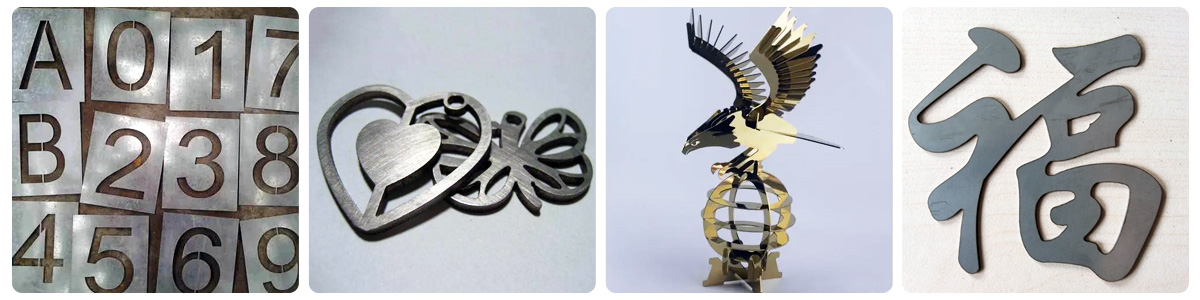
Precision laser cutting machine achieve micron-level cutting accuracy, allowing for the precise reproduction of complex patterns and details. The highly focused laser beam enables efficient cutting within extremely small areas, ensuring smooth edges and clear details. This advantage makes laser cutting suitable for projects requiring fine craftsmanship, such as artwork, electronic components, and custom products, enhancing the visual appeal and quality of the final product.
● Feasibility for Complex Designs
With the help of computer-aided design (CAD) software, designers can create extremely complex and intricate patterns. Laser cutting technology can quickly transform these designs into actual products, allowing designers to experiment boldly and break through the limitations of traditional cutting methods. Whether it's complex curves, tiny slits, or multi-layered patterns, laser cutting machines can efficiently achieve the desired results, significantly improving design flexibility and creativity.
● Material Versatility
Laser cutting technology is suitable for a variety of metal materials, including stainless steel, carbon steel, aluminum, and brass. This broad material compatibility allows users to freely choose the most suitable material based on project requirements. Laser cutting machines have strong material handling capabilities and a small heat-affected zone during cutting, effectively reducing the risk of deformation and damage. This allows designers to fully utilize the properties of different materials to realize creative designs, create unique finished products, and meet diverse market demands.
Through these three advantages, precision laser cutting machines not only improve the efficiency and quality of cutting complex patterns but also open up more possibilities for designers in their creative endeavors, promoting the integration of technology and art. Click here for more information
● Integration of CAD Software and Laser Cutting Machines
The widespread use of CAD software makes model creation easy. These models can directly interface with laser cutting machines, making the design process more efficient and precise. By adjusting parameters and making design modifications in CAD, the effects can be seen in real time, and cutting files can be generated quickly. This interconnectivity not only shortens the time between design and manufacturing but also simplifies the modification of cutting patterns, greatly enhancing design flexibility.
● Rapid Prototyping and Iteration
The high precision and efficiency of laser cutting machines support rapid prototyping, providing designers with the opportunity to quickly validate design concepts. In the early stages of design, ideas can be quickly transformed into physical prototypes, which are then tested and evaluated through rapid cutting and assembly. This iterative design process allows designers to make multiple modifications and optimizations in a short period, ensuring that the final product better meets expectations while reducing R&D costs and time.

● Fulfillment of Customer Customization Needs
The flexibility of laser cutting technology makes fulfilling customer customization needs easier. Designers can quickly adjust design schemes and cut according to specific customer requirements. This flexibility not only meets the needs of the personalized market but also allows for innovative designs based on different project characteristics. Laser cutting machines enable designers to provide diverse solutions, helping clients achieve more personalized and unique products, thereby enhancing their market competitiveness.
In summary, the combination of laser cutting machines and CAD software, the ability to rapidly prototype and iterate, and the flexibility to respond to customized client needs significantly improve design flexibility, providing solid technical support for the successful implementation of various projects. Click here for more information
● Arts and Crafts Production
Precision laser cutting technology has demonstrated immense potential in arts and crafts production, allowing artists and designers to freely realize their ideas into works of high artistic value. Through laser cutting machines, artists can create intricate carvings, delicate pendants, and unique installation art, achieving a level of precision and consistency difficult to attain with traditional handicrafts.
● Architecture and Interior Design
In the fields of architecture and interior design, laser cutting technology is widely used in the design and manufacture of various structural elements and decorative items. Architects can use laser cutting machines to create complex facades and interior partitions, creating visually appealing effects. Laser cutting not only precisely realizes the details in design drawings but also allows for diversity in material selection, adding a personalized style to the space. Furthermore, laser cutting technology facilitates adjustments and prototyping, enabling architects to quickly respond to changing design needs and enhance the innovation of projects.
● Industrial Design and Small-Batch Production
In industrial design, laser cutting machines can rapidly produce high-precision prototypes and small-batch products, giving designers greater creative freedom. Whether for product casings, functional components, or mechanical parts, laser cutting technology can efficiently realize complex design concepts while ensuring dimensional consistency and precision. This flexible production method is suitable for rapid market response, meeting customized and personalized needs, allowing designers to explore new ideas and materials in product development, and simultaneously enhancing the product's market competitiveness.
Through these applications, precision laser cutting machines not only facilitate artistic creation but also drive innovation in architectural design and industrial product development, inspiring creativity among professionals in various fields. Click here for more information
The future of laser cutting technology will move towards greater efficiency and intelligence. With continuous advancements in laser technology, particularly the introduction of fiber lasers, laser cutting machines will be able to cut at higher power, improving cutting speed and material adaptability while reducing energy consumption. This new type of laser exhibits better performance when cutting thick and heat-sensitive materials, and is widely used in the aerospace, automotive, and construction industries, facilitating the realization of more complex and precise designs. Furthermore, the compact design of laser cutting machines will make them suitable for small workspaces, expanding their application range.
The introduction of intelligence and automation will further drive the development of laser cutting technology. By integrating the Internet of Things (IoT) and Artificial Intelligence (AI), laser cutting equipment will become more intelligent, capable of real-time monitoring of the cutting process and automatic adjustment of cutting parameters, thereby improving cutting quality and efficiency. This intelligent cutting process not only reduces the need for human intervention but also lowers production costs and error rates. Users can remotely monitor and maintain equipment through cloud platforms, obtaining timely production data and fault alarms, greatly improving production flexibility and agility. Click here for more information
The importance of precision laser cutting machines in the design field cannot be ignored. They not only provide high-precision and high-efficiency cutting capabilities but also greatly enrich designers' creative space, enabling them to flexibly address complex design needs and customized client requirements. Laser cutting technology, combined with advanced CAD software, facilitates seamless integration between design and manufacturing, making the transformation from concept to finished product more efficient and accurate.
Furthermore, the widespread application of laser cutting machines in various fields such as art, architecture, and industrial design further demonstrates their crucial role in driving creativity and innovation. Through rapid prototyping and meticulous craftsmanship, designers are able to relentlessly explore new ideas, driving the industry's continuous development. Looking to the future, with continuous technological advancements and accelerated intelligentization, precision laser cutting machines will continue to play a vital role in the design field, leading new trends in manufacturing and artistic creation.

Table of Contents1. Introduction
Table of Contents1. Introduction2. Overview of UV Laser Marking Machines3. Marking Effects on Different Materials3.1 Non-metallic Materials3.2 Metal Materials4. Advantages of UV Laser Marking5. Application Examples of UV Laser Marking6. Conclusion
Table of Contents1. Introduction