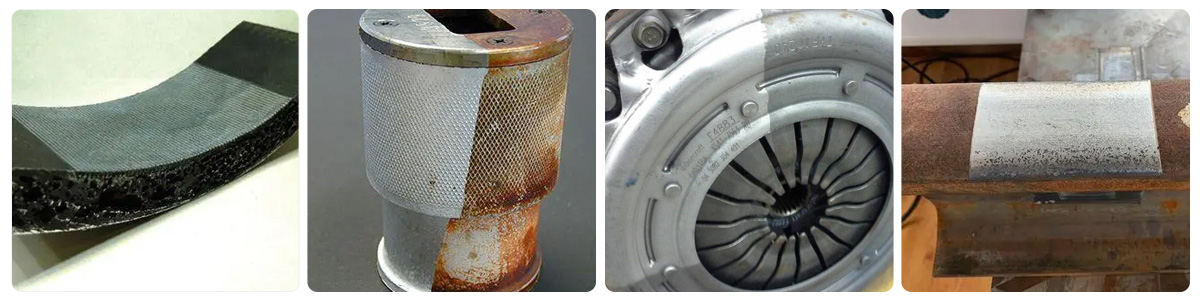
Views: 132 Author: Site Editor Publish Time: 2026-10-23 Origin: Site
2. Pain Points in the Traditional Mold Cleaning Industry
3. Principles and Advantages of Laser Cleaning Technology
In industrial production, molds undergo long-term, repetitive operation, making their surfaces highly susceptible to the accumulation of oil, carbon deposits, adhesive residues, and oxide layers. These contaminants not only compromise the dimensional accuracy and visual quality of the molded products but also shorten the service life of the molds—a persistent challenge in mold maintenance within the manufacturing sector.
Traditional mold-cleaning methods—such as manual grinding, sandblasting, or the use of chemical agents—are often inefficient, cause damage to the mold substrate, result in environmental pollution, and entail high operational costs. Consequently, they fail to meet the requirements of modern factories for efficient, precise, and eco-friendly production.

In contrast, laser cleaning—an innovative, green industrial cleaning technology—enables non-destructive, precise, and rapid removal of contaminants. It effectively addresses the pain points associated with mold cleaning, facilitates the upgrading of mold maintenance processes, and helps enterprises achieve higher product quality, reduced costs, and increased operational efficiency.
In traditional mold maintenance, conventional cleaning methods suffer from significant drawbacks that make them ill-suited for the demands of modern, high-precision manufacturing. Key pain points include:
1. Manual Grinding and Sandblasting: These processes can easily wear down mold cavities and intricate surface patterns, compromising the mold's original precision. Furthermore, they generate substantial amounts of dust, which not only degrades the working environment but also significantly increases the defect rate of manufactured products.
2. Chemical Acid Cleaning: Relying on chemical agents often leads to the corrosion of the mold substrate, thereby shortening the mold's service life. Additionally, the process produces hazardous liquid waste, resulting in high environmental compliance costs and failing to meet modern green manufacturing standards.
3. Low Overall Cleaning Efficiency: Traditional methods typically require the mold to be disassembled and subsequently left to dry. This cumbersome, time-consuming process leads to extended equipment downtime, directly impacting the factory's overall production capacity and scheduling.
4. Inconsistent Maintenance Results: Because it is difficult to standardize the intensity and procedures of manual cleaning, the results are often uneven. Residual impurities left on the mold surface can hinder the part-release process and cause surface defects, leading to inconsistent quality across product batches.
Laser cleaning for molds utilizes high-energy pulsed lasers directed at the mold surface. Through precise, instantaneous application of light energy, contaminants—such as oil, carbon deposits, adhesive residues, and oxide layers—are rapidly vaporized or detached. This non-contact process ensures that the laser beam never touches the mold substrate, fundamentally preventing mechanical damage while precisely removing contaminants and preserving the mold’s original structure and dimensional accuracy.

Compared to traditional cleaning methods, laser cleaning offers several key advantages, making it well-suited for the maintenance requirements of modern industrial molds:
1. Non-destructive, Precision Cleaning: Effectively removes surface contaminants without wearing down intricate mold patterns or compromising dimensional accuracy. This helps delay mold aging and significantly extends the mold's service life.
2. High Efficiency and Productivity: Supports in-line cleaning without the need for disassembly. Since there is no requirement to take the mold apart or wait for long drying periods, equipment downtime for maintenance is drastically reduced—perfect for continuous, high-volume industrial production.
3. Eco-friendly and Consumable-free: Eliminates the need for consumables like sandpaper or chemical agents. The process generates no dust or liquid waste, ensuring a safe, clean operation that fully aligns with green manufacturing and low-carbon environmental standards.
4. Consistent Cleaning Results: Automated operation ensures uniform, comprehensive cleaning with no residue. This resolves the issue of inconsistent results often seen with traditional methods, effectively lowering defect rates in mass production and ensuring stable product quality.
Laser cleaning for molds is well-suited for the maintenance of various precision industrial molds. Offering high versatility and precise cleaning results, it can be applied across a wide range of manufacturing sectors, effectively addressing cleaning challenges for different types of molds and ensuring product quality.
1. Injection Molding Mold Cleaning
Efficiently removes residual adhesive, high-temperature carbon deposits, and mold release agent residues from mold surfaces. It effectively resolves issues such as product yellowing, burrs, and uneven surfaces caused by mold contamination, ensuring consistent appearance and quality in mass production.
2. Rubber and Tire Mold Cleaning
Specifically designed to remove vulcanization residues and stubborn oxide layers from mold surfaces. It rapidly restores the original texture and pattern clarity of the molds, preventing defects caused by clogged patterns and significantly improving the molding precision and surface quality of rubber and tire products.

3. Stamping and Drawing Mold Cleaning
Quickly eliminates stubborn oil, metal scale, and impurities from mold surfaces. By removing foreign matter, it effectively reduces scratches and wear-related defects on workpieces, substantially increasing the yield rate of high-quality stamped and drawn parts.
4. Die-Casting Mold Cleaning
Precisely removes heavy carbon deposits and oxide layers that accumulate on die-casting molds during prolonged high-temperature operation. It resolves issues like surface roughness and pitting caused by mold scaling, significantly enhancing the surface finish and molding quality of die-cast products.
The implementation of laser cleaning technology for molds optimizes factory maintenance systems across multiple dimensions—including product quality, production efficiency, operational costs, and eco-friendly manufacturing. It delivers tangible upgrades to modern manufacturing, providing comprehensive support for refined production and operations.
1. Quality Enhancement: With high precision and thorough cleaning capabilities, laser technology elevates the cleanliness of mold surfaces, restoring intricate textures and molding accuracy. It effectively eliminates product defects caused by residual mold contaminants, ensuring high consistency in the appearance and dimensions of mass-produced items, significantly lowering defect rates, and stabilizing production quality.
2. Accelerated Efficiency: Featuring rapid cleaning speeds and a high degree of automation, this technology supports in-line cleaning without the need to disassemble molds. By eliminating cumbersome maintenance-related downtime, it minimizes production interruptions, maximizes overall production line capacity utilization, and is ideally suited for continuous, high-volume manufacturing.
3. Cost and Consumption Reduction: Unlike traditional cleaning methods, laser cleaning requires no consumables—such as chemical agents or sandpaper—leading to substantial material cost savings. It streamlines manual workflows, reduces labor requirements, and protects the molds themselves, thereby decreasing the frequency of repairs, overhauls, and replacements. This drives long-term reductions in production and operational costs.
4. Green Compliance: The process is entirely free of dust, liquid waste, and chemical pollution. It is safe and environmentally friendly, aligning perfectly with modern "green" manufacturing standards. This facilitates compliance with environmental impact assessments, supports safe and sustainable production, and helps enterprises establish a reputation for standardized, responsible industrial operations.

The manufacturing sector is currently undergoing a profound upgrade, trending toward high-precision intelligence, eco-friendly low-carbon operations, and enhanced production efficiency. Traditional mold maintenance methods—such as manual cleaning, chemical cleaning, or sandblasting—are increasingly inadequate for modern, large-scale, and high-precision manufacturing due to their inherent drawbacks: insufficient precision, significant environmental pollution, low efficiency, and high operational costs.
Laser cleaning for molds offers a compelling suite of advantages—"non-destructive precision, high efficiency, eco-friendliness (requiring no consumables), and long-term cost-effectiveness". By overcoming the limitations of conventional cleaning techniques, laser cleaning is rapidly becoming the standardized, intelligent solution for industrial mold maintenance. It not only effectively resolves mold-cleaning challenges and ensures consistent product quality, but also empowers enterprises to reduce costs, boost efficiency, and achieve greener production—ultimately driving high-quality, sustainable development within the manufacturing industry.
Table of Contents1. Introduction
Table of Contents1. Introduction2. Overview of UV Laser Marking Machines3. Marking Effects on Different Materials3.1 Non-metallic Materials3.2 Metal Materials4. Advantages of UV Laser Marking5. Application Examples of UV Laser Marking6. Conclusion
Table of Contents1. Introduction