Mastering Handheld Laser Welding in Tight Spaces: Essential Techniques for Complex Applications

Views: 183     Author: Site Editor     Publish Time: 2026-03-26      Origin: Site

Inquire

facebook sharing button
twitter sharing button
line sharing button
wechat sharing button
linkedin sharing button
pinterest sharing button
whatsapp sharing button
sharethis sharing button

Table of Contents

1. Introduction

2. Challenges of Welding in Complex Spaces

3. Tips for Using Handheld Laser Welding Machines

4. Technical Preparation and Personnel Training

5. Post-Welding Treatment and Inspection

6. Case Study

7. Conclusion


Introduction

Handheld laser welding machines are becoming increasingly popular in modern manufacturing and maintenance industries, particularly for applications in confined or complex spaces. These devices offer numerous significant advantages, such as high precision, fast welding speeds, and a minimal heat-affected zone, making welding in tight spaces simpler and more efficient. Compared to traditional welding methods, laser welding allows for better control of the welding process, ensuring weld quality while reducing material deformation and stress concentration, thereby greatly enhancing the overall reliability of the finished product.


When dealing with confined or irregular spaces, the flexibility of handheld laser welding machines becomes particularly crucial. Operators can easily access hard-to-reach welding points, thereby allowing for greater design freedom and creativity. However, while handheld laser welding machines offer numerous advantages, mastering this technology remains essential. Proper operating techniques and parameter settings not only ensure weld quality but also improve work efficiency. Therefore, learning how to effectively use handheld laser welding machines to perform welds in complex spaces is a core skill that every welding professional must master.

Challenges of Welding in Complex Spaces

1. Space Constraints

Welding in confined or irregular spaces often presents significant operational challenges for welders. Space constraints not only limit the choice of work positions but may also obstruct the welder’s line of sight and posture, making it difficult to work comfortably and effectively. Welders must maneuver flexibly in tight environments, making it hard to find the optimal welding posture, which increases the complexity of the task and leads to operator fatigue. Furthermore, the lack of adequate light and lighting conditions in confined spaces can further reduce the welder’s ability to control weld quality.


Pictures5
1
5
6000W handheld laser welding machine-5

2. Accessibility of Welding Locations

In complex spaces, the accessibility of welding locations is often affected by multiple factors. The shape, size, and arrangement of components may limit the welder’s access, making some welding locations difficult to reach directly. These constraints not only increase the challenges of maintaining the welder’s stability and force control during welding but may also force welders to operate in unstable positions, thereby affecting the effectiveness and quality of the weld. More seriously, the inability to properly handle welding tools may lead to accidents and incidents.


3. Thermal Management Issues

When welding in complex spaces, the high-temperature welding process may adversely affect surrounding materials or components, leading to thermal management issues. Although laser welding has a smaller heat-affected zone, heat can still easily accumulate in confined spaces, potentially causing deformation, melting, or damage to adjacent materials. Additionally, poor thermal management may lead to overheating in the weld area, resulting in uneven stress distribution during the product forming process and subsequently causing cracks or other quality issues during subsequent use. Effectively addressing these thermal management challenges is crucial for ensuring weld quality. Click here for more information

Tips for Using Handheld Laser Welding Machines

1. Selecting the Right Welding Equipment

Choosing the Right Model:

When performing welding in complex spaces, selecting a compact, portable laser welding machine is crucial. These devices are typically designed to be compact, making them easier to operate in confined spaces and allowing for flexibility in various irregular work environments. Portable welding machines are lightweight and highly flexible, enabling welders to adjust their posture more freely and ensure welding quality.

Use of Accessories:

Utilizing specific fixtures or extension arms can significantly enhance the maneuverability of handheld laser welding machine in complex spaces. Fixtures secure the workpiece in the ideal position, reducing instability during operation; extension arms help welders reach hard-to-access welding areas, ensuring a smooth welding process. Selecting the right accessories helps welders achieve better results in confined spaces.


2. Adjusting Welding Parameters

Welding Power:

Flexibly adjust the laser power based on the type and thickness of the welding material to ensure effective melting during the welding process without causing overheating. For example, when welding thin materials, the power should be appropriately reduced to prevent burn-through or deformation due to excessive heat.

Welding Speed:

Appropriately reducing the welding speed in complex spaces can improve control and accuracy during the welding process. Slower welding helps welders operate the laser welding machine more steadily, ensuring uniform welds and reducing defects. At the same time, it helps maintain the molten pool for a longer duration, facilitating better fusion of the workpieces.


3. Welding Path Planning

Pre-design the welding path:

To improve efficiency, preview the welding process using models or drawings before welding. This advance planning not only reduces decision-making time during operation but also ensures the welder has a clear welding strategy in complex spaces, minimizing time loss and workpiece damage caused by repeated operations.

Small-step operation:

When welding in confined spaces, consider adopting a segmented welding approach, welding a small section at a time. This helps ensure weld quality and reduces operational difficulties caused by spatial constraints. Segmented welding also allows the welder to focus on each small section, ensuring precision and stability in the weld, thereby further improving welding results.


By applying the techniques described above, welders can effectively use laser welding machines in complex spaces to improve both weld quality and efficiency. Click here for more information

Technical Preparation and Personnel Training

1. Operator Training

The Importance of Training for Complex Operating Environments:

Training for complex operating environments is key to improving welding quality and workplace safety. Since confined or irregular welding spaces often present additional challenges, operators must be familiar with the performance and operational characteristics of handheld laser welding machines. Through training, operators can understand the basic principles of laser welding, the impact of welding parameters, and how to flexibly apply this knowledge in specific operating environments to ensure smooth welding operations.

Providing Hands-On Training:

Hands-on training is essential for enhancing operators’ ability to handle situations in special environments. Training courses should include on-site drills simulating complex spaces to help welders become familiar with the techniques and strategies required for working in confined areas. Through simulated training, trainees can learn how to perform effective welding at various angles and in different positions, thereby improving their problem-solving skills and boosting their confidence when working under complex conditions.


2. Pre-Welding Preparation

Ensure the Work Area Is Clean:

Before welding, ensure the work area is clean, particularly the surfaces of the welding materials, which must be free of contaminants. Debris, dust, oil, and oxides can all affect weld quality, potentially leading to porosity, weld defects, or other issues. Therefore, use appropriate cleaning agents and tools to thoroughly clean the welding surfaces, ensuring the welding area is in optimal condition.

Prepare the necessary tools and materials in advance:

When welding in confined spaces, it is crucial to prepare the required tools and materials beforehand. This includes having the laser welding machine, fixtures, shielding gas, cleaning agents, and other essentials readily available to avoid delays caused by missing tools during the welding process. Ensure all materials and tools are at hand to enable quick and efficient operations once welding begins. Preparations should also include setting welding parameters and conducting a pre-welding functional check of the equipment to ensure all devices are in proper working order.


Through meticulous technical preparation and systematic personnel training, the welding team can significantly enhance its ability to perform welding in complex spaces, ensuring both operational efficiency and reliable weld quality. Click here for more information

Post-Welding Treatment and Inspection

1. Post-Welding Treatment Techniques

Necessary Cooling Procedures:

After welding is complete, the welded area must be properly cooled to prevent structural issues caused by localized overheating. Excessively high temperatures may lead to material deformation, affect adjacent components, or cause stress concentrations at the weld. Therefore, cooling fans, water sprays, or natural cooling methods should be used to rapidly cool the welded area to a safe temperature, ensuring the workpiece returns to normal environmental conditions.

Cleaning:

After cooling, the welded area must be cleaned to remove any residual weld slag, oxides, or contaminants. This cleaning step not only improves the visual quality of the weld but also reduces the risk of potential failures during future processing or use. During cleaning, appropriate cleaning agents and tools, such as soft-bristle brushes or specialized cleaning cloths, should be used to ensure the welded area is smooth and clean, thereby maintaining the material’s durability and aesthetic appeal.


How to control the quality of laser welding process samples

2. Quality Inspection

Welding Quality Inspection:

Post-welding quality inspection is a critical step in ensuring the integrity of the weld, particularly for components welded in complex spaces. The inspection should include a comprehensive evaluation of the weld joint to check for defects such as cracks, porosity, lack of fusion, or weld bead irregularities. It is recommended to conduct a thorough assessment using methods such as visual inspection, ultrasonic testing, and X-ray testing to confirm the integrity and reliability of the weld.

Focus on Complex Areas:

For welds in confined or complex spaces, quality inspections should be conducted with greater precision to ensure no potential issues are overlooked. In these areas, access to the weld joints may be limited, so special attention must be paid to inspecting the integrity of the welds and the overall structure of the workpiece. Any defects discovered should be promptly documented, and appropriate corrective actions taken to ensure the final product’s quality and performance meet expected standards.


Through effective post-welding treatment and detailed quality inspections, the reliability of welded joints can be significantly improved, ensuring that the product delivers excellent performance and safety during subsequent use. Click here for more information


Case Study

1. Laser Welding of Automotive Components

In the automotive manufacturing process, welding chassis components often presents challenges due to confined spaces, particularly in areas connecting brackets, the engine compartment, and the chassis. A well-known automotive manufacturer adopted a handheld laser welding machine to overcome the difficulties posed by these spatial constraints.


Why is Laser Welding the Future Trend Rail transit samples3-Suntop
Why is Laser Welding the Future Trend Aerospace samples1-Suntop
How to Improve Efficiency and Cost-Effectiveness with Laser Welding in Automotive Industry samples4-Suntop
How to Improve Efficiency and Cost-Effectiveness with Laser Welding in Automotive Industry samples6-Suntop


The manufacturer selected a portable laser welding machine suitable for operation in confined spaces, equipped with specially designed fixtures to ensure the welding tool remained stable at complex-shaped joints.

Detailed path planning was conducted prior to welding, with computer simulation software used to determine the optimal welding path, thereby reducing operation time and minimizing the risk of errors.


Following implementation, weld quality improved significantly, with strong and uniform welds free of porosity or cracks.

The overall welding process became more efficient, reducing production cycles and costs while ensuring automotive components met safety and durability standards.


2. Applications in Home Appliance Manufacturing

Home appliance production involves a variety of materials and components with irregular shapes, and the challenges in the welding process primarily stem from complex designs and diverse joint locations. A leading home appliance manufacturer adopted laser welding technology to meet these requirements when welding its new products.


To overcome this challenge, the company introduced a handheld laser welding machine and provided operators with specialized training on welding irregular shapes.

Operators conducted thorough preparatory work before welding to ensure all joint areas remained clean during the process and pre-determined the appropriate power and speed settings to prevent overheating or uneven welds.


laser welding aluminum Tool Manufacturing-Suntop
laser welding aluminum Metal Processing Industry-Suntop
How to Improve Efficiency and Cost-Effectiveness with Laser Welding in Automotive Industry samples10-Suntop
What Is The Use of Laser Welding Machine samples8-Suntop


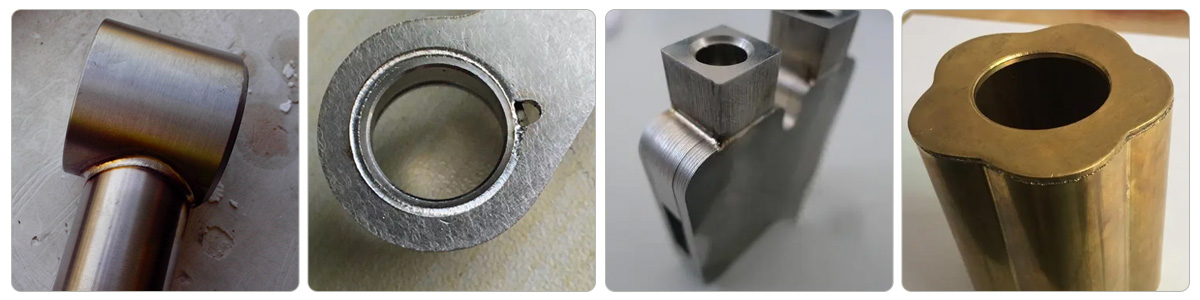
Through welding strategies tailored to irregular shapes, first-class welding results were ultimately achieved. The welds are neat and robust, with no missed welds or porosity, preserving the product’s aesthetic appeal.

Furthermore, the increased welding speed not only boosted production efficiency but also significantly reduced material waste and production costs.


These two case studies demonstrate how handheld laser welding technology effectively addresses welding challenges posed by complex spaces and shapes in practical applications. Through innovative solutions and practical experience, companies can achieve high-quality welding results that meet the growing demands of modern manufacturing.

Conclusion

When using handheld laser welding machines in complex spaces, mastering the relevant techniques and precautions is crucial for improving weld quality. By selecting the appropriate equipment, properly adjusting welding parameters, precisely planning welding paths, and implementing effective post-processing and quality inspections, welders can significantly reduce the risk of weld defects caused by spatial constraints. This not only enhances the structural strength and durability of the finished product but also boosts the welder’s confidence and operational safety.


At the same time, against the backdrop of the welding industry’s continuous evolution, it is vital to encourage users to engage in ongoing learning and practice to address increasingly complex welding scenarios. As new technologies are introduced and market demands shift, welders should maintain an open mindset and actively participate in training and technical exchanges to enhance their skills and adaptability. Through continuous learning, welders can better adapt to new process requirements, improve overall work efficiency, and ensure high-quality welding results across various work environments.


In summary, handheld laser welding machines provide a powerful tool for solving complex welding challenges. When welders flexibly apply these techniques in practice, they will drive further development and progress in the industry. In the future, through technological innovation and continuous exploration, handheld laser welding technology will be able to meet a broader range of application needs, bringing greater efficiency and quality assurance to the manufacturing sector.

Hot Products

content is empty!

Leave a Message
Contact us
More than 10 precision production line, easy to realize large quantities of goods, to provide you with the best price.
Contact Us
  No 317, Mu Dong RD, Wu Zhong DIST, Suzhou City, Jiangsu Province, China
 info@suntoplaser.com
  +86 13771746401

Products

Home
© 2023 Suzhou Suntop Laser Technology Co., Ltd  All rights reserved.