Views: 116 Author: Site Editor Publish Time: 2026-04-02 Origin: Site
2. Importance of Personalized Products
3. Customization Features of CO₂ Laser Marking Machine
4. Steps for Creating Personalized Products
As consumer demand for uniqueness and personalized experiences continues to grow, the market for personalized products is expanding rapidly. An increasing number of brands are recognizing that offering customized products not only meets customers’ specific needs but also strengthens their competitive edge. According to market research, personalized products can boost consumer purchasing intent, drive sales growth, and help brands stand out in a highly competitive market.

Against this backdrop, CO₂ laser marking machines have become essential tools for realizing personalized designs. Not only can they perform high-precision marking and engraving on a wide range of materials, but they also offer flexibility and rapid response times, making them ideal for various small-batch and custom production needs. By leveraging CO₂ laser marking technology, businesses can easily add unique patterns, text, or logos to their products, thereby satisfying customers’ desire for personalization, driving sales growth, and enhancing brand loyalty.
As consumers increasingly seek personalized and unique products, the market demand for customized items continues to rise. More and more consumers want to purchase not just goods, but products that reflect their personality and lifestyle. This trend compels brands to become more flexible and innovative in order to meet consumers’ evolving needs.
Personalized products not only satisfy customers’ desire for uniqueness but also enhance brand loyalty. When consumers can customize products according to their preferences and needs, they form a stronger emotional connection, which in turn deepens their loyalty to the brand. This emotional bond encourages repeat purchases and effectively increases customer lifetime value.

In a highly competitive market, products with personalized designs help brands stand out. Consumers’ emphasis on personalization enables companies that offer unique and customized experiences to capture a larger market share. Over time, businesses across various sectors—including home décor, electronics, and fashion accessories—have been actively exploring personalization strategies to enhance their market competitiveness.
Through innovation and uniqueness, personalized products successfully attract more customer attention. When choosing a brand, many consumers tend to favor companies that offer unique experiences, making this differentiated service particularly important. With the help of advanced technologies, such as CO2 laser marking machine, brands can provide fast and high-quality personalization solutions, thereby further enhancing customer satisfaction and brand image.
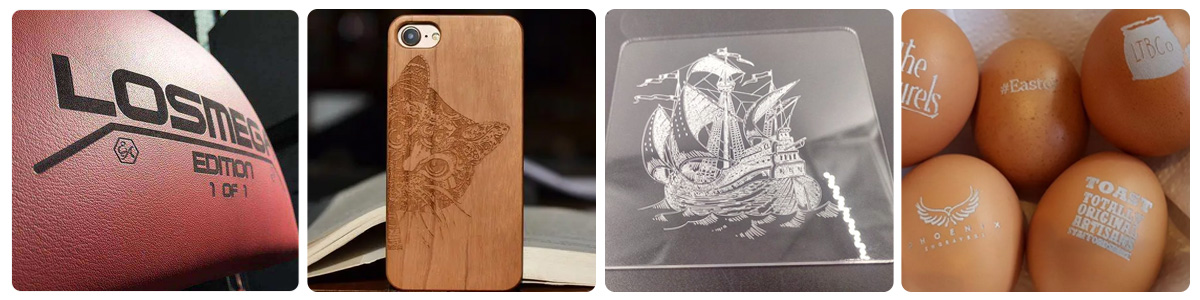
CO₂ laser marker offer exceptional high-precision marking capabilities, enabling engraving on a wide range of materials, including wood, plastic, and glass. This high-precision design not only ensures aesthetically pleasing engravings but also enhances product durability, allowing them to maintain their appearance and functionality in various environments. This enables businesses to provide customers with exquisite and long-lasting personalized products that meet consumers’ high standards for quality.
Thanks to their powerful design flexibility, CO₂ laser marking machines can accommodate the addition of various personalized elements, including text, patterns, and logos. Businesses can leverage this technology to create unique patterns and customized designs, thereby meeting the needs of different customers. These diverse design options not only encourage creativity but also help brands build a distinctive image and narrative, attracting more target consumers.
As market demands evolve rapidly, the flexibility for small-batch production offered by CO₂ laser marking machines is particularly valuable. Businesses can respond swiftly to market trends and rapidly manufacture personalized products without the need for complex molds or tools. This not only saves time and costs but also makes product updates and iterations more efficient, helping brands remain agile and innovative in a highly competitive market. In this way, companies can better meet consumers’ personalized needs and maintain a competitive edge in an ever-changing market environment. Click here for more information
● Create personalized graphics and text using design software
First, use professional design software (such as Adobe Illustrator, CorelDRAW, etc.) to create personalized graphics, text, icons, or logos. When designing, consider the preferences of your target audience and your brand image to ensure the content is appealing and relevant.
● Ensure the design aligns with the product’s dimensions and material properties
During the design process, verify the product’s specific dimensions, shape, and material properties to achieve optimal results during actual application. Since different materials react differently to laser marking, fully consider the material’s physical properties and corresponding processing parameters when designing.
● Import the design file into the laser marking machine and make necessary parameter adjustments
Convert the completed design file to a compatible format, such as DXF or AI, and import it into the laser marking machine’s control software. Set appropriate parameters within the software, including laser power, speed, and frequency, to ensure optimal marking results.
● Test the machine to ensure excellent marking results
Before proceeding with production marking, it is recommended to perform a test mark on a sample material to check the clarity, depth, and appearance of the mark. This step is crucial as it allows for parameter adjustments to ensure the marking quality of the final product meets expectations.
● Perform laser marking on products
After confirming that all settings are correct, begin laser marking on the products. Ensure operations are conducted in a quiet work environment to avoid any interference. Additionally, follow safety operating procedures to ensure the operator’s safety and the proper functioning of the equipment.
● Conduct quality inspections to ensure marking results meet standards
During production, promptly inspect the marking results to ensure the quality of the markings remains intact. By inspecting the clarity, positioning, and depth of the markings, potential issues can be identified and corrected promptly.
● Promote personalized products through online and offline channels
Develop a comprehensive marketing strategy to showcase personalized products through both online (social media, e-commerce platforms, official website, etc.) and offline (trade shows, in-store promotions, event marketing, etc.) channels. Increase brand visibility and attract more potential customers.
● Use social media and digital marketing to attract customer attention
Utilize social media platforms (such as Instagram, Facebook, Twitter, etc.) to showcase personalized products, share customer experiences, and encourage interaction and feedback. At the same time, leverage online advertising and SEO optimization to increase product visibility online and expand the customer base. Click here for more information

CO₂ laser marking machines are widely used across multiple industries. Thanks to their high precision, speed, and versatility, they provide powerful support for both mass production and customization.
CO₂ laser marking machines are used to mark and engrave packaging materials, including cardboard boxes and plastic packaging.
They can be used to add barcodes, QR codes, production dates, expiration dates, and other product information, ensuring that the information is clear and durable while meeting food safety and compliance requirements.
In the automotive, aerospace, and electronics industries, laser marking machines are used to mark various plastic components.
They provide wear-resistant, permanent markings that do not fade due to environmental factors, ensuring effective tracking and asset management.
Used for marking medical devices, instruments, and disposable medical supplies to ensure products have unique identification information.
Markings can withstand high temperatures and pressures, ensuring long-term reliability and supporting product traceability and compliance.
Used for personalized marking on consumer goods such as gifts, jewelry, and home goods, including names, patterns, and logos.
This quickly meets personalization needs, enhances customer satisfaction, adds value to products, and strengthens brand competitiveness.
Custom marking on artwork and handicrafts such as wood carvings, glass, and leather.
Offers high-detail processing, capable of rendering complex patterns or text to meet the demands of the high-end market.
Laser marking on electronic products such as phone cases, computer accessories, and circuit boards.
Creates high-definition markings with minimal damage to the material, ensuring both the aesthetic appeal and functionality of the product.
CO₂ laser marking machines play an indispensable role across multiple industries due to their efficiency, flexibility, and high precision. From packaging and manufacturing to the creation of personalized products, they generate value for businesses, enhance production efficiency, and meet customer demands for quality and personalization. With technological advancements and diversifying market needs, the industrial applications of CO₂ laser marking machines will continue to expand, driving further innovation and development. Click here for more information
Challenge:
When introducing new technologies such as CO₂ laser marking machines, companies often face challenges related to employees’ adaptation to new equipment and operating procedures. Technological updates can cause employees to feel uneasy and develop resistance, which in turn affects production efficiency and product quality.
Solutions:
Provide Comprehensive Training: Develop a systematic training program to offer employees courses on the operation, maintenance, and troubleshooting of CO2 laser marking machines. Training should combine online learning with hands-on sessions to ensure all employees are familiar with the equipment’s functions and operations.
Post-Installation Support: After the equipment is installed, provide ongoing technical support to help employees resolve issues encountered during daily operations. Utilize technical support hotlines, online chat, or regular on-site guidance to ensure employees can receive prompt assistance.
Regular Evaluation and Feedback: Regularly collect feedback from employees regarding the use of the laser marking machines, evaluate the effectiveness of training, and adjust training content and methods as needed to ensure employees’ skills remain compatible with technological advancements.
Challenges:
In the market for personalized products, identifying the target market and customer needs is a complex task. Companies need to gain a deep understanding of consumer preferences, market trends, and potential competitors to develop effective marketing strategies.
Solutions:
Market Research: Conduct market research using methods such as surveys, focus group discussions, and competitor analysis. Understand potential consumers’ preferences, needs, and purchasing behaviors, and monitor market dynamics in real time to ensure product positioning aligns with market trends.
Data Analysis: Utilize data analysis tools to evaluate customer purchase histories and feedback to identify target customer segments. This will help the company accurately grasp consumers’ personalized needs and effectively formulate marketing strategies.
Personalized Product Development: Customize and develop personalized products tailored to specific customer segments. For example, for younger consumers, design custom options featuring unique graphics and trendy elements; for the high-end market, offer premium materials and bespoke services.
Through the above solutions, companies can effectively address the challenges posed by technological adaptation and market positioning, enhance their competitiveness in the personalized product market, and ensure their products better meet customer needs while achieving business objectives. Click here for more information
Personalized products are gaining increasing popularity among consumers in today’s market. Their uniqueness and tailored nature effectively attract customers and strengthen brand loyalty. Personalized services not only satisfy customers’ desire for unique experiences but also enhance the added value of products, making consumers willing to pay a premium for customized designs. This trend has been validated by numerous companies, with an increasing number of brands leveraging personalized products to boost sales and enhance market competitiveness.
Against this backdrop, CO₂ laser marking machines play a crucial role. With their high precision and flexibility, these devices enable fast and accurate marking and engraving on a wide range of materials, making the production of personalized products more efficient and cost-effective. Through laser marking, companies can not only respond quickly to market demands but also offer diverse customization options, maximizing the potential of personalized designs. Whether in material processing, product customization, or production process optimization, CO₂ laser marking machines demonstrate immense potential.
By combining the market demand for personalized products with the technical advantages of CO₂ laser marking machines, businesses can secure a foothold in an increasingly competitive market, further enhance customer satisfaction, and drive sales growth. This solution brings new opportunities for business development and offers customers a richer shopping experience, making personalized products a key trend in the future market.
Table of Contents1. Introduction
Table of Contents1. Introduction2. Overview of UV Laser Marking Machines3. Marking Effects on Different Materials3.1 Non-metallic Materials3.2 Metal Materials4. Advantages of UV Laser Marking5. Application Examples of UV Laser Marking6. Conclusion
Table of Contents1. Introduction