Views: 142 Author: Site Editor Publish Time: 2026-11-10 Origin: Site
2. CO2 laser marking fits most non-metal materials
3. Key Advantages Over Traditional Methods
4. Stable and User-Friendly Equipment Suitable for Various Factory Scenarios
In the processing of non-metallic materials—such as leather, wood, bamboo, acrylic, plastics, paper, and packaging—traditional methods like screen printing, inkjet coding, and hot stamping have long been plagued by significant drawbacks, including markings that easily wear off, high consumable costs, environmental pollution, and poor print clarity. As industries increasingly demand greater precision and higher quality in product processing, CO₂ laser marking technology has emerged as the preferred, mainstream solution. With key advantages—such as requiring no consumables, delivering clear and intricate markings, creating permanent and wear-resistant imprints, and offering broad compatibility with various materials—CO₂ laser marking is progressively replacing traditional techniques for product identification, precision engraving, and high-volume coding on non-metallic items.
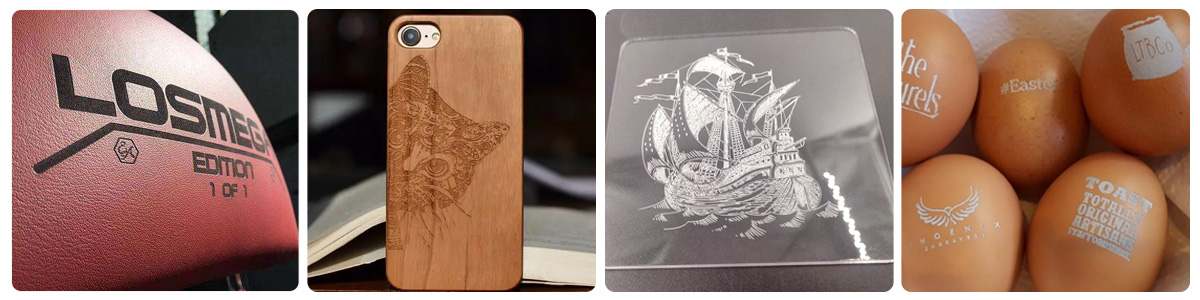
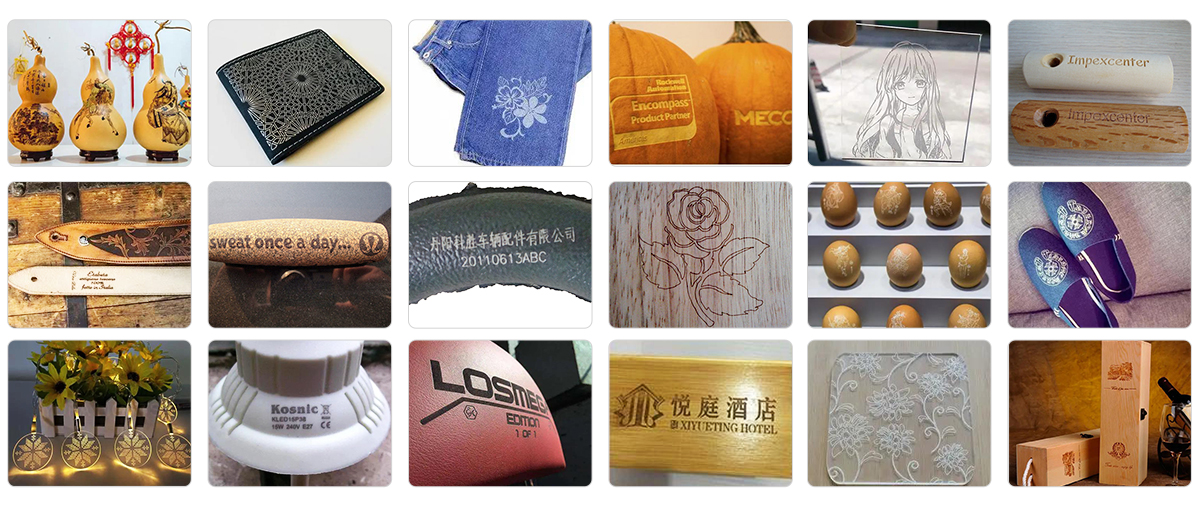
Unlike fiber lasers—which are designed exclusively for processing metals—CO₂ lasers feature a specific wavelength tailored for non-metallic materials. Offering exceptional material compatibility, they meet the marking, engraving, and coding requirements for a wide range of non-metallic products across various industries. They are compatible with the vast majority of mainstream non-metallic materials found on the market today:
• Packaging Materials: Ideal for high-precision coding—such as production dates, traceability QR codes, and brand identifiers—on paper products, paper packaging boxes, plastic films, and various types of packaging bags.
• Craft and Decorative Materials: Suitable for bamboo, wood, genuine leather, synthetic leather, fabric, and rubber; capable of intricately engraving brand logos, complex patterns, and custom designs.
• Plastics: Supports precise marking, character engraving, and pattern etching on a variety of plastic products—including ABS, acrylic, resin, and plastic keypads—delivering clear, uniform, and well-defined results.
• Creative Goods and Home Decor: Widely used for items such as creative gifts, solid wood products, and textiles, allowing for the detailed engraving of personalized patterns, text, and logos to satisfy diverse customization needs.
CO₂ laser marking has become the preferred process for marking non-metallic materials, primarily because it overcomes the inherent limitations of traditional methods—such as screen printing, inkjet coding, hot stamping, and labeling. It offers significant advantages in terms of marking quality, production costs, efficiency, and adherence to manufacturing standards:
1. No Consumables, Lower Long-Term Costs: The process requires no consumables such as inks, ribbons, or adhesive labels; it relies solely on electricity. This eliminates the recurring expense of purchasing supplies, resulting in superior cost-effectiveness for high-volume, long-term production.
2. Durable, Permanent Markings: By using a laser to ablate the surface, the mark becomes an integral part of the substrate. The resulting marks are highly resistant to wiping, alcohol, and friction, effectively solving the common issues found with traditional methods—such as peeling, blurring, or fading.
3. High Precision and Detail for Complex Designs: With an ultra-fine laser spot, the system can produce crisp, clear markings—from tiny characters and high-density QR codes to intricate brand logos and complex patterns. The level of precision and aesthetic quality far surpasses traditional techniques, meeting the exacting requirements for high-end product marking.
4. Eco-Friendly and Clean: The process is entirely free from ink odors, wastewater, solid waste, and chemical pollution. It ensures a clean, tidy production environment that fully complies with modern environmental standards and industry regulations.
5. Automation-Ready for Higher Throughput: The system supports both static, high-precision marking and "on-the-fly" (flying) marking integrated into production lines. It is ideally suited for industrial-scale mass production, significantly boosting overall operational efficiency.
CO₂ laser marking systems feature a stable overall structure and a low barrier to entry, making them highly practical and adaptable for manufacturing environments of various scales and operational conditions:

1. Air-cooled design for easy maintenance: The system utilizes an integrated air-cooling structure, eliminating the need for a separate water chiller. This removes the cumbersome tasks of changing water or maintaining a water-cooling system, resulting in simplified daily upkeep, a lower failure rate, and greater long-term operational stability.
2. Simple, efficient operation with a short learning curve: Equipped with an intelligent operating system, the unit offers excellent compatibility. Users can directly import common file formats—such as AI, DXF, or PLT—from a computer and initiate marking with a single click. No specialized technical background is required, allowing staff to quickly become proficient in its operation.
3. Exceptional marking speed to boost productivity: With stable laser output and rapid response times, the system efficiently handles batch marking and engraving tasks. This significantly reduces processing time, thereby enhancing the overall efficiency and output capacity of the production line.
4. Compact, flexible design for diverse applications: The unit’s small footprint allows for flexible placement. It is equally well-suited for routine processing at fixed workstations or for integration into automated production lines, effectively meeting a wide range of manufacturing requirements.
CO₂ laser marking technology offers exceptional versatility, making it highly suitable for a wide range of sectors, including food and personal care packaging, leather and apparel, bamboo and wooden home furnishings, plastics and electronics, and arts, crafts, and gifts. For various non-metallic materials, the equipment delivers a stable, uniform laser beam that produces high-definition, detailed markings and engravings with clean, well-defined edges. This process balances processing speed with production costs, enabling businesses to effectively manage expenses during mass production while enhancing the visual quality of their products and ensuring the consistency of their markings.

Compared to traditional methods—such as screen printing, inkjet coding, or hot stamping—CO₂ laser marking effectively resolves common industry challenges, including poor marking durability, low clarity, high consumption of consumables, and environmental concerns. With advantages such as permanent marking, the elimination of consumables, a reduction in the need for rework, and seamless integration into automated mass-production lines, this technology has largely replaced outdated, traditional processing methods. It has become the preferred, mainstream solution for precision marking, batch traceability coding, and personalized engraving on non-metallic materials—perfectly meeting the standardized production and customized processing requirements of factories of all sizes.
Our company offers a comprehensive range of CO₂ laser marking equipment, featuring various power levels and configurations to effectively meet the marking and engraving requirements for non-metallic materials across diverse industries. We provide customized marking solutions and production line integration tailored to the specific operational needs of our clients. By delivering efficient, stable, and cost-effective integrated laser processing solutions for non-metallic materials, we empower businesses across various sectors to enhance production quality, increase efficiency, and reduce costs.
Table of Contents1. Introduction