Why Water Cooling Is Essential for CO2 Laser Machine Stability

Views: 141     Author: Site Editor     Publish Time: 2026-11-12      Origin: Site

Inquire

facebook sharing button
twitter sharing button
line sharing button
wechat sharing button
linkedin sharing button
pinterest sharing button
whatsapp sharing button
sharethis sharing button

Table of Contents

1. Introduction

2. Challenges in CO₂ Laser Heat Dissipation

3. How the Water-Cooling System Works

4. Core Functions of Water-Cooled Heat Dissipation Systems

5. Comparison of CO₂ Laser Equipment Compatibility

6. Common Malfunctions Caused by Water-Cooling System Abnormalities

7. Key Points for Routine Maintenance

8. Conclusion


Introduction

CO₂ laser equipment performs cutting and engraving operations through energy conversion in the laser tube, and the entire machine continuously generates a large amount of heat during operation. During prolonged continuous operation, heat continuously accumulates and cannot dissipate on its own, becoming a core issue affecting the equipment’s operational status and a primary cause of precision degradation and frequent malfunctions.


Excessively high operating temperatures can directly cause issues such as laser power fluctuations and beam deviation, resulting in processing accuracy deviations and inconsistent finished product quality. At the same time, high temperatures accelerate the aging and wear of core components—such as the laser tube, optical lenses, and power supply—and, in severe cases, can trigger high-temperature protection mechanisms, leading to sudden equipment shutdowns and production interruptions, which significantly increase production and maintenance costs.


Against this backdrop, water-cooling systems have become the cornerstone of temperature control for the stable operation of CO₂ laser equipment. Their highly efficient, constant-temperature cooling capabilities rapidly dissipate excess heat and stabilize operating temperatures, effectively preventing various issues caused by high temperatures and ensuring the equipment maintains continuous, high-precision, and high-efficiency stable operation.

Challenges in CO₂ Laser Heat Dissipation

CO₂ laser equipment generates a significant amount of heat during operation. The heat sources are primarily concentrated in four core components: the CO₂ laser tube, optical lenses, the power supply module, and the drive system. Among these, the laser tube is the primary source of heat, generating a large amount of waste heat during the energy conversion process; Optical lenses continuously accumulate heat due to prolonged exposure to high-energy light beams; the power supply module and drive system also generate sustained heat while operating under high-frequency, high-load conditions. This simultaneous heat generation from multiple sources places immense pressure on the equipment’s heat dissipation capabilities.


Under continuous batch processing conditions in a factory setting, where equipment operates non-stop for extended periods, numerous heat dissipation challenges are exposed. The equipment generates heat rapidly, and the concentrated heat buildup cannot be dissipated in a timely manner, resulting in significant temperature fluctuations inside the unit. Conventional cooling methods have limited efficiency and insufficient temperature control precision, making them ill-suited for the demands of prolonged, high-load operations. This makes cooling failure highly likely, preventing the equipment from maintaining a constant operating temperature.


Frequent temperature fluctuations cause fundamental and persistent damage to laser equipment. Temperature instability directly compromises the stability of the laser beam, causing output power to fluctuate erratically and adversely affecting the processing accuracy and final quality of cutting and engraving operations. Additionally, repeated cycles of heating and cooling accelerate the aging of core components, shorten the equipment’s service life, and increase the likelihood of errors and downtime. This is the primary reason why professional water-cooling systems are essential for high-precision, long-duration laser processing.

How the Water-Cooling System Works

The water-cooling system for CO₂ laser cutting and engraving machine features a comprehensive and well-established temperature control structure, consisting primarily of four core components: a chiller, a circulation loop, temperature sensors, and a heat exchange module. These components work in concert to form a closed-loop cooling system capable of continuously cooling heat-generating components—such as the laser tube, power supply, and optical components—thereby providing the hardware foundation for stable equipment operation.


Customized CO2 Laser Cutting and Engraving Machine for South African Client Successfully Shipped-3
Customized CO2 Laser Cutting and Engraving Machine for South African Client Successfully Shipped-2
Customized CO2 Laser Cutting and Engraving Machine for South African Client Successfully Shipped-1


The system as a whole follows a closed-loop cooling process with a clear and efficient operational logic. During operation, circulating water flows through the system’s heat-generating core areas via the water circuit, rapidly absorbing excess heat generated by the equipment. The water then enters the chiller for temperature regulation, precisely balancing the water temperature. Next, the heat exchange module dissipates internal heat to the outside, completing the heat exchange process. The cooled water then recirculates back into the equipment, maintaining continuous cooling and forming an uninterrupted closed-loop cooling cycle.


Leveraging intelligent sensing and closed-loop regulation technologies, the water-cooling system offers outstanding precision in temperature control. The system monitors water temperature in real time and dynamically adjusts it, strictly maintaining the equipment’s operating temperature within a standard and reasonable range, effectively preventing sudden fluctuations in temperature. This stable, constant-temperature operating environment ensures consistent and stable laser beam output, fundamentally addressing the shortcomings of traditional cooling methods—such as imprecise temperature control and heat buildup—and making the system suitable for prolonged, continuous machining operations.

Core Functions of Water-Cooled Heat Dissipation Systems

As a critical supporting system for CO₂ laser cutter and engraver, water-cooled heat dissipation systems provide comprehensive protection for stable equipment operation across multiple dimensions—including power output, processing accuracy, component protection, production efficiency, and operational and maintenance costs. Their core functions are primarily reflected in the following five aspects:


1. Stabilizing laser output power to eliminate processing errors

Temperature rise during equipment operation can easily cause laser power decay and output fluctuations, directly affecting the machining quality of finished products. The water-cooling system controls equipment temperature in real time, maintaining a constant laser output power at all times and completely resolving the issue of power instability caused by temperature increases. In large-scale batch production, it effectively ensures that the cutting depth and engraving depth are uniform and consistent for every workpiece, eliminating machining errors such as color differences and inconsistent depths in batch processing, and guaranteeing product consistency.


2. Stabilizing Laser Beam Quality to Ensure Processing Precision

High-temperature environments can cause laser spot distortion, beam deviation, and focusing inaccuracies, significantly reducing laser processing precision. An efficient water-cooled temperature control system stabilizes equipment operation, prevents high temperatures from interfering with the laser beam, and firmly maintains beam quality and focusing accuracy. It perfectly meets the high-precision process requirements for intricate engraving, small-area precision cutting, and detailed openwork, effectively enhancing product processing precision and yield rates.

How to realize high-speed cutting and improve productivity with CO2 laser cutting machine features-Suntop

3. Protecting Core Components and Extending Equipment Lifespan

Core components such as CO₂ laser tubes, optical lenses, and power supply units are extremely sensitive to operating temperatures. Prolonged operation at high temperatures accelerates component aging and can even lead to failures such as laser tube rupture or lens damage. The water-cooling system provides continuous and balanced heat dissipation, effectively lowering the operating temperature of core components, slowing down the aging of consumables, preventing damage caused by high temperatures, significantly reducing the failure rate of core consumables, and effectively extending the service life of the entire machine.


4. Supports Long-Term Continuous Operation and Enhances Production Efficiency

Compared to traditional air-cooling methods, water-cooling offers higher cooling efficiency, more precise temperature control, and more stable operation, significantly overcoming the limitations of air cooling. It is perfectly suited for high-volume, long-term, uninterrupted production environments in factories. There is no need for frequent shutdowns to cool the equipment, effectively saving idle cooling time, maintaining a consistently high-efficiency processing state, and significantly boosting overall production capacity and processing efficiency.


5. Reduces Equipment Failure Rates and Lowers Operating and Maintenance Costs

Most sudden equipment failures are caused by overheating, including automatic shutdowns, system errors, and equipment freezes. The water-cooling system fundamentally improves the equipment’s thermal environment, preventing various malfunctions caused by high temperatures and significantly reducing the probability of equipment failure. At the same time, it effectively reduces the frequency of equipment repairs and the cost of replacement parts, lowering long-term operating and maintenance expenses and ensuring long-term, stable, and low-wear operation of the equipment.

Comparison of CO₂ Laser Equipment Compatibility

Currently, the two mainstream cooling methods for CO₂ laser equipment are air cooling and water cooling. There are significant differences between the two in terms of cooling principles, operational performance, and suitability for various operating conditions. Given the high-precision and long-duration operational requirements of industrial production, the gap in overall performance between these two cooling solutions is particularly pronounced. The following provides a detailed comparative analysis from multiple perspectives.
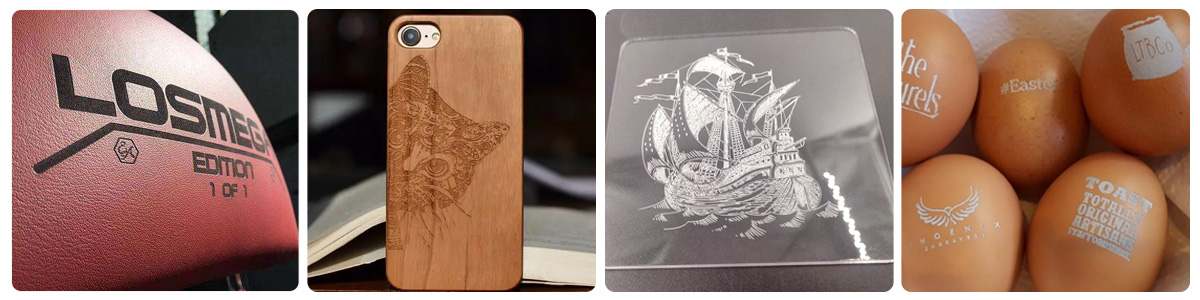
What materials can laser marking machines be applied to co2 laser marking-Suntop

1. Comparison of Cooling Efficiency and Temperature Control Stability

Air-cooling relies on convection via fans, resulting in slower heat dissipation and lower temperature control precision. During operation, the equipment is prone to sudden temperature fluctuations, making precise temperature control difficult. In contrast, water-cooling relies on a closed-loop water circulation heat exchange system, offering higher cooling efficiency, uniform heat transfer, and precise temperature control. It can stably maintain the equipment’s temperature within the standard range, effectively suppressing temperature fluctuations, and ensure the laser equipment operates at a constant temperature throughout the entire process, resulting in more stable beam output and power performance.


2. Comparison of Continuous Operation Capability and Suitable Operating Scenarios

Air-cooling has a limited maximum cooling capacity. Prolonged continuous operation can lead to heat buildup and insufficient cooling, requiring the equipment to be shut down periodically to cool down. It is only suitable for short-term, intermittent, low-power processing scenarios, such as small workshops, handmade customization, and the processing of small, scattered parts. Water-cooling supports round-the-clock, uninterrupted continuous operation. Its cooling performance does not degrade with operating time, making it fully suited for factory-level industrial production scenarios involving high-volume, high-load, and long-duration continuous production, without the hassle of frequent shutdowns for cooling.

Why CO2 laser marking machine can mark on wood samples-Suntop

3. Comparison of Equipment Wear, Processing Results, and Long-Term Operating Costs

In terms of equipment wear, air-cooling systems suffer from unstable temperature control. Long-term heat accumulation at high temperatures accelerates the aging of core components such as the laser tube and lenses, resulting in a higher failure rate and frequent replacement of consumables. Water-cooling systems maintain a constant temperature, significantly reducing thermal wear on components, extending the equipment’s service life, and minimizing the probability of failure. In terms of processing results, air-cooled equipment is prone to issues such as power instability, uneven depth of cut, and rough cut surfaces due to temperature fluctuations, resulting in a limited yield rate; water-cooled equipment offers high processing precision and produces uniform, fine-textured finished products, making it suitable for high-precision machining requirements. Regarding long-term costs, air-cooled equipment incurs high costs for maintenance and replacement parts, resulting in a low overall cost-effectiveness; water-cooled equipment is simple to operate and maintain, with extremely low wear and tear, making it more cost-effective and stable over the long term.


Considering cooling capacity, operational stability, machining quality, and long-term operational and maintenance costs, air-cooling is suitable only for low-power, intermittent, and low-precision light-duty machining applications. In contrast, medium- to high-power, industrial-grade CO₂ laser machine demands higher precision in temperature control, continuous operation capability, and equipment stability. Water-cooling systems fully meet industrial production standards and are the preferred cooling solution for industrial-grade CO₂ laser equipment.

Common Malfunctions Caused by Water-Cooling System Abnormalities

The water-cooling system is critical to ensuring the stable operation of CO₂ laser equipment. Any operational abnormality can directly disrupt the equipment’s constant-temperature operating environment, triggering a series of processing issues and equipment failures that disrupt normal production operations. Common water-cooling system malfunctions can be broadly categorized into the following three types:


1. Excessively High Water Temperature: Power Decline, Incomplete Cutting, and Blurred Engraving

Excessive cooling water temperature is the most common issue in water-cooling systems. When the water temperature remains persistently high, the equipment cannot dissipate heat in a timely manner, leading directly to a significant decline in laser output power and unstable output. During processing, quality issues such as incomplete cutting of sheet metal, residual burrs on cut edges, blurred engraving patterns, and uneven engraving depth may occur, severely affecting the precision of finished products and the processing yield rate.


2. Poor Water Circulation: Laser Tube Overheating, Equipment Alarms, and Shutdowns

Issues such as clogged pipes, insufficient water flow, and pump failures can all cause poor water circulation. When water cannot circulate normally to facilitate heat exchange, heat continuously accumulates in the core cooling area of the laser tube, causing temperatures to rise sharply. This can easily lead to overheating and premature aging of the laser tube. The equipment will trigger its high-temperature protection mechanism, resulting in system alarms and forced shutdowns, which directly interrupt the production process, causing delays in production schedules. In severe cases, it can even lead to the laser tube burning out and becoming scrap.


3. Temperature Control Failure: Irregular Laser Spot, Significant Increase in Processing Defect Rate

When temperature sensors fail or the temperature control system malfunctions, the water-cooling system cannot precisely regulate the water temperature, resulting in continuous fluctuations in operating temperature and uncontrolled temperature variations. An unstable temperature environment directly disrupts the laser beam’s shape, causing issues such as a distorted spot, beam deviation, and inaccurate focusing. Ultimately, this leads to a significant increase in workpiece processing defects, including deformation of cutouts, uneven line widths, and uneven cut surfaces, substantially increasing the product scrap rate.

Key Points for Routine Maintenance

The operational status of the water-cooling system directly determines the processing stability, finished product quality, and overall service life of CO₂ laser equipment. Performing routine, standardized maintenance can effectively prevent malfunctions in the water-cooling system, maintain high-efficiency heat dissipation, and reduce equipment wear and operational costs. The following are the key points for routine maintenance:


1. Replace the circulating cooling water regularly to prevent scale buildup and blockages in the piping

Prolonged use of circulating cooling water leads to the accumulation of impurities and scale, which easily adhere to the inner walls of pipes and the laser tube water channels. This narrows the passages, obstructs water flow, and consequently impairs heat exchange efficiency. Regularly replacing the specialized cooling water according to the equipment’s usage frequency effectively reduces scale buildup and impurity accumulation, ensures unobstructed water circulation, and prevents issues such as poor heat dissipation and equipment overheating caused by water channel blockages at the source.


2. Clean the Chiller’s Filter Screen and Heat Exchange Modules to Maintain Consistent Heat Dissipation Efficiency

The chiller’s filter screen and heat exchange modules are constantly exposed to the workshop environment, making them prone to accumulating dust, lint, and debris. This can clog the heat dissipation structures and significantly reduce heat exchange efficiency. As part of routine maintenance, the filter screens should be periodically removed and cleaned, and dust accumulated on the surfaces of the heat exchange modules should be removed to ensure unobstructed airflow through the cooling ducts and efficient operation of the heat exchange components. This ensures that the water-cooling system consistently maintains standard cooling performance, meeting the demands of long-term continuous processing.


3. Routinely monitor water temperature and pressure to promptly identify equipment abnormalities

Water temperature and pressure are key indicators for assessing the operational status of the water-cooling system. Routinely monitor water temperature and pressure readings before and after daily startup to confirm that equipment operating parameters remain within standard ranges. If issues such as abnormal spikes in water temperature, unstable water pressure, or fluctuations in water flow are detected, immediately shut down the system to inspect relevant components—including piping, pumps, and sensors—and quickly resolve minor faults to prevent accumulated problems from causing serious issues such as unstable laser power or equipment shutdowns triggered by alarms.


4. Implement Specialized Protective Measures for Winter and Summer to Adapt to Seasonal Operating Conditions

Seasonal temperature fluctuations directly affect the operational stability of water-cooling systems, necessitating targeted maintenance measures. In summer, when workshop temperatures are high, inspections of the chiller’s heat dissipation must be intensified to prevent insufficient cooling and excessive water temperatures caused by high ambient temperatures. In winter, when temperatures are low, strict anti-freeze measures must be implemented; for idle equipment, accumulated water in the piping must be drained promptly or antifreeze coolant added to prevent water lines from freezing and bursting or components from suffering freeze damage, thereby ensuring stable equipment operation throughout all four seasons.

Conclusion

Water-cooling systems are the core supporting infrastructure that ensures the high-quality operation of CO₂ laser equipment and play a decisive role in the equipment’s overall performance. A stable, constant-temperature cooling environment effectively maintains laser output precision, sustains continuous and efficient processing, and reduces wear on core components. This comprehensively enhances the equipment’s operational stability and overall service life, fundamentally resolving the pain points associated with traditional cooling methods—such as power fluctuations, processing defects, equipment fragility, and the inability to operate continuously.


Optimal equipment performance relies on standardized operation and routine maintenance. Proper operation of the water-cooling system, along with regular cleaning of the water circuits, water replacement, and operational condition monitoring, can sustain the equipment’s optimal cooling state, reduce the likelihood of failure-related downtime, and lower long-term operational and maintenance costs. These practices form the essential foundation for ensuring the efficient, long-lasting, and stable operation of CO₂ laser equipment.


With their precise temperature control, strong adaptability, and outstanding stability, water-cooled CO₂ laser systems are widely applicable across diverse scenarios, including industrial mass production, advertising and signage fabrication, woodworking and cultural-creative engraving, and personalized custom processing. They not only meet high-precision processing requirements but are also suited for extended industrial operations, providing more reliable and efficient comprehensive solutions for laser processing across various industries.

Leave a Message
Contact us
More than 10 precision production line, easy to realize large quantities of goods, to provide you with the best price.
Contact Us
  No 317, Mu Dong RD, Wu Zhong DIST, Suzhou City, Jiangsu Province, China
 info@suntoplaser.com
  +86 13771746401

Products

Home
                                                                © 2023 Suzhou Suntop Laser Technology Co., Ltd  All rights reserved.       https://www.metalbasketcontainer.com