| Availability: | |
|---|---|
| Quantity: | |
| PDF Export | |

1. High transmittance:
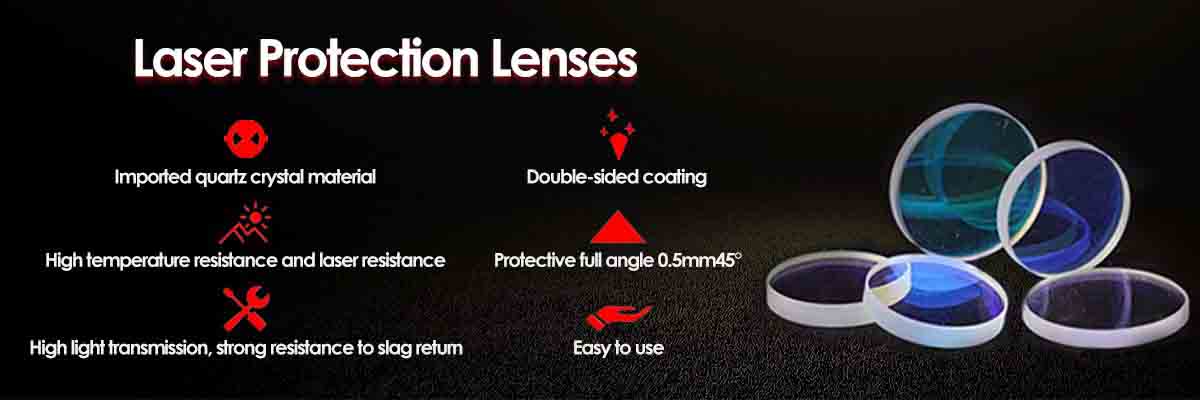
Laser protection lenses usually use optical materials with high transmittance to ensure that the laser beam can penetrate smoothly and minimize light loss.
2. Low reflectivity:
The low reflectivity can effectively prevent the reflection interference of the laser beam and improve the processing quality and safety.
3. High temperature and wear resistance:
The use of high temperature resistant materials can withstand long-term high-intensity laser irradiation, and has excellent wear resistance and extended service life.
4. Chemical stability:
It has strong resistance to common chemicals and can effectively prevent chemical corrosion during laser cutting.
5. Customizability:
It provides a variety of specifications, sizes and wavelengths to meet the needs of different application scenarios.
6. Filtering characteristics:
It can be designed into a filter as needed to block light of a specific wavelength to protect the safety of laser equipment and operators.
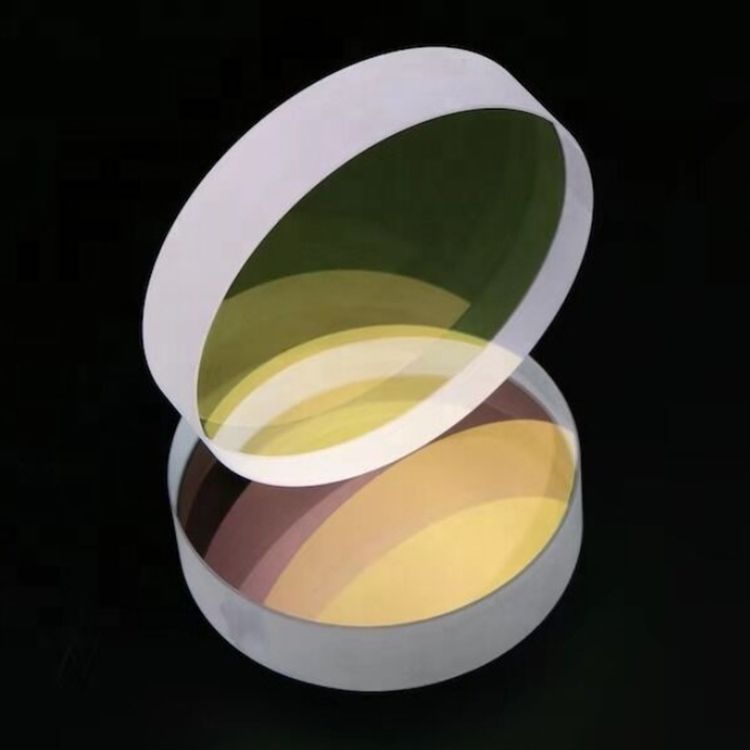
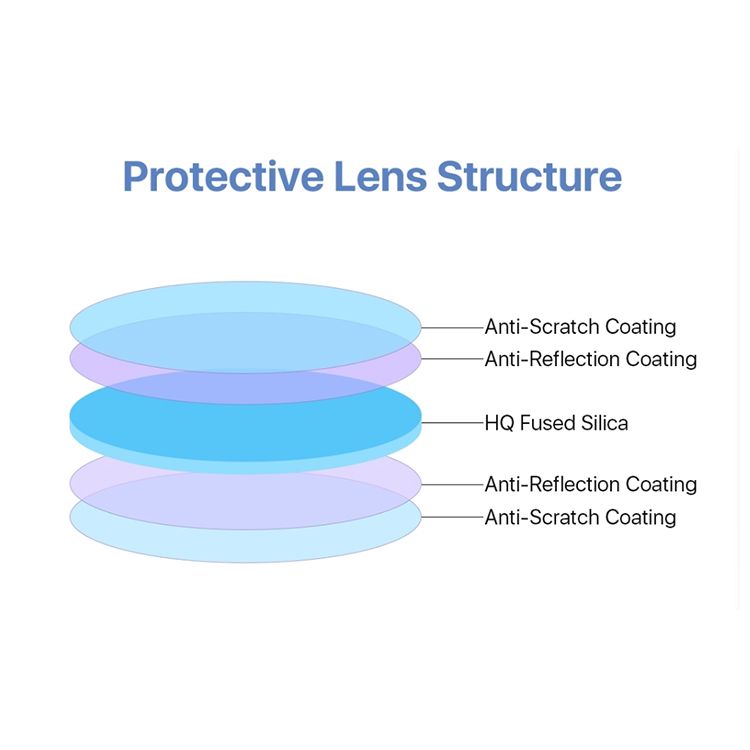
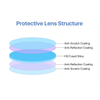
Protect the focusing lens to prevent splashes from splashing onto the lens and causing damage to the lens. Ensure the processing accuracy requirements by regularly replacing the protective lens. Coating the lens with a 1064nm anti-reflection coating with a high damage threshold (>15J/cm2) can effectively increase the transmittance of the lens, reduce energy loss, and improve the quality of processed products.
1. Protective function
Protective lenses can effectively prevent external dust, dirt and other impurities from entering the laser, keep the surface of the lens clean, so as to ensure the quality and stability of the laser output.
2. Improvement of transmittance
Good protective lenses have high transmittance, which can reduce the reflection and scattering of the beam and improve the working efficiency of the laser.
3. Anti-wear function
The protective lenses are specially treated to have certain anti-wear performance, which can prolong the service life of the lenses and reduce the replacement frequency and maintenance cost.
4. Beam adjustment
Some protective lenses also have the function of adjusting the beam, which can change the angle and shape of the beam to meet different working requirements and improve the precision of laser processing.
5. Thermal stability
High-quality protective lenses have good thermal stability, which can maintain stable optical performance under high temperature environment and ensure stable operation of the laser for a long time.
6. Anti-reflective coating
Some protective lenses are coated with special anti-reflective coating, which reduces the reflection loss of the beam, improves the optical transmission efficiency and enhances the output power of the laser.
Maintaining the best performance of laser protection lenses requires regular cleaning and proper storage. The following are detailed daily cleaning and protection tips and storage recommendations to help you effectively extend the life of the lenses and keep them in optimal condition.
● Cleaning frequency
Check the lenses regularly and perform necessary cleaning according to the frequency of use and environment. Especially after completing laser operation, make sure that the lenses are free of dust or stains.
● Cleaning tools
Use a soft, clean, dry cloth (such as a microfiber cloth) to clean and avoid abrasion of the lens surface.
Try to avoid using paper towels, old clothes, etc., as these materials may scratch the lenses.
● Cleaners
Use a dedicated optical cleaner and make sure it is suitable for the lens material. Never use alcohol, solvents, or cleaners containing chemicals, which may damage the lens surface.
Before cleaning the lens, you can spray the cleaner on the cloth instead of spraying it directly on the lens to prevent liquid from entering the edge.
● Cleaning steps
Gently wipe the lens with a dry cloth to remove dust and dirt.
If there are stubborn stains, spray a small amount of detergent on the cloth and keep smooth circular motions to avoid scratching the lens.
After cleaning, wipe with a clean part of the cloth to ensure that there is no residual detergent.
● Avoid direct contact
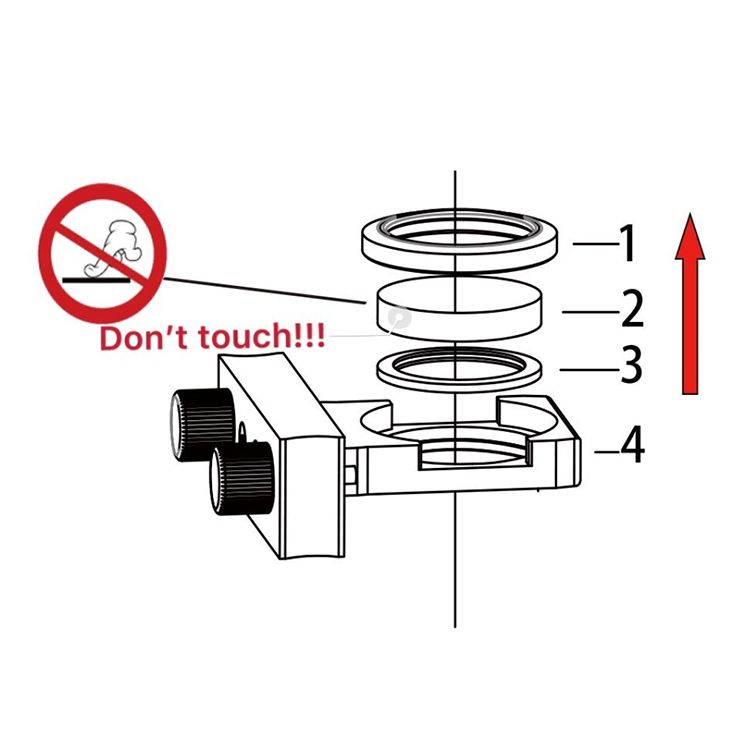
Do not touch the lens surface directly with your fingers to avoid grease and dirt.
● Anti-scratch protection
When using the lens, try to keep it in the protective cover and avoid exposure to the working environment unless necessary.
● Use protective cover
Place the laser protection lens in a dedicated protective box or soft packaging to avoid compression and wear. During transportation, ensure that the lens is in a safe state to prevent accidental damage.
● Avoid high temperature and humidity
The location where the lens is stored should avoid high temperature and humidity to prevent damage to optical performance. The ideal storage environment is a place with stable temperature and dryness.
● Keep away from chemicals
Keep away from corrosive and chemicals to avoid damage to the lens material.
● Fixed storage location
When storing, ensure that the lens is away from possible falls, collisions or other unexpected factors. A dedicated shelf or cabinet can be set up to store only the lenses and related accessories.
● Regular inspection
Regularly inspect the lenses in storage to ensure that there are no scratches, stains or other damage. Deal with any problems promptly to avoid safety hazards during the next use.
By following the above cleaning and storage recommendations, you can effectively maintain the performance and safety of laser protection lenses. This can extend the life of the tool and ensure the safety and work efficiency of the operator.

1. Protect the focusing lens:
Effectively prevent splashes, dust and other impurities from damaging the focusing lens, thereby extending the service life of the focusing lens and improving the reliability of the laser system.
2. Improve processing accuracy:
Keep the lens clean and intact, provide a stable optical path for laser processing, and ensure high precision and high quality of the processing process.
3. Reduce maintenance costs:
Regular replacement of protective lenses can reduce damage to the focusing lens, reduce the frequency of maintenance and replacement of focusing lenses, and thus save costs.
4. Operational safety:
By effectively blocking harmful or colored light waves, improve the safety of the laser processing process and provide further protection for operators.
5. Versatility:
Protective lenses of different wavelengths and materials can be customized according to different laser types and application scenarios to meet a variety of processing needs.
6. Enhance the efficient operation of equipment:
Ensure that the laser equipment operates in the best condition, thereby improving overall production efficiency.
Laser protective lenses have become an indispensable and important component in the laser processing process with their excellent optical performance and durability. They not only effectively protect critical optical components, but also improve processing accuracy and efficiency and reduce maintenance costs, thus providing users with significant economic and technical advantages.
1. Laser Cutting
Laser cutting is a technology that uses a high-energy laser beam to cut materials into the desired shape. Lasers can quickly and accurately cut a variety of materials such as metals, plastics, wood and textiles, and are widely used in industries such as automobile manufacturing, aerospace, and home appliances.
Advantages: fast cutting speed, small heat-affected zone, smooth cutting edges, and low mold cost.
2. Laser Welding
Laser welding uses a laser heat source for welding and is suitable for the connection of metals and certain non-metallic materials. This technology is particularly important in fields such as electronic equipment, medical equipment, and precision instruments.
Advantages: fast welding speed, high weld quality, fine processing, and reduced material deformation.
3. Laser Marking
Laser marking is a technology that uses lasers to mark the surface of materials. It is widely used in product identification, barcodes, QR codes, and batch number engraving. Marking can achieve high-precision engraving on materials such as metals, plastics, and glass.
Advantages: strong wear resistance, long-lasting marking, environmentally friendly and pollution-free, and can be customized.

1. High transmittance:
Laser protection lenses usually use optical materials with high transmittance to ensure that the laser beam can penetrate smoothly and minimize light loss.
2. Low reflectivity:
The low reflectivity can effectively prevent the reflection interference of the laser beam and improve the processing quality and safety.
3. High temperature and wear resistance:
The use of high temperature resistant materials can withstand long-term high-intensity laser irradiation, and has excellent wear resistance and extended service life.
4. Chemical stability:
It has strong resistance to common chemicals and can effectively prevent chemical corrosion during laser cutting.
5. Customizability:
It provides a variety of specifications, sizes and wavelengths to meet the needs of different application scenarios.
6. Filtering characteristics:
It can be designed into a filter as needed to block light of a specific wavelength to protect the safety of laser equipment and operators.
Protect the focusing lens to prevent splashes from splashing onto the lens and causing damage to the lens. Ensure the processing accuracy requirements by regularly replacing the protective lens. Coating the lens with a 1064nm anti-reflection coating with a high damage threshold (>15J/cm2) can effectively increase the transmittance of the lens, reduce energy loss, and improve the quality of processed products.
1. Protective function
Protective lenses can effectively prevent external dust, dirt and other impurities from entering the laser, keep the surface of the lens clean, so as to ensure the quality and stability of the laser output.
2. Improvement of transmittance
Good protective lenses have high transmittance, which can reduce the reflection and scattering of the beam and improve the working efficiency of the laser.
3. Anti-wear function
The protective lenses are specially treated to have certain anti-wear performance, which can prolong the service life of the lenses and reduce the replacement frequency and maintenance cost.
4. Beam adjustment
Some protective lenses also have the function of adjusting the beam, which can change the angle and shape of the beam to meet different working requirements and improve the precision of laser processing.
5. Thermal stability
High-quality protective lenses have good thermal stability, which can maintain stable optical performance under high temperature environment and ensure stable operation of the laser for a long time.
6. Anti-reflective coating
Some protective lenses are coated with special anti-reflective coating, which reduces the reflection loss of the beam, improves the optical transmission efficiency and enhances the output power of the laser.
Maintaining the best performance of laser protection lenses requires regular cleaning and proper storage. The following are detailed daily cleaning and protection tips and storage recommendations to help you effectively extend the life of the lenses and keep them in optimal condition.
● Cleaning frequency
Check the lenses regularly and perform necessary cleaning according to the frequency of use and environment. Especially after completing laser operation, make sure that the lenses are free of dust or stains.
● Cleaning tools
Use a soft, clean, dry cloth (such as a microfiber cloth) to clean and avoid abrasion of the lens surface.
Try to avoid using paper towels, old clothes, etc., as these materials may scratch the lenses.
● Cleaners
Use a dedicated optical cleaner and make sure it is suitable for the lens material. Never use alcohol, solvents, or cleaners containing chemicals, which may damage the lens surface.
Before cleaning the lens, you can spray the cleaner on the cloth instead of spraying it directly on the lens to prevent liquid from entering the edge.
● Cleaning steps
Gently wipe the lens with a dry cloth to remove dust and dirt.
If there are stubborn stains, spray a small amount of detergent on the cloth and keep smooth circular motions to avoid scratching the lens.
After cleaning, wipe with a clean part of the cloth to ensure that there is no residual detergent.
● Avoid direct contact
Do not touch the lens surface directly with your fingers to avoid grease and dirt.
● Anti-scratch protection
When using the lens, try to keep it in the protective cover and avoid exposure to the working environment unless necessary.
● Use protective cover
Place the laser protection lens in a dedicated protective box or soft packaging to avoid compression and wear. During transportation, ensure that the lens is in a safe state to prevent accidental damage.
● Avoid high temperature and humidity
The location where the lens is stored should avoid high temperature and humidity to prevent damage to optical performance. The ideal storage environment is a place with stable temperature and dryness.
● Keep away from chemicals
Keep away from corrosive and chemicals to avoid damage to the lens material.
● Fixed storage location
When storing, ensure that the lens is away from possible falls, collisions or other unexpected factors. A dedicated shelf or cabinet can be set up to store only the lenses and related accessories.
● Regular inspection
Regularly inspect the lenses in storage to ensure that there are no scratches, stains or other damage. Deal with any problems promptly to avoid safety hazards during the next use.
By following the above cleaning and storage recommendations, you can effectively maintain the performance and safety of laser protection lenses. This can extend the life of the tool and ensure the safety and work efficiency of the operator.
1. Protect the focusing lens:
Effectively prevent splashes, dust and other impurities from damaging the focusing lens, thereby extending the service life of the focusing lens and improving the reliability of the laser system.
2. Improve processing accuracy:
Keep the lens clean and intact, provide a stable optical path for laser processing, and ensure high precision and high quality of the processing process.
3. Reduce maintenance costs:
Regular replacement of protective lenses can reduce damage to the focusing lens, reduce the frequency of maintenance and replacement of focusing lenses, and thus save costs.
4. Operational safety:
By effectively blocking harmful or colored light waves, improve the safety of the laser processing process and provide further protection for operators.
5. Versatility:
Protective lenses of different wavelengths and materials can be customized according to different laser types and application scenarios to meet a variety of processing needs.
6. Enhance the efficient operation of equipment:
Ensure that the laser equipment operates in the best condition, thereby improving overall production efficiency.
Laser protective lenses have become an indispensable and important component in the laser processing process with their excellent optical performance and durability. They not only effectively protect critical optical components, but also improve processing accuracy and efficiency and reduce maintenance costs, thus providing users with significant economic and technical advantages.
1. Laser Cutting
Laser cutting is a technology that uses a high-energy laser beam to cut materials into the desired shape. Lasers can quickly and accurately cut a variety of materials such as metals, plastics, wood and textiles, and are widely used in industries such as automobile manufacturing, aerospace, and home appliances.
Advantages: fast cutting speed, small heat-affected zone, smooth cutting edges, and low mold cost.
2. Laser Welding
Laser welding uses a laser heat source for welding and is suitable for the connection of metals and certain non-metallic materials. This technology is particularly important in fields such as electronic equipment, medical equipment, and precision instruments.
Advantages: fast welding speed, high weld quality, fine processing, and reduced material deformation.
3. Laser Marking
Laser marking is a technology that uses lasers to mark the surface of materials. It is widely used in product identification, barcodes, QR codes, and batch number engraving. Marking can achieve high-precision engraving on materials such as metals, plastics, and glass.
Advantages: strong wear resistance, long-lasting marking, environmentally friendly and pollution-free, and can be customized.
Table of Contents1. Introduction
Table of Contents1. Introduction2. Overview of UV Laser Marking Machines3. Marking Effects on Different Materials3.1 Non-metallic Materials3.2 Metal Materials4. Advantages of UV Laser Marking5. Application Examples of UV Laser Marking6. Conclusion
Table of Contents1. Introduction