5-in-1 Laser Welding Machine: Reduce Costs & Boost Efficiency for Metal Fabrication

Views: 158     Author: Site Editor     Publish Time: 2026-06-05      Origin: Site

Inquire

facebook sharing button
twitter sharing button
line sharing button
wechat sharing button
linkedin sharing button
pinterest sharing button
whatsapp sharing button
sharethis sharing button

Table of Contents

1. Introduction

2. Drawbacks of Traditional Processing Models

3. Core Product Upgrade: 5-in-1 Integrated Functionality

4. Key Advantages: Comprehensive Support for Factories to Reduce Costs and Improve Efficiency

5. Core Specifications and Product Warranty

6. Industry Applications

7. Summary and Corporate Outlook


Introduction

In traditional metal processing, most companies still rely on a modular equipment setup, requiring multiple separate machines for welding, cutting, and rust removal. This approach not only entails high costs for equipment procurement and maintenance and occupies a significant amount of workshop space, but also presents challenges such as cumbersome workflow transitions, frequent workpiece transfers, and heavy reliance on manual labor. For small and medium-sized processing enterprises in particular, the high initial investment in equipment, long payback periods, and limited production efficiency have become core pain points that constrain capacity expansion and profit growth.


Addressing these widespread production bottlenecks in the industry, our company has developed a new, upgraded version of the 5-in-1 handheld laser welding machine based on the actual needs of industrial processing. This breakthrough device integrates five major processing functions, completely breaking down the functional barriers of traditional single-purpose equipment. It replaces multiple conventional machines with a single unit, streamlining production processes and reducing labor and equipment costs. At the same time, leveraging the high precision and efficiency of laser processing, it effectively improves product quality and production capacity, providing a new and efficient solution for the metal processing industry’s transition toward intensive and intelligent manufacturing.

Drawbacks of Traditional Processing Models

For a long time, the metal processing industry has generally relied on traditional, standalone, single-function processing equipment to carry out production operations. The entire production process requires the coordination of multiple specialized machines, such as welding, cutting, and rust removal equipment. While this outdated production model appears to have a clear division of labor, it actually has numerous shortcomings that severely limit a company’s production efficiency and economic benefits. It struggles to meet today’s market demands for high efficiency and low costs. The specific industry pain points are as follows:


1. High Initial Equipment Costs and Heavy Overall Operational Burden

In traditional metal processing, each process operates independently. Enterprises must purchase multiple pieces of equipment separately, such as welding machines, cutting machines, and cleaning and derusting equipment, resulting in significant upfront investment. Additionally, the concurrent use of multiple machines leads to continuously accumulating operational costs, including routine maintenance, replacement of parts, equipment depreciation, and electrical energy consumption. For small and medium-sized processing plants, these high equipment costs extend the payback period and significantly squeeze profit margins. Meanwhile, large-scale mass-production enterprises face the time-consuming and labor-intensive challenges of managing bulk equipment maintenance and troubleshooting, resulting in persistently high overall production costs.


2. Occupies a Large Amount of Workshop Space, Resulting in Extremely Low Space Utilization

Various types of traditional processing equipment are bulky and have single functions, requiring dedicated placement areas and operational spaces. The model of placing multiple machines separately and operating in distinct zones consumes a significant amount of limited workshop production space, leading to a crowded layout and chaotic workflow. To accommodate multi-machine operations, many enterprises are forced to expand their factory floor space, further increasing costs for facility leasing and expansion. This is particularly problematic for small and medium-sized factories with limited space, where equipment crowds out production areas, leading to insufficient space for material storage and workpiece handling. This severely wastes floor space resources and constrains production capacity expansion.


3. Cumbersome and redundant production processes result in long overall production cycles

Under traditional machining models, workpieces must sequentially undergo multiple independent processes such as cutting, welding, and rust removal. After each process is completed, the workpiece must be transported to the corresponding equipment area for re-clamping, repositioning, and re-calibration. Frequent workpiece transfers, re-alignment, and equipment recalibration generate significant idle time. The lack of seamless process integration makes production bottlenecks and process backlogs highly likely. These cumbersome intermediate processes significantly extend the processing time per unit, resulting in low overall production efficiency. This makes it impossible to meet the demands of high-volume, short-lead-time orders, severely impacting the company’s ability to accept and fulfill orders.


4. High barriers to entry and labor costs, coupled with a shortage of skilled professionals

Traditional welding and cutting equipment involves complex operating procedures and difficult process adjustments, with processing quality highly dependent on the operator’s experience. Companies must hire certified senior technicians and skilled operators to ensure production quality. This not only entails high costs for employee salaries, skills training, and management but also presents labor challenges due to a shortage of skilled workers in the industry and high staff turnover. New hires require a long training period and cannot independently handle production tasks in the short term. Any staff turnover or labor shortages will directly cause production lines to stall, resulting in irreversible production losses for the company.


5. Unstable Processing Results and High Volume of Rework

Traditional processing techniques such as TIG welding and rust removal are outdated. The high heat input during these processes makes workpieces highly susceptible to thermal deformation, edge scorching, and uneven weld seams. Finished products often exhibit numerous surface defects, blackened and rough welds, and severe oxidation residues, resulting in poor consistency and difficulty in maintaining a high yield rate. To meet shipping standards, companies must invest significant manpower in subsequent grinding, polishing, and repair welding operations. This not only increases labor and material costs but also further delays production schedules, leading to wasted resources and severely impacting product quality and the company’s reputation.

Core Product Upgrade: 5-in-1 Integrated Functionality

Addressing industry pain points such as the limited functionality, cumbersome setup, fragmented processes, and low efficiency of traditional metalworking equipment, our company has completed a technological upgrade and is proud to introduce our brand-new 5-in-1 handheld laser welding system. Breaking free from the limitations of traditional single-function equipment, this innovative machine integrates five core processing technologies into a single unit. It truly achieves multi-functional use and one-stop forming, with a single unit capable of fully replacing traditional welding machines, cutting machines, and cleaning machines. This completely redefines the traditional segmented processing model, significantly streamlines production workflows, and adapts to the vast majority of metal processing scenarios.


1. Laser Welding: Stable, Secure, and Superior Finish

The equipment supports the welding of various common metal materials, including carbon steel, stainless steel, galvanized sheet, aluminum alloy, copper, and titanium alloy, and is suitable for producing workpieces of different specifications, such as thin sheets and medium-to-thick plates. Compared to traditional TIG welding, laser welding involves lower heat input and a controllable heat-affected zone, effectively preventing issues such as thermal deformation, cracking, and discoloration of the workpiece. The weld seams are fine, smooth, and uniformly formed with high strength and excellent sealing properties. No complex post-welding grinding is required, and the finished products feature a neat and attractive appearance, meeting the high-precision welding demands of hardware products, sheet metal cabinets, doors, windows, curtain walls, and structural components.


2. Energy-Storage Welding: Precise Energy Control for Precision Small-Part Processing

Equipped with an intelligent energy-storage precision welding system, it enables fine-tuned, controllable energy output, precisely regulating welding temperature and duration. This addresses the challenges of traditional welding, such as concentrated heat, burn-through, and workpiece damage. Specifically designed for high-precision micro-welding applications such as new energy lithium-ion battery components, precision small hardware parts, electronic metal terminals, heat exchanger tubing, and micro-structural components, it delivers precise weld placement with minimal heat damage, no deformation, and no burn-through. This effectively improves product yield rates and perfectly meets the high-standard, high-quality processing requirements for precision components.


3. Laser Cutting: Burr-free Cutting, Integrated Sheet Metal Processing

Integrated with a simple laser cutting function, it can directly cut various types of thin metal sheets, producing flat, smooth cut surfaces with no deformation and precise, uniform cut edges.


4. Laser Cleaning: Non-destructive, Eco-friendly, and Highly Efficient for Refurbishment and Descaling

Equipped with a high-efficiency laser cleaning module, it employs a non-contact, non-destructive cleaning process to quickly and thoroughly remove impurities such as rust, oxide layers, oil stains, dust, old paint coatings, and weld spatter from workpiece surfaces. The entire process requires no consumables such as sandpaper, grinding wheels, or chemical cleaning agents. It produces no dust pollution or chemical residues and does not damage the workpiece substrate, leaving the surface clean and uniform in texture after cleaning. It is widely applicable for mold refurbishment, rust removal from old equipment, pre-processing of workpieces, and degreasing and deoxidizing of metal surfaces. It is environmentally friendly and offers cleaning efficiency far surpassing traditional sandblasting and grinding processes.


5. Weld Seam Cleaning: Simplifies Post-Processing Steps to Achieve One-Step Finishing

Addressing common post-welding issues such as blackening, yellowing, oxidation discoloration, and residual weld spatter, the equipment features a dedicated weld seam cleaning function that rapidly removes oxidation marks and stains from the welded area, instantly restoring the metal’s natural luster. It effectively replaces traditional post-processing methods such as manual grinding and polishing, significantly reducing labor and consumable costs while shortening the processing workflow. With one-button cleaning upon welding completion, workpieces require no secondary handling or transport, truly achieving clean post-welding finishing and significantly enhancing production efficiency and the overall quality of the finished product.


With five freely switchable functions and intelligent adaptation, there is no need to change equipment or rewire and re-calibrate. This completely transforms the cumbersome traditional model of multi-device, divided operations, achieving fully integrated processing across the entire workflow—including cutting, welding, energy storage welding, cleaning, and weld seam cleaning—to comprehensively empower factories with efficient, low-cost, and intelligent production.

Key Advantages

Compared to traditional standalone metal processing equipment, the new 5-in-1 handheld laser welding machine features an innovative design that is integrated, intelligent, and lightweight. It comprehensively optimizes production processes across six key dimensions—equipment investment, floor space utilization, labor costs, production efficiency, finished product quality, and operational scenarios—to precisely address various waste issues in factory production. This enables enterprises to achieve production upgrades that reduce costs, improve efficiency, and enhance both quality and speed.


1. Reduce Equipment Investment Costs and Minimize Operational and Maintenance Expenses

Traditional metal processing requires the separate purchase of multiple machines, such as welders, cutters, and cleaning machines. Not only are the initial procurement costs high, but the simultaneous operation of multiple machines also leads to significant ongoing expenses for daily maintenance, replacement parts, repairs, equipment depreciation, and energy consumption. In contrast, the 5-in-1 laser welding machine serves as a universal solution, with a single unit capable of replacing five traditional machines, significantly reducing a company’s initial equipment investment. At the same time, the operation and maintenance process for a single machine is simpler and involves lower wear and tear, effectively avoiding the various operational costs associated with multiple machines running in parallel, thereby significantly reducing the pressure on a company’s production and operations.


2. Saving Workshop Floor Space and Improving Space Utilization

Traditional processing equipment is single-function and bulky. Placing multiple separate units occupies a large amount of effective workshop space, and requires dedicated areas for workpiece transfer and equipment operation, leading to severe waste of workshop space. Many companies even need to expand their facilities or lease new premises to meet production demands. This machine features a highly integrated structural design, making the entire unit compact and space-efficient. It eliminates the need for multiple dedicated workstations, drastically reducing the equipment’s footprint. The entire machining process can be completed within a limited workshop space, effectively optimizing workshop resources and significantly improving space utilization, thereby saving enterprises from additional expenses related to facility leasing or expansion.


Pictures2
1
5
6000W handheld laser welding machine-5


3. Streamline Labor Input and Reduce Labor Costs

Traditional metal processing equipment is complex to operate and difficult to debug, with processing quality heavily dependent on the operational experience of senior technicians. Companies not only have to pay high wages for skilled workers but also face labor challenges such as a shortage of specialized talent, high staff turnover, and long training cycles for new hires. This laser equipment is equipped with an intelligent operating system featuring a vast library of proven process parameters covering various metal materials and processing conditions. It supports one-click switching between multiple modes, including welding, cutting, and cleaning. The equipment is simple and intuitive to operate; even untrained staff can work independently after brief training, eliminating the need to hire highly paid, certified technicians. This significantly reduces labor, training, and management costs, effectively addressing the industry’s challenges of labor shortages and high labor costs.


4. Optimizing Production Workflows to Dramatically Boost Efficiency

In traditional segmented processing, workpieces must be repeatedly transported between multiple machines, disassembled, repositioned, and adjusted, resulting in significant idle time during process transitions. This creates cumbersome, stagnant workflows and extends overall production cycles, making it difficult to meet the demands of high-volume, short-lead-time orders. The five-in-one integrated equipment enables seamless transition between processing steps, eliminating the need for frequent workpiece transfer and re-clamping. From blanking, welding, and precision spot welding to surface cleaning and weld repair, the entire process can be completed in a single, continuous operation. Compared to traditional processing methods, overall production efficiency increases by 3 to 5 times, significantly shortening the processing cycle per unit. This effectively improves order delivery efficiency, enabling enterprises to take on more high-volume orders.


5. Stable Processing Quality, Reduced Rework and Scrap Rates

Traditional welding and cutting processes involve high heat input, making workpieces highly susceptible to thermal deformation, rough welds, surface defects, and oxidation-induced discoloration. This results in poor product consistency and difficulty in maintaining a stable yield rate, requiring extensive manual grinding, repair welding, and rework—leading to a double waste of materials and labor. The equipment utilizes high-precision laser processing technology with stable and controllable energy output. It offers high processing accuracy and an extremely small heat-affected zone, effectively preventing issues such as workpiece deformation, burn-through, and surface defects. The resulting welds are smooth and the surfaces are clean, ensuring excellent product consistency. This reduces rework, repairs, and product scrap at the source, significantly improving product pass rates and stabilizing both product quality and market reputation.


6. Adaptable to Multiple Scenarios with Exceptional Versatility

Traditional large, stationary equipment is confined to fixed workshop workstations and cannot adapt to special operating conditions such as outdoor environments, high-altitude work, or confined spaces, resulting in severe limitations on operational scenarios. This device features a lightweight, handheld design, making the entire unit portable and agile. Paired with a universal mobile base, repositioning and transportation are effortless. It can meet the needs of standardized, high-volume mass production in factory workshops, as well as special scenarios such as outdoor construction, on-site equipment maintenance, high-altitude welding, and precision machining in confined spaces. By breaking through the limitations of location and working conditions, a single machine can adapt to all processing needs, offering practicality and versatility far exceeding that of traditional single-purpose equipment

Core Specifications and Product Warranty

To ensure long-term, stable, efficient, and safe operation of the equipment, and to meet enterprises’ mass production and diversified manufacturing needs, this newly upgraded 5-in-1 handheld laser welder is equipped with high-quality core hardware and an intelligent control system. It is also backed by a comprehensive product warranty and on-site service system, delivering a full-spectrum upgrade—from equipment performance and user experience to after-sales support—to safeguard stable production for enterprises.


1. Genuine Lasers from Leading Brands: Stable Performance and Long Service Life

The entire product line is equipped with genuine fiber lasers from leading brands such as Raycus, MAX, and JPT. The quality of the core light sources is strictly controlled, offering outstanding advantages such as high electro-optical conversion efficiency, low energy consumption, and a stable output beam. The laser source delivers uniform and precise energy output, making it suitable for long-term, full-load continuous mass production operations. This eliminates issues such as frequent start-stops, power decay, and processing instability. Additionally, the light source features a long service life and an extremely low failure rate, effectively reducing replacement and maintenance costs for core components. This ensures long-term, high-intensity, stable operation of the equipment, fully meeting the needs of routine batch production in factories.


2. Intelligent Touchscreen Operating System: Easy Operation with No Prior Experience

The equipment is equipped with a high-definition intelligent touchscreen operating system featuring a simple, intuitive interface and clearly organized functional zones, delivering an excellent human-machine interaction experience. The system comes pre-loaded with established processing parameters for various common metal materials, including carbon steel, stainless steel, aluminum, copper, and galvanized sheet metal, covering comprehensive process solutions for welding, cutting, energy-storage welding, laser cleaning, and weld seam cleaning. Operators do not need to repeatedly adjust parameters; they can quickly switch between five major functional modes with a single button, significantly lowering the threshold for process debugging. Even operators with no prior experience can operate the equipment proficiently after simple training, effectively addressing industry challenges such as reliance on senior technicians, cumbersome debugging, and high trial-and-error costs associated with traditional equipment.


3. Professional Water-Cooled Constant-Temperature Cooling System for Sustained Full Power Output

To address common issues with laser equipment—such as overheating, power decay, and frequent malfunctions during prolonged operation—the machine is equipped with a professional closed-loop water-cooling system. This system features efficient constant-temperature control, rapid heat dissipation, and intelligent temperature regulation. It maintains a stable core temperature in real time during operation, effectively resolving heat accumulation caused by continuous, long-term use. This ensures that power output does not decay and performance remains consistent even under full-load conditions. The entire cooling system operates stably and is built to last, significantly reducing the likelihood of high-temperature failures and downtime for maintenance. This enhances the equipment’s continuous operation capability and overall service life, making it suitable for round-the-clock, non-stop mass production in factory environments.


4. Comprehensive Certifications + Comprehensive After-Sales Support: Hassle-Free Deployment Globally

The equipment is manufactured to strict process standards and quality specifications, holding all necessary industry compliance certifications. It fully meets export standards and satisfies the qualification review requirements for various engineering projects and international trade orders. Additionally, the company has established a comprehensive one-stop service system, offering complimentary sample testing, customized process solutions, on-site equipment commissioning, and one-on-one operator training. Equipment is shipped with comprehensive warranty coverage, backed by full-cycle professional technical support and after-sales maintenance services. We respond swiftly to customer needs, resolving issues related to equipment operation, process optimization, and troubleshooting, ensuring a worry-free experience for enterprises throughout the procurement, usage, and maintenance phases.


Industry Applications

With advantages such as multifunctional integration, high adaptability, precision, and stability, the handheld laser welding machine overcomes the limitations of traditional equipment. It flexibly adapts to processing needs involving multiple materials, processes, and operating conditions, and is widely used across mainstream metalworking industries. Whether for standardized mass production, high-precision fine machining, or on-site maintenance in outdoor locations, it performs flawlessly, offering exceptional versatility and practicality.


1. Sheet Metal Processing Industry: Ideal for welding, trimming, rust removal, and refurbishment of various thin-gauge sheet metal parts such as cabinets, enclosures, kitchenware, and equipment housings. The finished products exhibit no deformation and feature smooth weld seams, eliminating the need for extensive grinding or rework. This effectively enhances the overall quality of sheet metal products and boosts production efficiency.


2. Hardware and Sanitary Ware Industry: Designed for precision welding, surface deoxidation, and weld cleaning of sanitary hardware, decorative hardware, and daily-use hardware components. It resolves issues such as blackening, rough surfaces, and low yield rates in small hardware parts, meeting the refined processing standards for high-end hardware products.


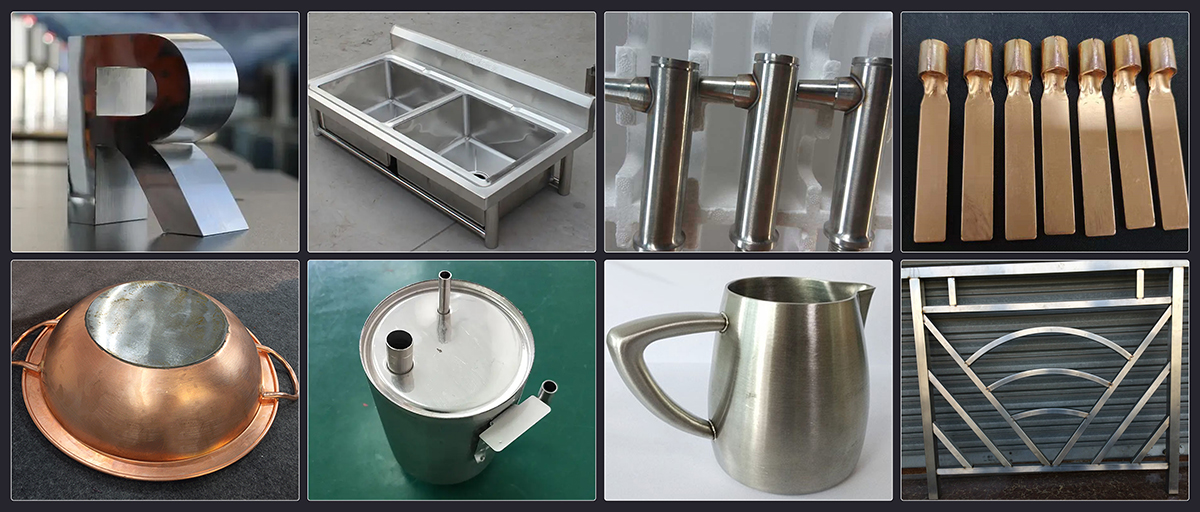
Fiber Laser Welding Machine application-Suntop


3. Doors, Windows, and Curtain Wall Industry: Suitable for the joining and welding of aluminum alloy doors and windows, stainless steel railings, and curtain wall profiles, as well as defect repair and surface rust removal and refurbishment. The equipment is handheld and flexible, adaptable to the processing of irregularly shaped profiles and on-site installation and repair work. The finished products are sturdy and aesthetically pleasing, meeting the needs of both home renovation and large-scale engineering production.


4. Automotive Parts Industry: Suitable for automotive sheet metal repair, as well as the welding, cutting, and cleaning/refurbishment of automotive hardware components and precision structural parts. With minimal thermal deformation and high precision, it meets the high-standard, high-stability processing requirements of the automotive parts sector.


5. New Energy Lithium Battery Industry: Leveraging precise and controllable energy storage welding capabilities, it is suitable for micro-welding of lithium battery electrodes, battery connectors, and precision new energy components. With low thermal damage, no burn-through, and high yield rates, it serves as core equipment for the production and maintenance of new energy components.


6. Construction Machinery Maintenance: Designed for on-site wear repair, weld repair, and rust/scale removal and refurbishment of large mechanical structural components and construction equipment parts. The equipment is mobile, making it suitable for outdoor construction sites and factory equipment maintenance scenarios, efficiently resolving equipment repair challenges.


7. Mold Refurbishment Industry: Capable of performing surface rust removal, oxidation removal, stain cleaning, and weld repair on various metal and plastic molds. It cleans mold surfaces non-destructively without damaging the base material, enabling rapid mold refurbishment and regeneration, thereby significantly reducing mold replacement costs.


8. Pipeline Equipment Industry: Suitable for welding, cutting, and deoxidizing weld seams on metal pipes and pipe fittings. It can operate in confined pipe spaces and outdoor pipeline construction sites, delivering consistent processing results to meet industrial pipeline installation and maintenance needs.


In terms of production capabilities, this equipment meets the centralized production needs of small and medium-sized workshops—offering low-cost, multifunctional, and multi-process solutions that replace multiple machines to save on investment. It also aligns with the refined, standardized, and high-quality mass production standards of large enterprises. Additionally, it flexibly adapts to special working conditions such as outdoor projects, on-site repairs, high-altitude operations, and confined spaces, comprehensively supporting the production and operational scenarios of all types of enterprises.

Summary and Corporate Outlook

In summary, traditional standalone metal processing equipment suffers from numerous industry pain points, including high capital investment, significant space requirements, cumbersome processes, high labor costs, and inconsistent processing quality. These issues severely hinder metal processing companies’ efforts to increase production capacity and achieve transformation and upgrading. In contrast, our newly launched 5-in-1 handheld laser welding machine, leveraging its core competitive advantages of integration, intelligence, high efficiency, and low cost, has effectively broken through the limitations of traditional processing models. By integrating five key functions—welding, energy-storage welding, cutting, laser cleaning, and weld seam cleaning—it truly achieves the goal of replacing multiple traditional machines with a single unit. By streamlining production processes, reducing operational costs, improving processing quality, and expanding application scenarios, this equipment effectively resolves various challenges in enterprise operations. It helps companies significantly reduce production costs, boost production efficiency, and increase product yield rates, providing a high-quality, efficient, and integrated solution for the metal processing industry’s transition toward intensive, precision-oriented, and intelligent manufacturing.


Moving forward, our company will continue to deepen our expertise in the R&D and production of intelligent laser equipment. We remain committed to addressing the core needs of the manufacturing sector’s transformation and upgrading, as well as enterprises’ goals of cost reduction and efficiency improvement, while persistently pursuing technological innovation and process refinement. We will continuously optimize the performance, processes, and user experience of our laser equipment, meticulously refine product details, and develop intelligent laser processing equipment that offers better cost-effectiveness, greater adaptability, and more diverse functions, thereby continuously expanding our product portfolio. At the same time, the company will continue to deeply engage with industry markets, precisely addressing the differentiated processing needs of various sectors. Through superior product quality and a comprehensive technical service system, we will empower manufacturing enterprises across various fields, both domestically and internationally, to improve quality, enhance efficiency, and achieve transformation and upgrading. We are committed to supporting the high-quality development of traditional manufacturing toward intelligent, efficient, and green practices.

Leave a Message
Contact us
More than 10 precision production line, easy to realize large quantities of goods, to provide you with the best price.
Contact Us
  No 317, Mu Dong RD, Wu Zhong DIST, Suzhou City, Jiangsu Province, China
 info@suntoplaser.com
  +86 13771746401

Products

Home
                                                                © 2023 Suzhou Suntop Laser Technology Co., Ltd  All rights reserved.       https://www.metalbasketcontainer.com