Views: 126 Author: Site Editor Publish Time: 2026-11-20 Origin: Site
2. Pain Points in Traditional Jewelry Soldering
3. Core Technical Advantages of Laser Spot Welder
5. Industry Value Delivered by the Equipment
6. Summary and Industry Outlook
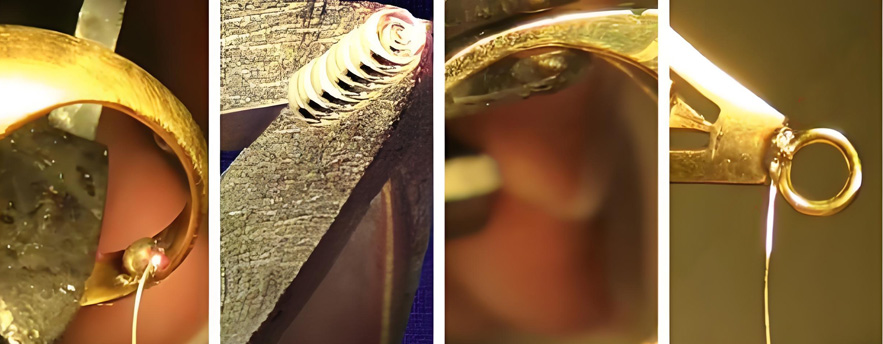
Jewelry is frequently crafted from soft precious metals like gold and silver. Given the intricate designs and complex stone-setting structures involved, these pieces demand an exceptionally high level of precision in welding. Traditional welding methods often create a large heat-affected zone, which can lead to issues such as unsightly weld marks, deformation, discoloration, or even damage—including burning or cracking—to the set gemstones. This frequently results in high rework rates and makes it difficult to maintain a consistent yield of high-quality products. Leveraging micron-level precision welding technology, laser spot-welding machines for jewelry overcome the significant drawbacks of conventional techniques. They have become essential equipment for both the production of new jewelry and the restoration or repair of existing pieces. By ensuring both welding precision and an aesthetically pleasing finish, these machines significantly boost processing efficiency, enabling jewelry factories, workshops, and repair shops to achieve standardized, high-quality operations.
Traditional open-flame jewelry soldering carries several unavoidable drawbacks. The process creates a large heat-affected zone, where high temperatures can easily cause deformation, oxidation, discoloration, or surface blackening—resulting in irreversible damage to the precious metal substrate.
Furthermore, the precision of this method is limited; it often produces oversized solder joints and visible weld marks. These require extensive post-soldering polishing, which can compromise the original, delicate, and refined appearance of the jewelry.
For pieces featuring gemstones, the high heat can scorch or even shatter diamonds, colored gemstones, or jade. Such damage is costly to repair.
Additionally, this technique relies heavily on the hands-on experience of skilled artisans. The long learning curve makes it difficult for newcomers to become proficient quickly. This leads to high labor costs and inconsistent product quality, which hinders stable, large-scale production.
● Micron-Level Precision Spot Welding: Features a tiny, precisely focused laser spot that produces uniform, refined weld points. This enables virtually seamless welding, preserving the original design and luster of the jewelry.
● Low-Temperature Thermal Welding: Minimizes the heat-affected zone, effectively preventing deformation, oxidation, or blackening of gold and silver. It also ensures no damage to surrounding gemstones, enamel, or electroplated coatings.
● Compatible with Various Precious Metals: Capable of reliably welding a wide range of precious metals used in jewelry, including gold, karat gold, platinum, and silver.
● Intelligent, Adjustable Parameters: Parameters can be flexibly tuned based on the thickness, style, and specific welding location of the piece—ideal for complex items such as delicate components, openwork designs, and prong settings.
● Simple and Efficient Operation: Equipped with an intuitive visual interface, the system is easy for beginners to master, reducing reliance on highly skilled technicians while maintaining high efficiency for both batch production and individual repairs.

1. Precision Processing of New Jewelry: Ideal for the assembly of finished jewelry—such as rings, necklaces, earrings, bracelets, and pendants—as well as prong setting and spot-welding of metal components. It produces refined, uniform weld points, ensuring the overall quality and premium feel of new pieces.
2. Restoration and Repair of Existing Jewelry: Provides precise repair and re-welding for issues like fractures, broken solder joints, loose connections, or minor deformations. The repairs are seamless and aesthetically pleasing, perfectly restoring the jewelry to its original appearance.

3. Repair of High-End Gemstone Jewelry: Suitable for the delicate repair of jewelry set with diamonds, colored gemstones, or jade. The low-temperature welding process prevents heat damage or the risk of gemstones cracking, ensuring a safe repair for high-end pieces.
4. Welding of Complex, Miniature Components: Easily handles intricate, irregularly shaped items—such as openwork (filigree) jewelry, ultra-fine chains, and tiny precision parts—that are difficult to process using traditional methods. It effectively overcomes the challenges of welding delicate jewelry, offering exceptional versatility in application.
● Comprehensive Quality Upgrade: Effectively eliminates common issues associated with traditional welding—such as weld marks, workpiece deformation, and metal discoloration—thereby significantly enhancing the refinement and premium feel of finished jewelry. This perfectly aligns with the quality standards required for today’s "affordable luxury" and high-end bespoke jewelry markets.
● Enhanced Efficiency, Cost Reduction, and Revenue Growth: Drastically lowers costs related to post-weld polishing, rework, and scrapped workpieces. It shortens production cycles, boosts mass-production capacity for manufacturing facilities, and improves service efficiency for retail repair shops.
● Lowering the Barrier to Entry: With standardized and intelligent operation, the equipment eliminates the need for reliance on the hands-on experience of veteran master craftsmen. Novices can quickly master the technology, enabling small-to-medium-sized jewelry manufacturers and independent workshops to undergo a cost-effective transformation and upgrade.
● Expanding Business Horizons: Capable of executing complex, high-precision tasks—such as crafting bespoke high-end jewelry or restoring luxury pieces—the equipment empowers businesses and retail shops to expand into high-value-added services and strengthen their core market competitiveness.
Compared to traditional open-flame welding, laser spot welding machines for jewelry offer key advantages—such as micron-level precision, minimal thermal damage, seamless results, high versatility, and ease of operation—that effectively resolve the long-standing pain points of conventional methods. Consequently, these machines have become the primary, upgraded equipment for precision jewelry processing.
The jewelry industry is currently evolving rapidly toward greater refinement, high-end positioning, and customization, with consumers placing increasingly high demands on the intricate quality and flawless restoration of their jewelry. Given this trend, micron-level laser precision welding technology is set to see widespread adoption, driving the jewelry processing sector toward greater intelligence, precision, and standardization.
Looking ahead, we remain committed to deepening our expertise in precision laser welding equipment for the jewelry industry. By continuously optimizing both equipment performance and process solutions, we aim to provide the global jewelry manufacturing and repair sectors with professional, reliable, and integrated smart-manufacturing solutions characterized by high efficiency, precision, and stability.
Table of Contents1. Introduction