Views: 117 Author: Site Editor Publish Time: 2026-11-05 Origin: Site
2. Pain Points in Traditional Sheet Metal Welding Processes
3. Handheld Fiber Laser Welder: Key Advantages for Sheet Metal Processing
4. Compared to Traditional Welding: An Upgrade in Overall Cost-Efficiency and Benefits
5. Industry Overview and Upgrade Recommendations
The sheet metal processing industry is rapidly evolving toward greater precision, higher efficiency, and superior aesthetic quality. Traditional welding methods—such as arc welding and TIG (argon arc) welding—present significant drawbacks, including substantial thermal deformation, labor-intensive post-weld grinding, and a high skill threshold for operators. These methods fall short of meeting the stringent quality requirements for high-end sheet metal components, equipment enclosures, and structural hardware. In contrast, handheld fiber laser welders offer flexible, convenient operation, produce aesthetically pleasing weld seams, and result in minimal thermal deformation. By drastically simplifying post-weld grinding, these systems have become the essential upgrade solution for sheet metal manufacturers looking to optimize processes, enhance product quality, and boost production efficiency.
In both mass production and high-end custom fabrication of sheet metal, the drawbacks of traditional arc welding and argon arc welding (TIG welding) have become increasingly apparent, severely constraining both production capacity and product quality. These traditional methods involve high heat input, which frequently causes the metal sheets to deform, warp, or develop surface irregularities. This leads to high rework rates, significantly driving up production costs. Furthermore, the finish quality is often poor—characterized by rough, uneven weld seams and noticeable color variations—necessitating extensive manual labor and time for secondary processing, such as grinding, polishing, or touch-up painting. These cumbersome procedures result in long production cycles.
These processes also demand a high level of technical expertise, creating a heavy reliance on highly skilled welders. The costs associated with recruiting and training such personnel are substantial. Moreover, because the work is performed manually, there is significant variability in execution, leading to inconsistent product yields and uneven quality. In addition, traditional welding is inefficient; the slow welding speed and time-consuming nature of the process limit overall capacity. Consequently, these methods are entirely inadequate for meeting the demands of the modern sheet metal industry—which requires high-volume, high-efficiency, and standardized production—and are ill-suited for contemporary sheet metal manufacturing models.
Compared to traditional welding methods, handheld fiber laser welders offer targeted solutions to common challenges in sheet metal fabrication. With their superior performance, they enable a comprehensive upgrade of sheet metal welding processes, significantly enhancing both production quality and efficiency.
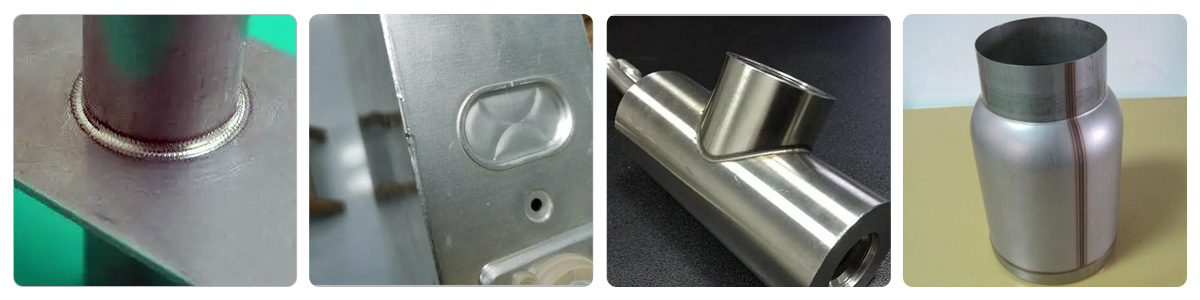
The equipment creates a minimal heat-affected zone (HAZ) by precisely controlling the laser’s heat output. This effectively prevents issues such as warping or deformation in thin sheet metal, ensuring well-formed workpieces, minimizing the need for rework, and reducing material waste. The resulting welds are fine, uniform, and smooth—free from defects like blackening, undercuts, or weak/incomplete welds. The high-quality finish eliminates the need for labor-intensive post-processing steps such as grinding, polishing, or touch-up painting, thereby streamlining production workflows, shortening processing cycles, and cutting costs on labor and consumables.
Designed for ease of use, the system features an intuitive, intelligent interface paired with a lightweight, handheld welding torch. Even operators with no prior experience can become proficient after minimal training. This removes the heavy reliance on highly skilled, veteran welders—a critical advantage for companies struggling with recruitment difficulties, high labor costs, and inconsistent process quality.
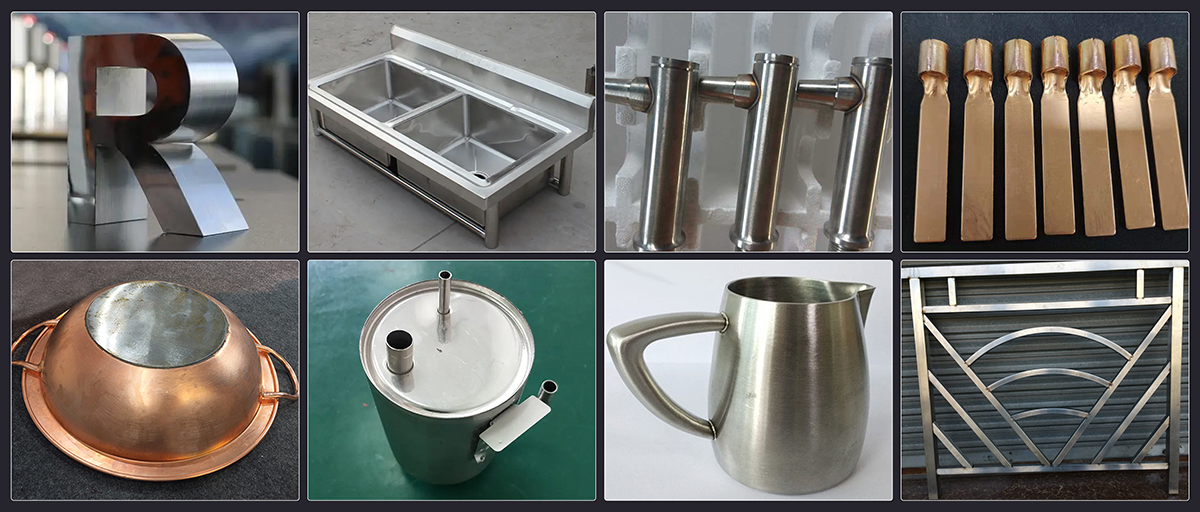
Furthermore, the equipment offers exceptional versatility and adaptability. It is perfectly suited for welding a wide range of products—including stainless steel sheet metal, equipment cabinets, electrical enclosures, door and window frames, and various hardware components—covering the vast majority of sheet metal fabrication applications. With welding speeds far exceeding those of traditional methods, the equipment doubles processing efficiency. It easily handles large-scale, standardized production orders, empowering businesses to scale up capacity, improve quality, and boost overall efficiency.

Relative to traditional sheet metal welding processes, handheld fiber laser welding machines offer a comprehensive upgrade in both production cost-efficiency and operational benefits, helping enterprises reduce costs, increase efficiency, and enhance market competitiveness.
Regarding labor costs, laser welding is simple to operate and easy to master. It does not require highly paid, veteran welders; instead, general staff can be trained to perform the work in a short period. This effectively lowers the costs associated with recruiting, training, and employing specialized welders, making labor expenditures more manageable.
In terms of post-processing, laser-welded components exhibit minimal deformation, with smooth, clean weld seams. This eliminates the need for labor-intensive tasks such as reshaping, heavy grinding, or touch-up painting. Consequently, it significantly reduces the consumption of grinding supplies and paint materials, while also saving substantial time on post-processing, streamlining production workflows, and shortening overall production cycles.
Regarding quality and performance, the equipment’s welding parameters are stable and controllable, ensuring high consistency and fewer defects in the finished products. This effectively resolves issues—common in traditional manual welding—where quality varies from piece to piece, thereby significantly boosting the product yield rate. Consistent, high-quality output enhances customer satisfaction upon delivery and strengthens a company’s market reputation, ultimately supporting long-term, stable business growth.
The sheet metal processing industry is currently facing intensified, homogeneous competition. As market demands for product precision, aesthetic quality, delivery efficiency, and cost-effectiveness become increasingly stringent, the inherent limitations of traditional welding processes have emerged as a critical bottleneck for business growth. In the context of industry-wide transformation and upgrading, process innovation and equipment modernization have become essential for sheet metal enterprises to secure their market position and enhance their core competitiveness.

Handheld fiber laser welder effectively address long-standing industry pain points—such as significant thermal deformation, poor finish quality, low efficiency, high labor costs, and cumbersome post-processing. With advantages including high precision, minimal deformation, ease of operation, versatility, and high efficiency, these machines are ideally suited to the production requirements of sheet metal enterprises of all scales—from small, custom-fabrication workshops to large-scale, mass-production facilities. In any setting, this equipment helps optimize production workflows, streamline processing steps, and reduce overall production costs.
For sheet metal processing enterprises, transitioning to modern laser welding technology represents more than just a simple equipment upgrade; it signifies a lean evolution of the entire production model. Through such process innovation, companies can significantly improve workpiece quality and production efficiency, ensure consistent product yields, and build a strong reputation for high-quality deliverables. Ultimately, this empowers businesses to gain a competitive edge in a crowded market and achieve sustainable, long-term growth.
SUNTOP specializes in the R&D and production of industrial laser equipment, including laser welding and laser cutting systems. With deep expertise in sectors such as metal processing, sheet metal fabrication, and hardware manufacturing, we provide comprehensive, one-stop, customized laser processing solutions tailored to each client’s specific workpiece materials, processing requirements, and production volume needs. Our equipment offers stable performance and versatility across a wide range of applications, effectively helping enterprises reduce costs, increase efficiency, and upgrade their production processes. We welcome inquiries from both new and existing clients—contact us to discuss potential collaborations, schedule an on-site visit, or arrange for free sample testing and machine demonstrations!
Table of Contents1. Introduction