| Availability: | |
|---|---|
| Quantity: | |
| PDF Export | |
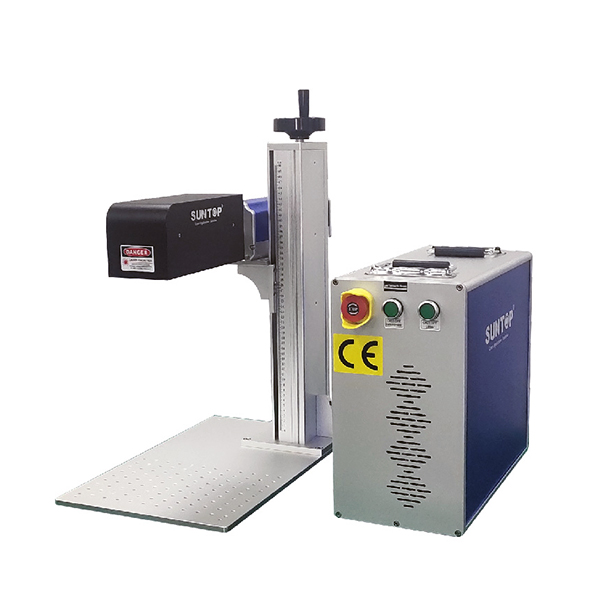
This portable 3D laser marking machine utilizes advanced dynamic-focus 3D marking technology to achieve precise focus on three-dimensional curved surfaces, irregular shapes, and workpieces with varying heights. It effectively eliminates issues common to traditional markers—such as blurred edges on curved surfaces and uneven marking depth—delivering superior 3D processing results.
Featuring a lightweight, compact, and portable design, the unit offers exceptional operational flexibility, allowing for rapid deployment anywhere. It is suitable for a wide range of applications, including factory mass production, on-site processing, and custom engraving, while remaining easy to operate with a low learning curve.
The machine is built for stability and durability, supporting prolonged continuous operation with high marking speeds and consistent output quality. It is compatible with various materials—such as stainless steel, copper, aluminum, hardware, and plastics—and meets diverse industrial and personalized processing needs, including logos, serial numbers, QR codes, patterns, and deep engraving.
1. Subvert the traditional two-dimensional marking mode, to achieve all-round marking, can be engraved bevel, cylinder, cone, sphere and other different 3D shapes.
2. Graphics from mainstream 3D software can be imported and the graphics can be simply edited for easy operation.
3. Automatically calculates radian and automatically adjusts focus for marking multi-level large format, 3D curved surfaces and more.
4. Using imported scanning system and scanning head, the infrared focusing system does not need to measure the focal length, which makes the work more convenient.
5. Adopt high-precision three-dimensional positioning technology, high-speed focus scanning system, short pulse, high peak power and high pulse repetition frequency. The working efficiency is 20% higher than that of similar models.
6. Stable performance of the whole machine, small size, maintenance-free, service life up to 100,000 hours.
1. 3D Dynamic Focusing: Automatically adapts to curved, arched, or uneven surfaces, ensuring uniform 3D marking without issues like blurred edges or inconsistent depth.
2. Portable and Flexible: Compact and lightweight design allows for easy transport and setup; suitable for both fixed workstations and on-site operations without site constraints.
3. High-Precision Processing: Produces a fine laser beam for crisp marking and engraving; characters and patterns are durable, wear-resistant, and long-lasting.
4. Broad Material Compatibility: Compatible with various metals—such as stainless steel, copper, and aluminum—while also meeting processing needs for certain non-metallic materials.
5. Stable Operation and Low Maintenance: Features a low failure rate and energy-efficient performance; supports continuous long-term operation with simple, hassle-free daily maintenance.
6. Easy Operation: Comes with an intuitive control system interface that is quick to master, eliminating the need for complex training and effectively boosting production efficiency.
7. Wide Range of Applications: Capable of marking logos, serial numbers, QR codes, patterns, and more; suitable for industries such as hardware, automotive parts, jewelry, handicrafts, and mold making.
1. How can i place an order?
Please provide the details of your requirements as clear as possible. So we can send you the offer at the first time.
For further discussion, it is better to contact us with WhatsApp / WeChat / email / phone, in case of any delays.
2. What kind of display we provide?
We have laser marking machine / laser welding machine / laser cutting machine / laser cleaning / CO2 laser cutting and engraving machine / laser accessories for you choose.
3. How about the warranty?
We have 2 years warranty and lifelong maintenance.
4. What is your terms of delivery?
We accept EXW, FOB, CFR, CIF, DDU, DDP, etc. You can choose the one which is the most convenient or cost effective for you.
5. What is the difference between the 3D portable laser marking machine and a standard 2D marking machine?
This machine features a 3D dynamic focusing system capable of processing curved surfaces, arcs, stepped surfaces, and irregularly shaped workpieces, ensuring uniform marking without blurred edges. Standard 2D models are limited to flat surfaces and cannot handle three-dimensional products. Additionally, the lightweight design allows for flexible, mobile operation.
6. Does the equipment support on-site mobile operation?
Yes. The unit is compact, lightweight, and easy to assemble/disassemble. It requires no fixed infrastructure and can be set up and used on-site, making it suitable for retail stores, outdoor locations, and temporary workstations.
7. Is installation complex, and how long does it take for a beginner to get started?
Installation is simple; you only need to connect the power and communication cables to start the machine. The accompanying software features an intuitive interface, allowing users to master basic text and pattern marking in just half a day—no professional technical background is required.
8. Is manual focusing required before marking?
It supports autofocus; combined with the 3D dynamic focusing function, the focal length automatically adjusts for workpieces of varying heights. Manual fine-tuning is also available to further optimize processing results.
9. Can the equipment be integrated into an assembly line?
Yes. With its fast response speed and compact size, the equipment can be integrated into automated assembly lines to perform continuous, batch marking operations.
10. What causes blurred edges or uneven depth when marking curved workpieces?
This is usually caused by an uncalibrated focal length or the workpiece being tilted. Recalibrating the 3D focus and ensuring the workpiece surface is level will resolve the issue.
11. What should I do if the marking appears faint or lacks sufficient depth?
Increase the laser power and decrease the marking speed. Also, check the workpiece surface for oil or oxidation layers and clean them off before processing.
12. How do I handle discrepancies between the marked pattern size and the design drawing?
Recalibrate the galvanometer parameters in the software and ensure the configuration file is imported correctly; performing a test mark after calibration will restore the correct dimensions.
13. Will the markings peel off or fade?
Laser marking is a physical ablation process where the mark penetrates the surface layer of the workpiece. The text and patterns are durable and wear-resistant, so they will not peel or fade under normal use. 14. The device does not respond or fails to start up?
First, check if the power cord and socket are live and if the power switch is turned on. If there is still no response despite having power, check for loose cable connections and unplug/replug the cables.
15. The device powers on normally, but the laser does not emit a beam?
Check the software settings to ensure laser output is not disabled, and verify the connections for the galvanometer and control card. Try restarting the device after a period of inactivity; if the issue persists, contact after-sales support for hardware inspection.
16. The galvanometer does not move or the marking path is distorted during operation?
First, restart the device and software, and perform a galvanometer reset. Check for loose USB communication cables or data cables, and keep the device away from sources of strong electromagnetic interference, such as electric welding machines.
17. The device makes abnormal noise during operation?
Disconnect the power and check the interior of the machine for any obstructing foreign objects. Inspect the cooling fans and transmission components, and clear away any debris.
18. What routine maintenance is required?
Keep the machine body and lenses clean to prevent dust accumulation. Disconnect the power and cover the machine for dust protection when not in use for extended periods. Periodically check cable connections; no complex maintenance is required.
19. What is the approximate service life of the device?
The core laser module has a lifespan of over 100,000 hours. With normal use and simple maintenance, the entire machine can operate reliably for many years.
20. Is after-sales support provided?
A standard warranty is provided for the entire machine. Remote guidance or professional after-sales repair support is available for any malfunctions or operational issues encountered during use.

Fiber laser source
Good beam quality, stable performance, long service life (100,000 hours), and maintenance-free. MAX, Raycus, JPT and other brands can choose.
3D digital scanning head
Famous brand SINO-GALVO oscilloscope scanning head, high speed and accurate marking.
XYZ three axes, irregular / surface marking, Z axis can be flexible automatic movement.
Professional 3D galvanometer
Variable focal length, precise control of focal position, ensure focal size and spot quality to realize the engraving of irregular products.
Double red light preview
Help to find the focal distance quickly, no need to use ruler, just check whether the red dots and red lines on the surface of the product to be marked overlap.
Built-in air cooling
With built-in air cooling design, the heat dissipation performance is better, can effectively extend the service life of optical components.
Aluminum table
The worktable is made of thick aluminum plate, which is very stable. The positioning holes with threads are neatly arranged for easy and accurate positioning.
Control system
BJJCZ control card adopts EZCAD software, which is easy to operate and powerful. Compatible with Windows XP /7/8/10.
Safety protection
The equipment is equipped with an emergency stop button to ensure that the power supply can be quickly cut off in the event of an abnormality. The laser protection cover can be customized according to needs to ensure the safety of operators during use.
Laser Power | 30W | 50W | 60W | 100W |
Model | ST-FL30P-3D | ST-FL50P-3D | ST-FL60P-3D | ST-FL100P-3D |
Max Marking Range | 110*110mm /150*150mm | 200*200mm | 300*300mm | 300*300mm |
Depth of Single Marking | 0.01mm | 0.03mm | 0.06mm | 0.08mm |
Same pattern marking efficiency | 10s | 7 s | 4s | 2s |
Whole Machine Power | 600W/h | 800W/h | 1000W/h | 12000W/h |
Laser Type | Fiber Laser | |||
Laser Source | MAX Brand (Raycus can choose) | |||
Control Software | EZCAD | |||
Cooling Mode | Air Cooling | |||
Working Accuracy | ±0.002MM | |||
Marking Speed | 0-7000mm/s | |||
Repetition Frequency | 20-100KHz | |||
Laser Wavelength | 1064nm | |||
Minimum Font for Marking | 0.15mm | |||
Working Voltage | 220V±10%, 50/60 Hz | |||
Graphic Format Supported | AI, PLT, DXF, BMP, DST, DWG, DXP | |||
Applicable Material | All metal (Stainless steel, Carbon steel, Brass, etc.) and some plastic (ABS, PVC, PES, ETC.) | |||
Optional Accessories to Purchase | D80 Rotating Shaft/ D57 Small Chuck/2D Table (X.Y direction)/ Cutting Fixture | |||
Net Weight (KG)/ Gross Weight | 45KG / 55KG | |||
Machine Dimension | 420*300*550mm (L*W*H) | |||
|
Application Materials
Suitable for working with most metal marking applications such as Gold, Silver, Stainless Steel, Brass, Aluminum, Steel, Iron Titanium etc., and can also mark on many nonmetal materials, such as ABS, Nylon, PES, PVC etc.
|
Application Industries
Widely used in electronics industry, automobile industry, tools and measuring tools, aerospace, instrumentation, packaging industry, medical products, household appliances, keyboards, panels, advertising signs, certificate cards, daily necessities, jewelry and diamonds and other fields.
Table of Contents1. Introduction